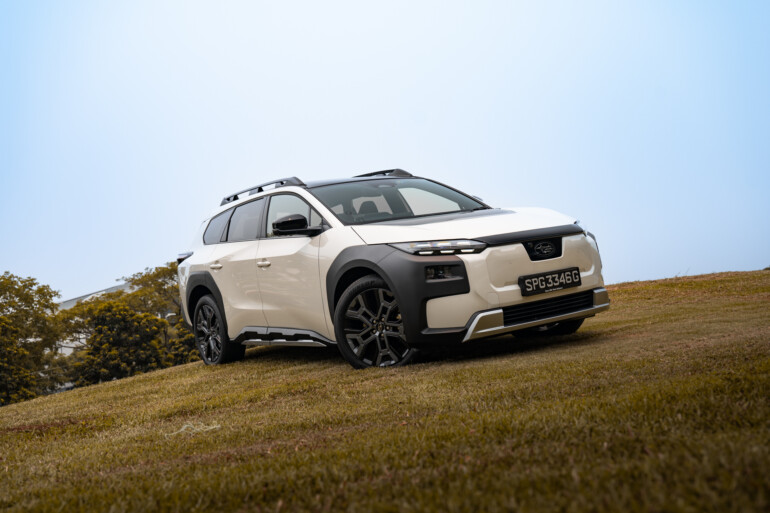
The Subaru e-Outback is quicker to 100 km/h than some old WRXs, and it has a huge boot and roof rails you can actually put things on. Priorities, apparently.
There was a time when the words “fastest Subaru” would have conjured up a large rear wing, gold wheels and something blue hurtling sideways through a Welsh forest.
Now, the title belongs to an electric family car, and there is no enormous bonnet scoop.
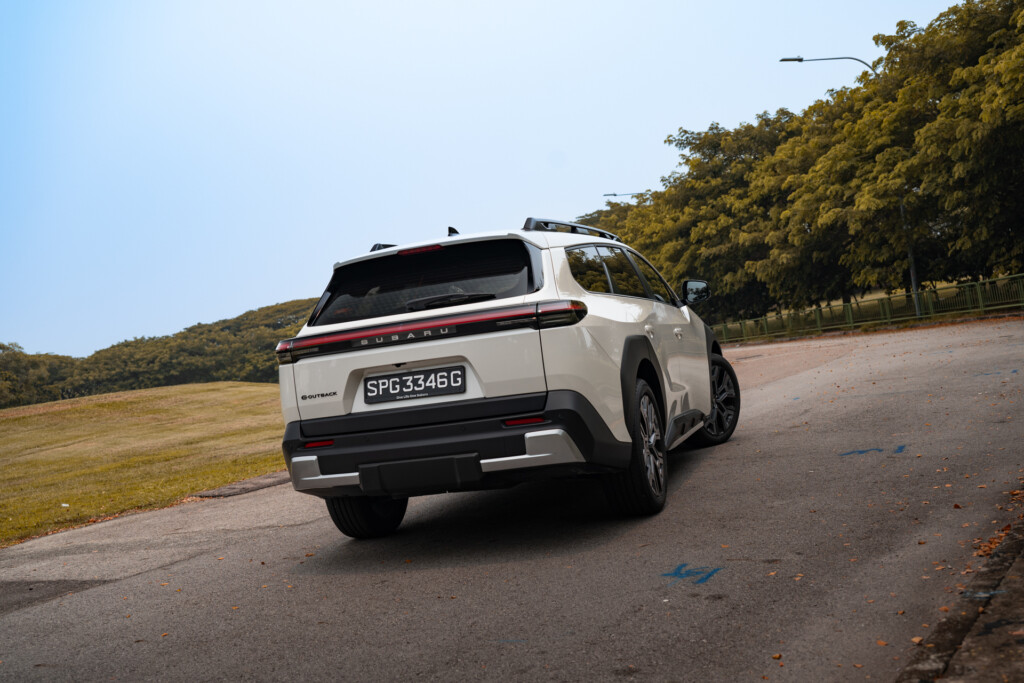
Despite the name, the e-Outback is not an ordinary Outback with its petrol engine removed and batteries stuffed underneath. It is closely related to the Subaru Solterra and Toyota’s bZ4X family, although the lineage becomes complicated enough that explaining it properly risks requiring a family tree.
The important bit is that the e-Outback is longer and more practical than the Solterra, with most of that additional length added behind the rear wheels. It is also built by Subaru at its Gunma Yajima factory in Japan. Unlike the related Toyota, Subaru’s version comes exclusively with two motors and all-wheel drive.
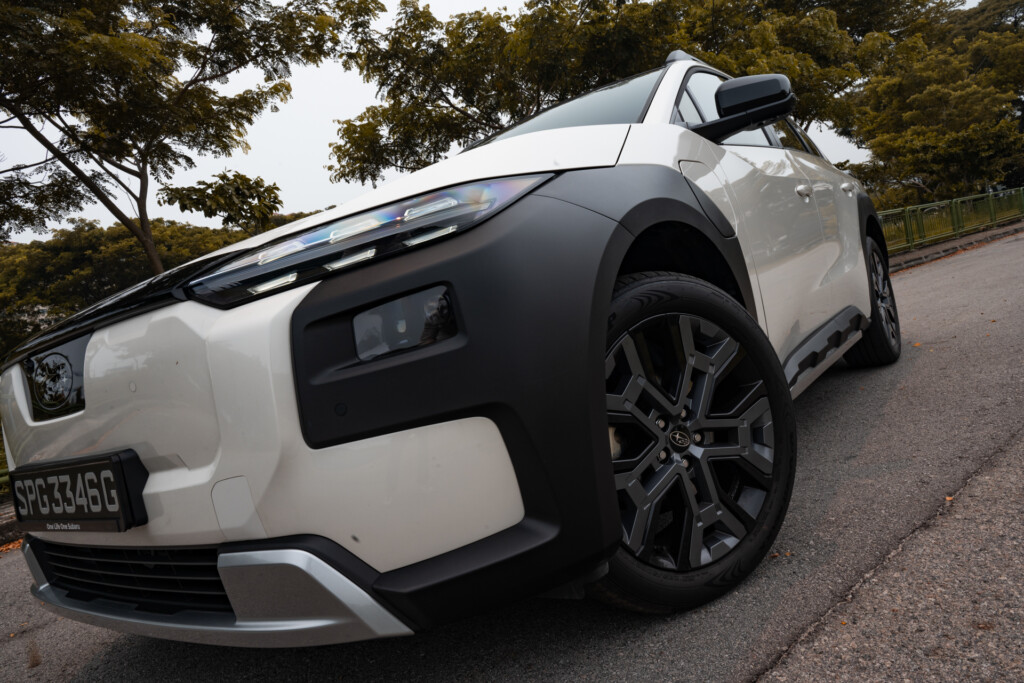
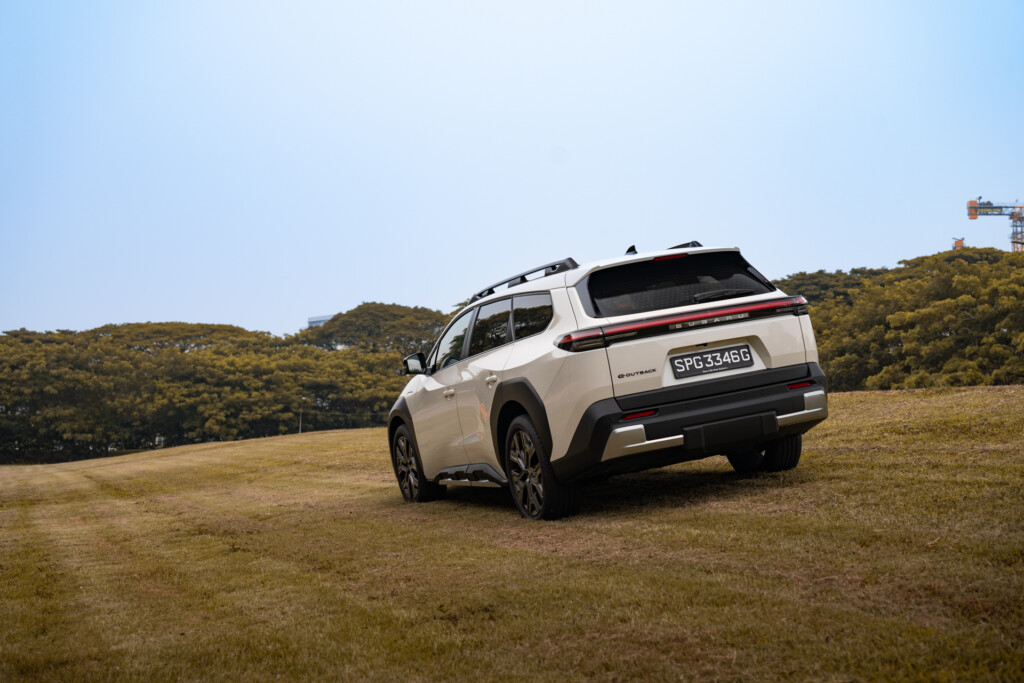
While much of the electric-car world has decided that the future must resemble a bar of soap left somewhere warm, the e-Outback remains defiantly chunky.
There is black plastic around the wheelarches. There are proper roof rails. The body is long rather than excessively tall, giving it more of a raised-estate silhouette than the generic SUV shape that now occupies seemingly every third parking space. Nobody will confuse it with an Italian concept car.
The Singapore-specification e-Outback uses two permanent-magnet motors, one for each axle, with a combined output quoted locally at 381PS and 536Nm. That is enough for 0 to 100km/h in 4.5 seconds, and top speed is 180km/h.
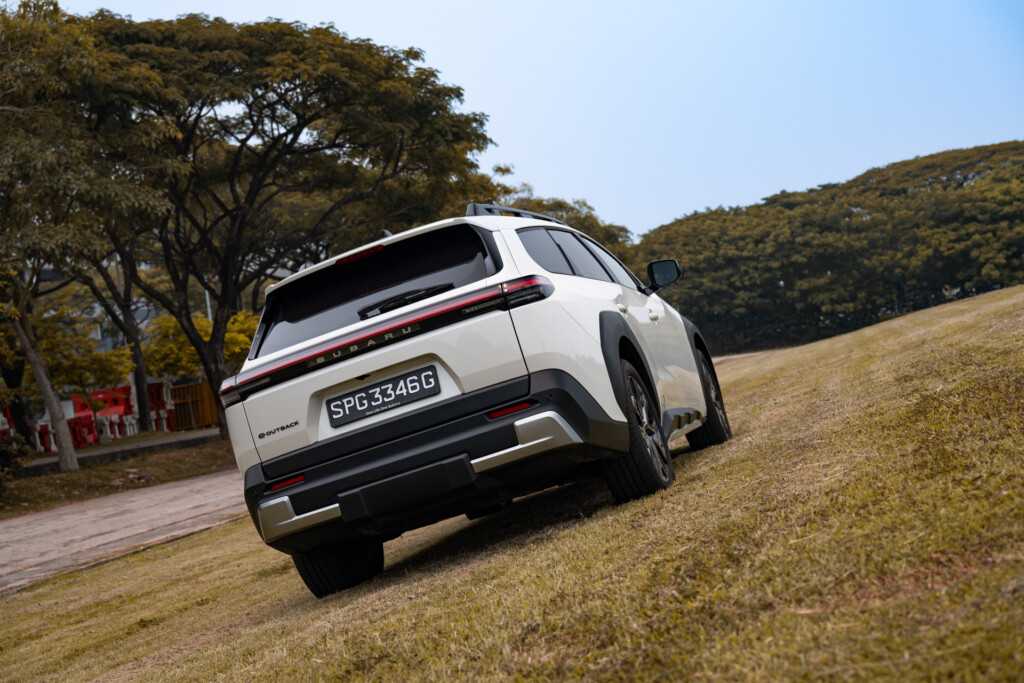
A vehicle designed to carry bicycles, camping equipment and children does not need to reach expressway speeds faster than many sports cars. But unnecessary speed is one of the more enjoyable consequences of electrification.
Select Power mode, press the accelerator properly and the e-Outback squats slightly at the rear before departing with genuine enthusiasm. There are MacPherson struts up front, double wishbones at the rear and enough suspension travel to deal properly with poor surfaces.
The steering is well weighted, if not overflowing with information, and the body takes a corner with reassuring control rather than flopping onto its outside tyres.
There are five levels of regeneration available through the paddle switches, including effectively none at all. Cleverly, the car can balance regenerative braking between the two axles so lifting off the accelerator does not cause the body to pitch excessively forwards.
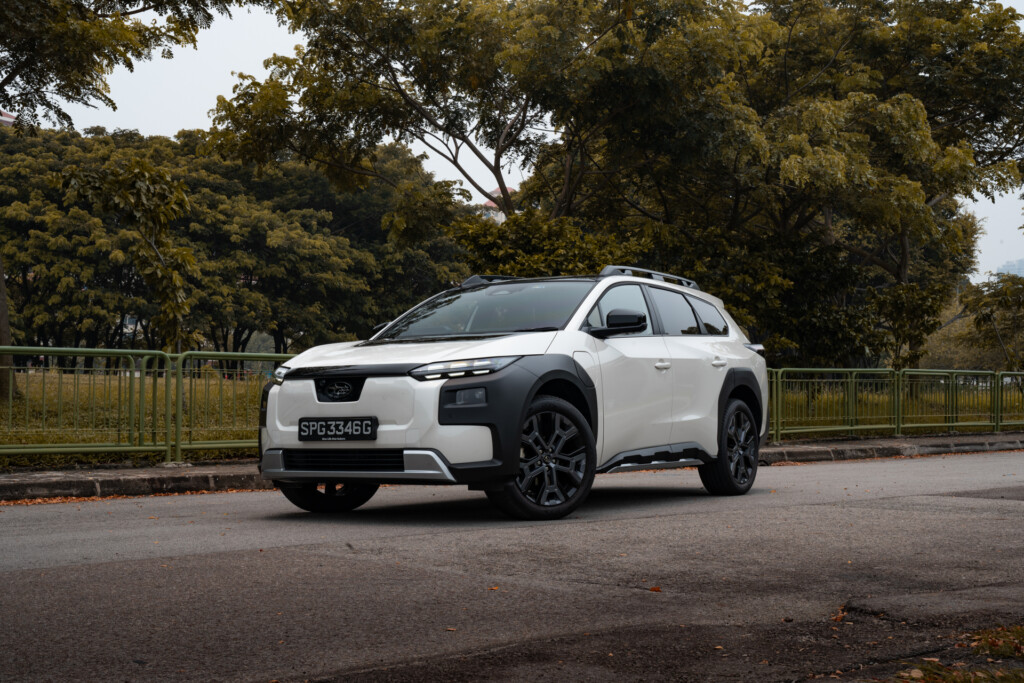
The e-Outback has 211mm of ground clearance beneath its underbody and Subaru’s X-Mode system, including settings for Snow/Dirt and Deep Snow/Mud, along with a low-speed Grip Control function that lets the car handle accelerator and braking duties while the driver concentrates on steering.
There are limits, of course. It has no locking mechanical differentials, and ground clearance remains ground clearance regardless of how enthusiastic the marketing department becomes.
But the hardware is not decorative. Plenty of SUVs wear chunky tyres and black plastic cladding while possessing roughly the same appetite for mud as a pair of white trainers. The Subaru actually expects you to get them dirty.
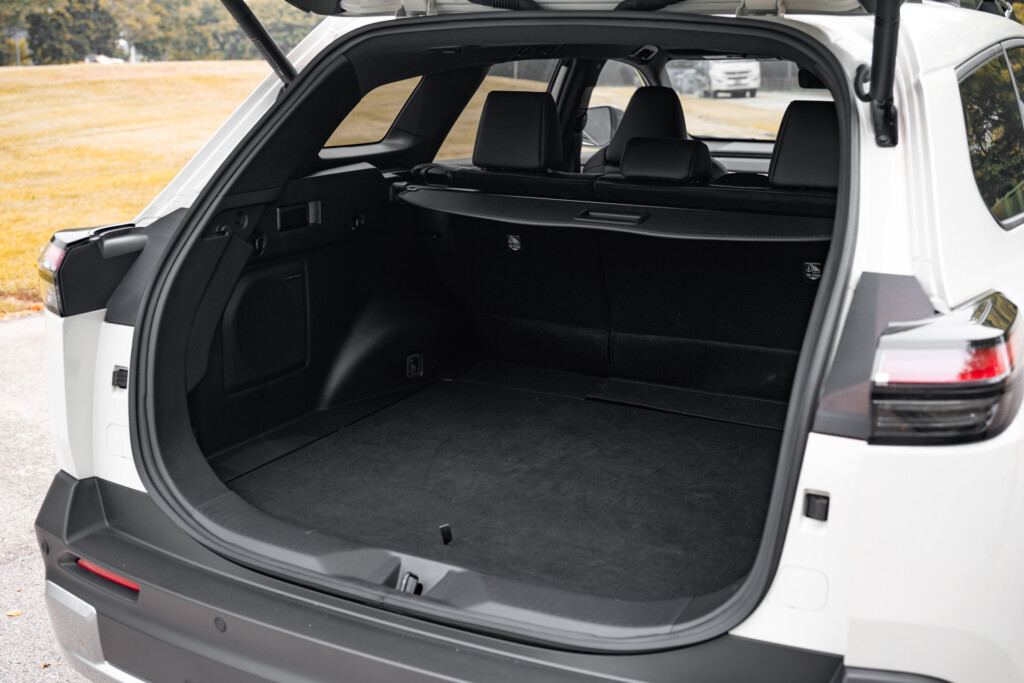
Plus, you can take everything you need on adventures, since the e-Outback offers up to 619 litres with the rear seats upright. The opening is wide, the floor can be adjusted and one-touch releases make dropping the rear backrests easy.
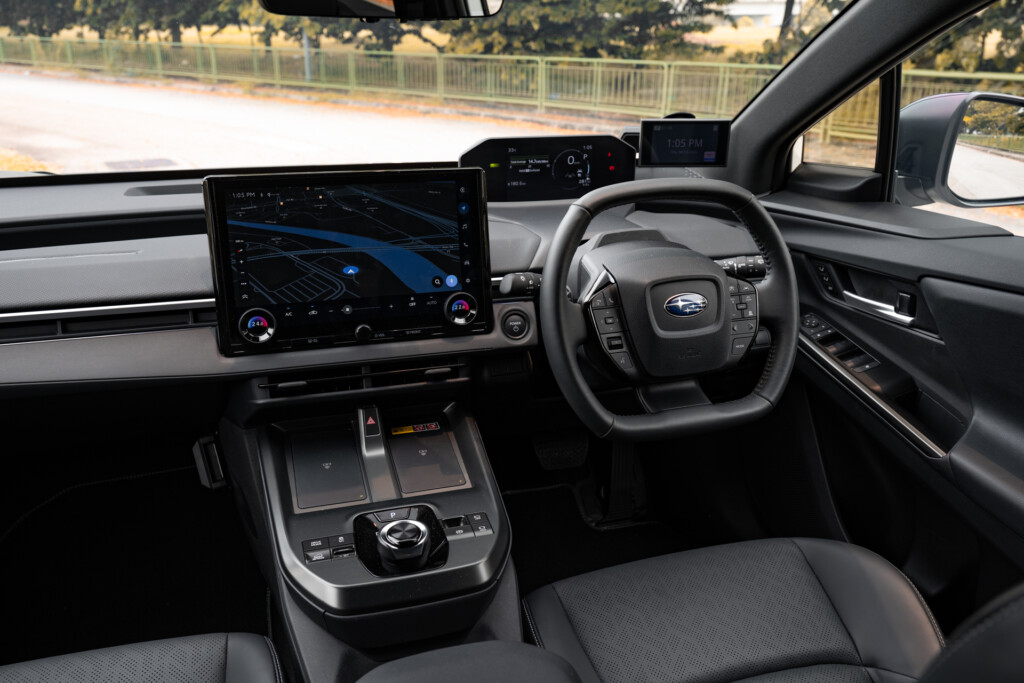
The cabin follows the same philosophy. It will not make anybody from a Scandinavian furniture company nervously study the dashboard for inspiration, but it is clear and sensibly arranged.
A large 14-inch touchscreen dominates the centre, accompanied by a compact driver’s display. There are dual wireless phone chargers, ventilated front seats, heating for both rows, a panoramic roof and a 10-speaker Harman/Kardon audio system on the Singapore model.
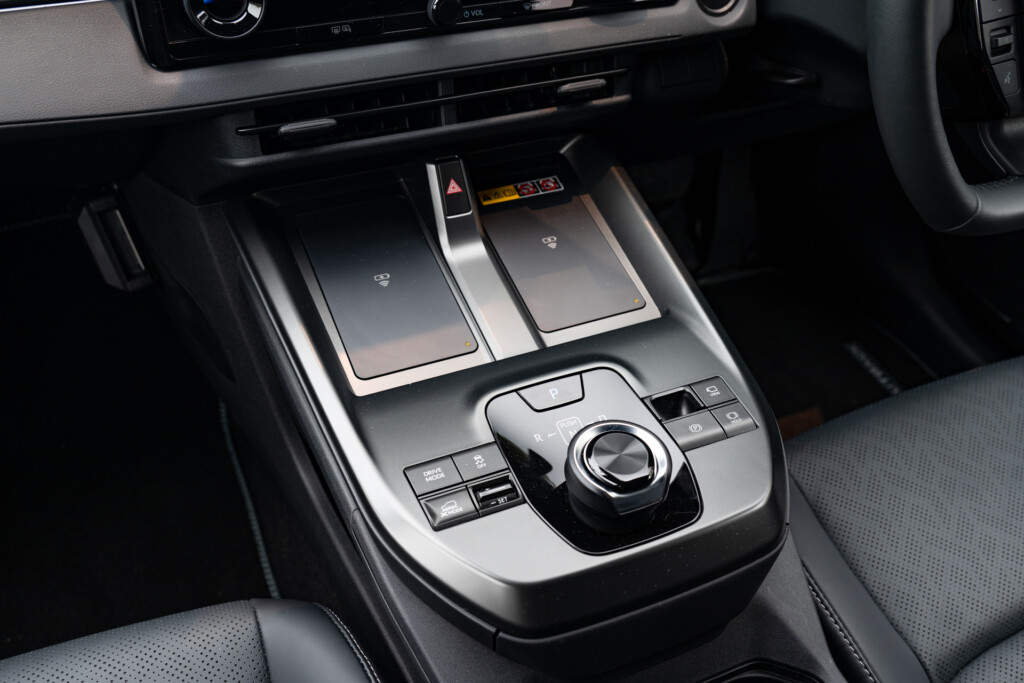
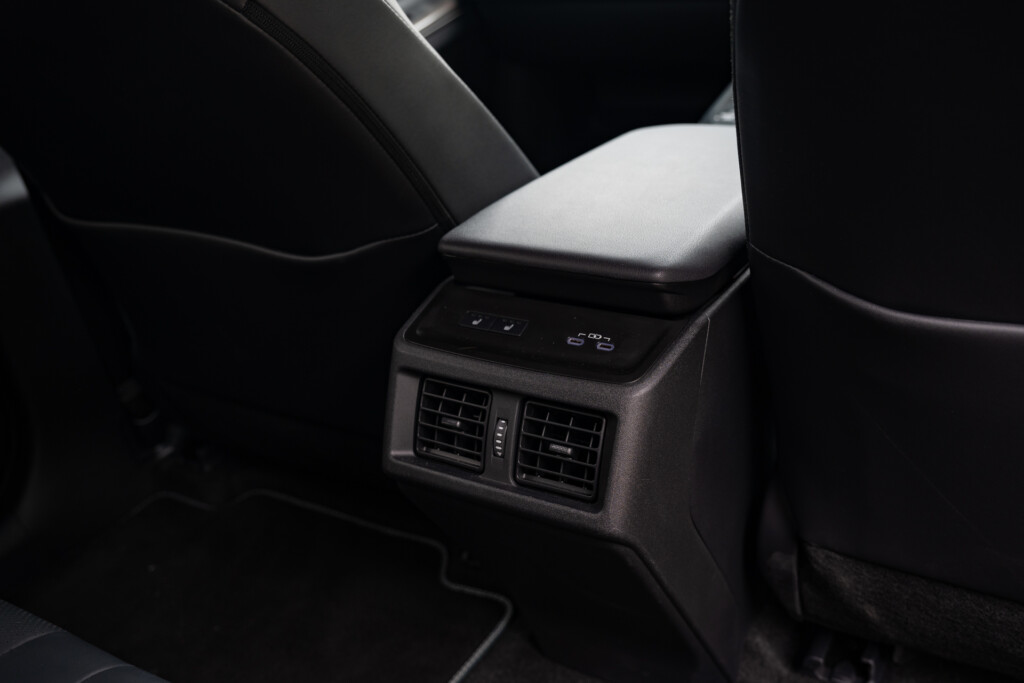
Importantly, not everything has been banished into touchscreen menus, and thanks to common sense prevailing there are still physical controls and paddle switches for frequently used functions.
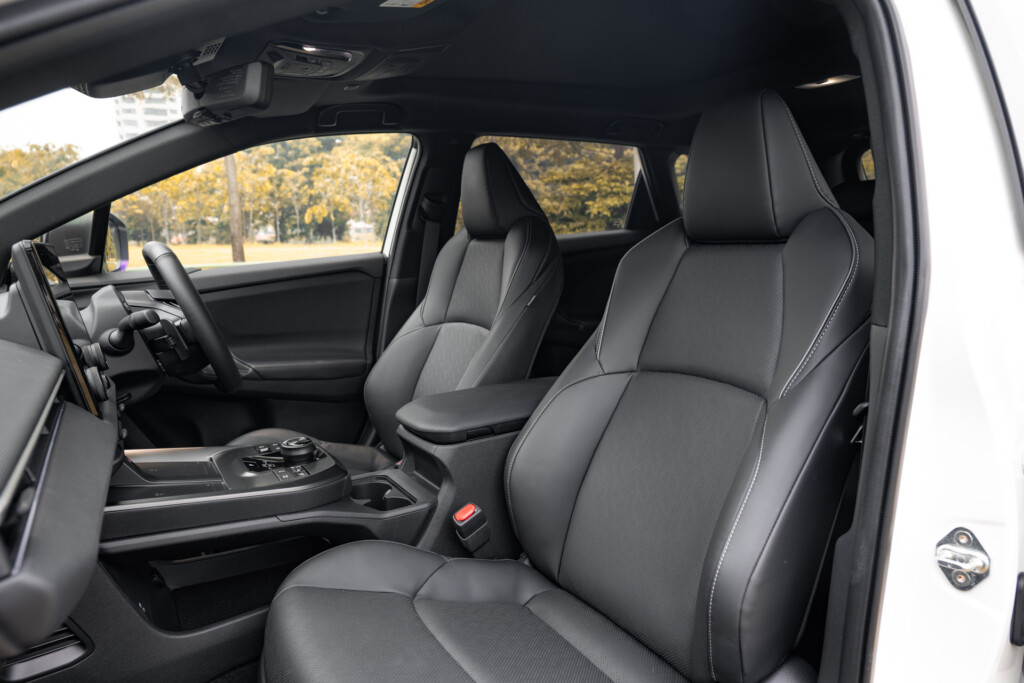
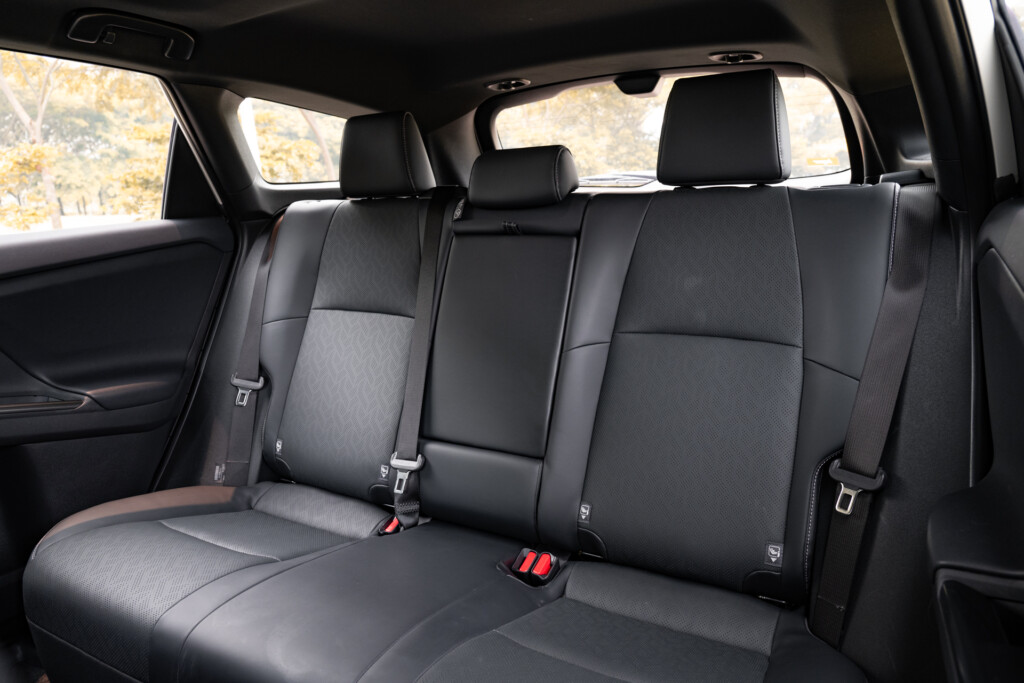
The driving position is comfortable, rear passenger space is generous and visibility is decent. There is a reassuring robustness to the whole thing, even if nobody is going to climb aboard and mistake the interior for something from Bentley.
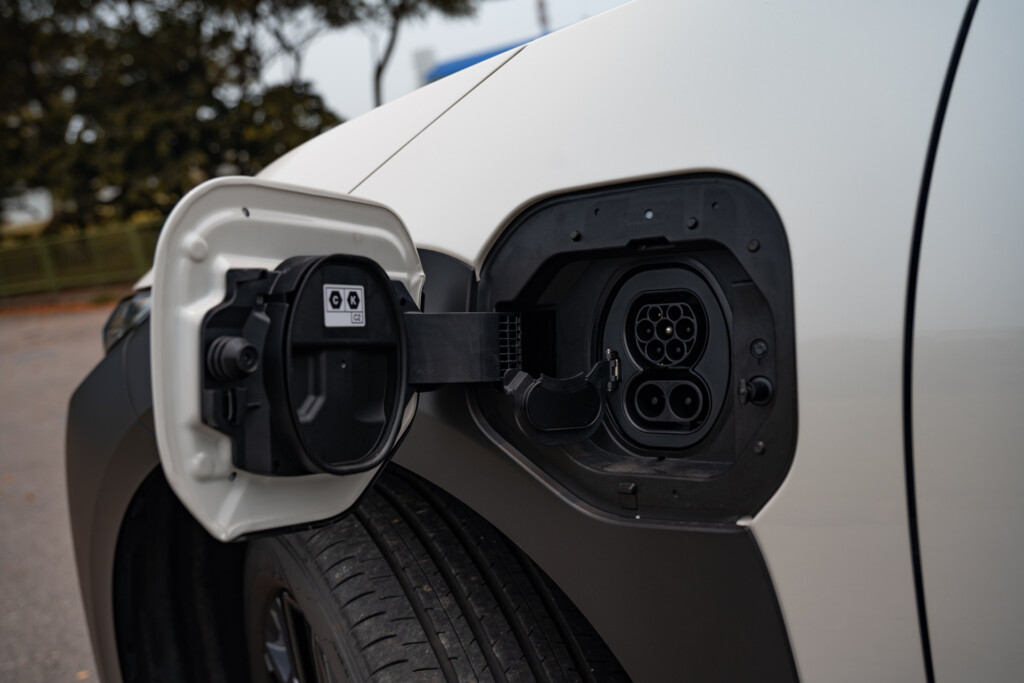
The Singapore e-Outback has a 74.7kWh battery and an official WLTP range of 443km. AC charging can run at up to 22kW, while DC fast charging peaks at around 150kW.
If anything, the e-Outback is one of those EVs whose capability makes you wish for slightly more battery. It is built for road trips, and has the all-wheel-drive system for whatever questionable road Google Maps sends you down halfway through said road trip. You therefore want the range to match the enthusiasm.
At the time of writing, Subaru Singapore lists the e-Outback from S$224,800, inclusive of the prevailing COE.
Because Singapore calculates electric-car road tax partly according to motor output, having 381PS is considerably more amusing when you are accelerating than when the tax bill arrives. Current listings put annual road tax at S$4,712.
Still, the e-Outback has a convincing amount of metal and capability for the money.
Take away the petrol engine, boxer soundtrack and mechanical four-wheel-drive hardware of Subarus past, and there was always a danger that the company’s first generation of electric cars would lose the qualities that made the badge mean something. The e-Outback suggests otherwise.
Technical Specifications
Subaru e-Outback
Powertrain: Dual Electric Motors, All-Wheel Drive
Power: 280 kW (375 bhp)
Torque: 536 Nm
Gearbox: Single-Speed (A)
Acceleration: 4.5 Seconds (0-100km/h)
Top Speed: 180 km/h
Battery Capacity: 74.7 kWh
Drive Range: 443 km
Energy Consumption: 5.7 km/kWh
Price: S$221,800 with COE (accurate at the time of this article)
Photo Credits: Sean Loo (@auto.driven)
Read more automotive news at AutoApp, or check out our latest videos on YouTube and on TikTok!