There is something rather poetic about Proton finally building a plug-in hybrid, and the Proton e.MAS 7 PHEV is certainly ready to step up to the challenge.
For decades, Proton has been synonymous with providing Malaysians with honest, accessible motoring. It has weathered changing consumer tastes, embraced partnerships with some of the industry’s biggest names, and most recently, accelerated headlong into the electrified era. And it has done so rather quickly.
Since the inception of Pro-Net in 2023, Proton has wasted little time laying down its electrification roadmap. The journey began with the arrival of the smart #1 in late 2023, followed by the smart #3 and the flagship smart #5, while simultaneously nurturing its homegrown e.MAS brand through the launch of the e.MAS 7 and e.MAS 5.
Now comes perhaps its most important step yet. The e.MAS 7 PHEV.
More than simply another variant in Proton’s expanding portfolio, the e.MAS 7 PHEV represents the company’s first ever plug-in hybrid. It marks Proton’s arrival into territory once fiercely guarded by German manufacturers before eventually becoming the new battleground for Chinese automakers.
The question, then: has Proton got it right?
More than enough performance
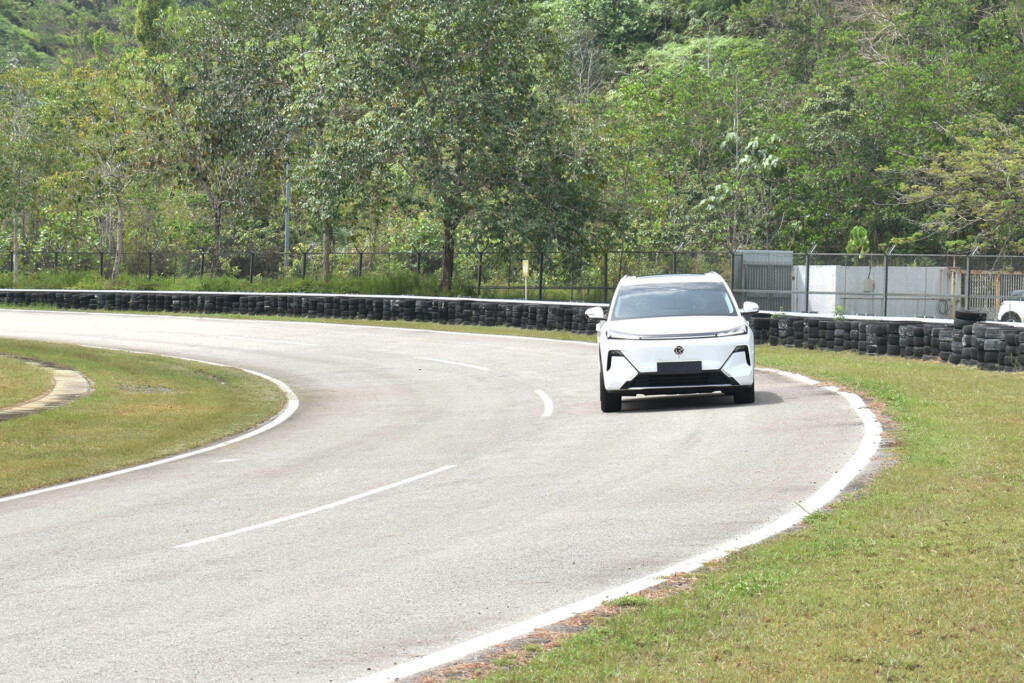
Producing a combined 259hp and 262Nm of torque from its naturally aspirated 1.5-litre four-cylinder engine and front-mounted electric motor, the e.MAS 7 PHEV may appear slightly modest on paper when compared to rivals such as the Chery Tiggo 7 CSH and Jaecoo J7. On the roads, however, those concerns quickly disappear.
With three adults onboard, the Proton never once felt out of breath. Its parallel-series hybrid powertrain does much of the heavy lifting here. During lower-speed driving, propulsion is primarily handled by the electric motor, preserving both refinement and efficiency. Demand additional performance and the petrol engine quietly joins the party, supplementing the electric motor with seamless urgency.
The Premium variant I tested featured an 18.4kWh CATL-sourced LFP battery pack that offers up to 105km of electric-only driving range (NEDC), or a more realistic 86km (WLTP).
The numbers tell an interesting story
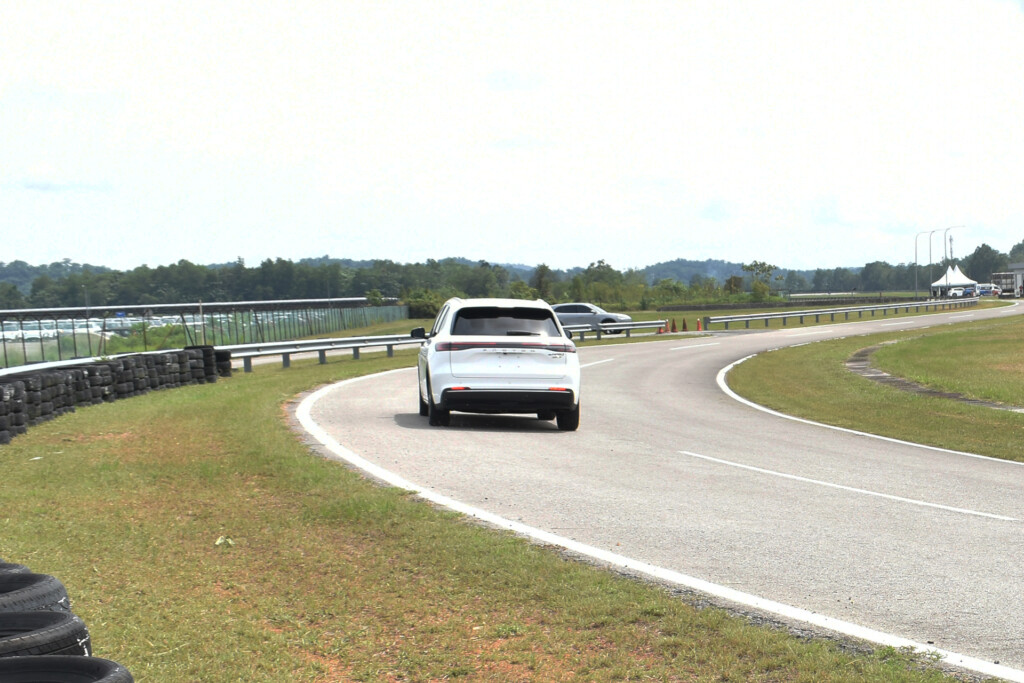
As we only had a brief stint with the car on Proton’s Tanjung Malim test circuit, we could not fully test out the car’s fuel efficiency. With its 51-litre fuel tank, the e.MAS 7 PHEV is theoretically capable of covering up to 1,065 km to 1,420 km using a full battery and a full tank of gas. And that’s whilst driving with considerably less enthusiasm than most owners ever will.
Even if real-world figures ultimately deliver only 70% or 80% of Proton’s headline 1,000km combined range claim, that remains an impressive accomplishment for a first attempt.
Comfort first, perhaps a little too much
The same praise, however, cannot entirely be extended to the way the car drives.
Despite Proton positioning the e.MAS 7 PHEV as an entirely different model from its fully-electric sibling, both cars feel remarkably familiar from behind the wheel. Sharing the same Global Intelligent New Energy Architecture certainly explains some of this similarity. Chief amongst those shared traits is an unwavering focus on comfort.
Usually, that’s something worth celebrating. In the e.MAS 7 PHEV’s case, however, Proton may have been slightly too generous with the recipe.
The suspension setup is decidedly soft, delivering commendable ride comfort during everyday driving. Unfortunately, as typical roads rarely resemble billiard tables, undulating surfaces, uneven tarmac and mid-corner bumps quickly expose the limitations of the car’s chassis composure.
Ironically, sorting this singular issue would transform the e.MAS 7 PHEV from being a very good product into an excellent one.
Curiously, things seemed to improve when switching from Hybrid mode into Power mode. The car suddenly felt more tied down and noticeably better controlled over the same roads.
That observation is somewhat puzzling given Proton insists the drive modes merely alter throttle response and steering weight, with no adaptive suspension present.
Familiar, but better looking
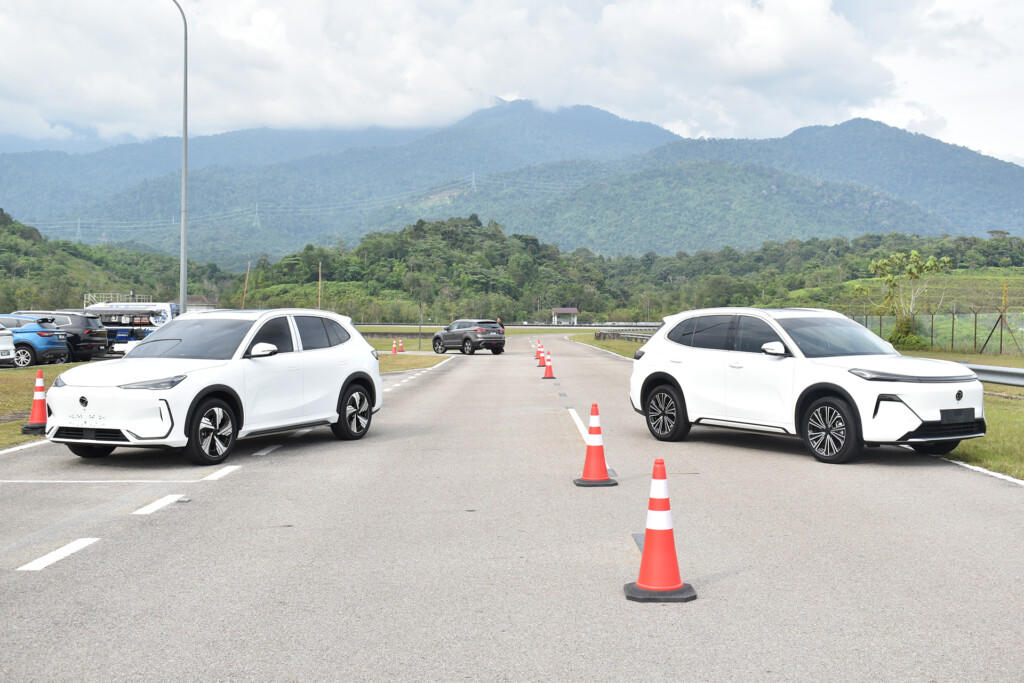
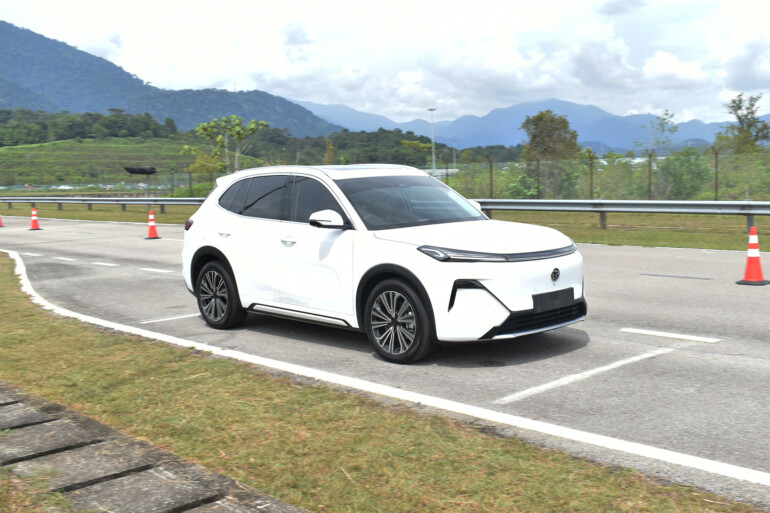
Visually, I’d argue the e.MAS 7 PHEV is actually the more attractive sibling.
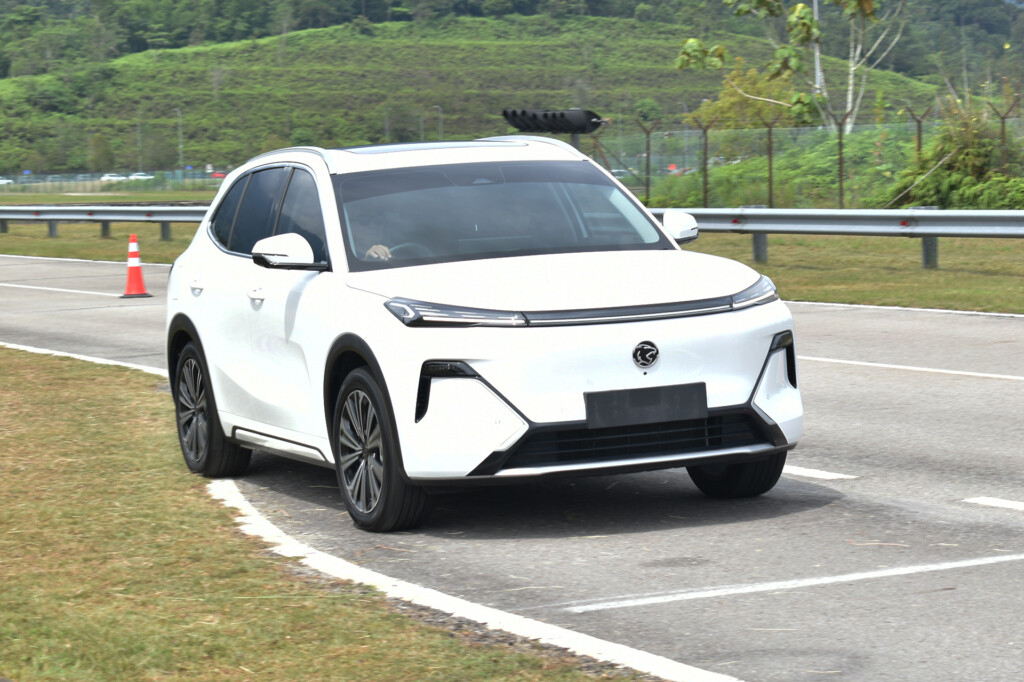
Its revised front apron lends the car a more chiselled appearance, while the full-width daytime running light signature gives it a greater sense of presence on the road. Conventional door handles replace the flush-fitting items found on the EV, presumably in the interest of simplicity or cost, although I suspect many owners will appreciate their straightforward operation.
The handsome 19-inch multi-spoke alloy wheels fitted to the Premium variant certainly help matters too.
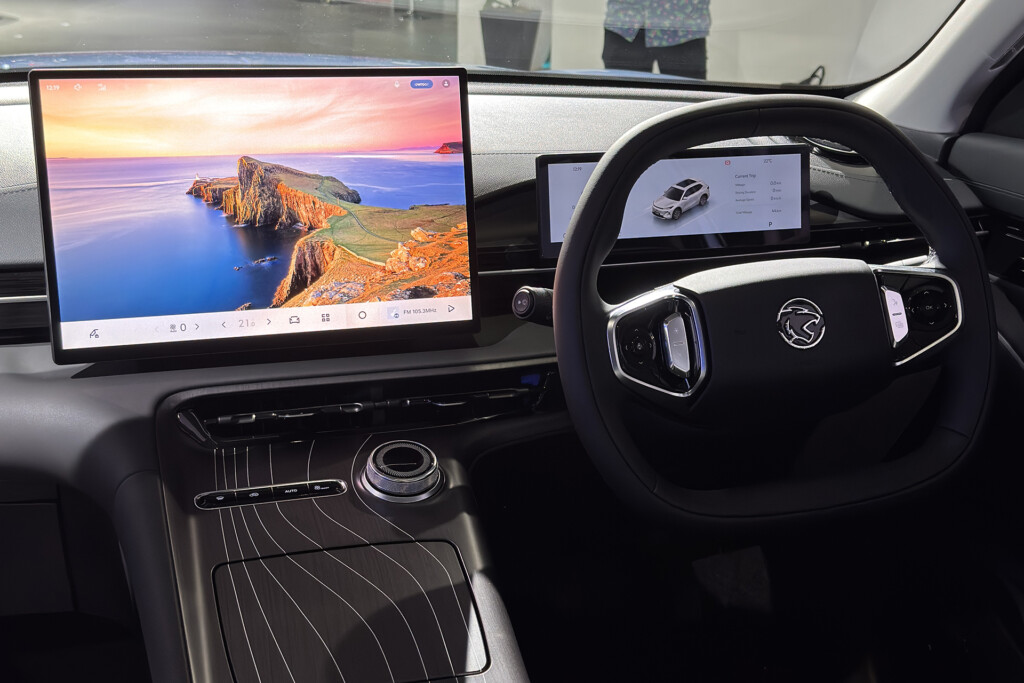
Familiarity immediately takes over when you enter the cabin. Anyone who has experienced the fully-electric e.MAS 7 will feel right at home here. The dashboard architecture remains virtually unchanged, centred around a sizeable 15.4-inch touchscreen responsible for controlling most vehicle functions.
Yes, physical buttons would still be appreciated, particularly for frequently used functions, but such is the direction modern automotive interiors continue to take.
Premium specification brings a 16-speaker Flyme Sound audio system, a 10.2-inch digital instrument cluster, a 13.8-inch head-up display, wireless smartphone charging and 256-colour ambient lighting, among numerous other conveniences.
Dimensionally, the PHEV also enjoys a slight advantage over its EV counterpart. It measures 125mm longer, 39mm wider and 15mm taller, while its wheelbase grows marginally by 5mm.
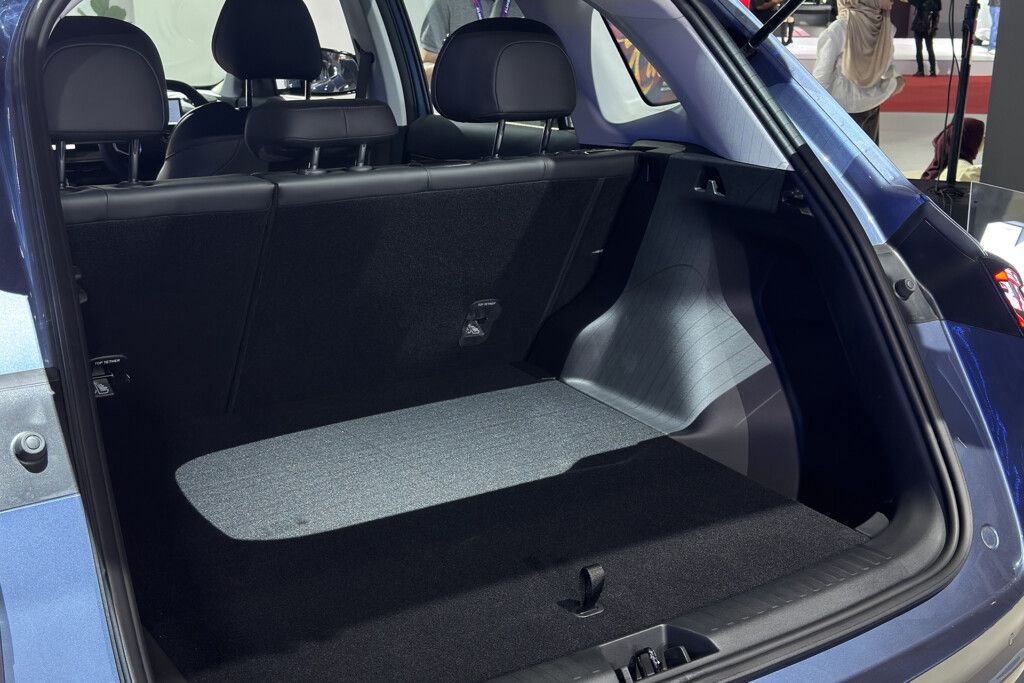
The differences are largely imperceptible from within the cabin, but they do translate into greater practicality. Boot capacity now stands at 528 litres, representing a useful 67-litre improvement over the EV. The only casualty is the underfloor storage compartment, sacrificed in favour of accommodating the fuel tank.
A start to a new beginning
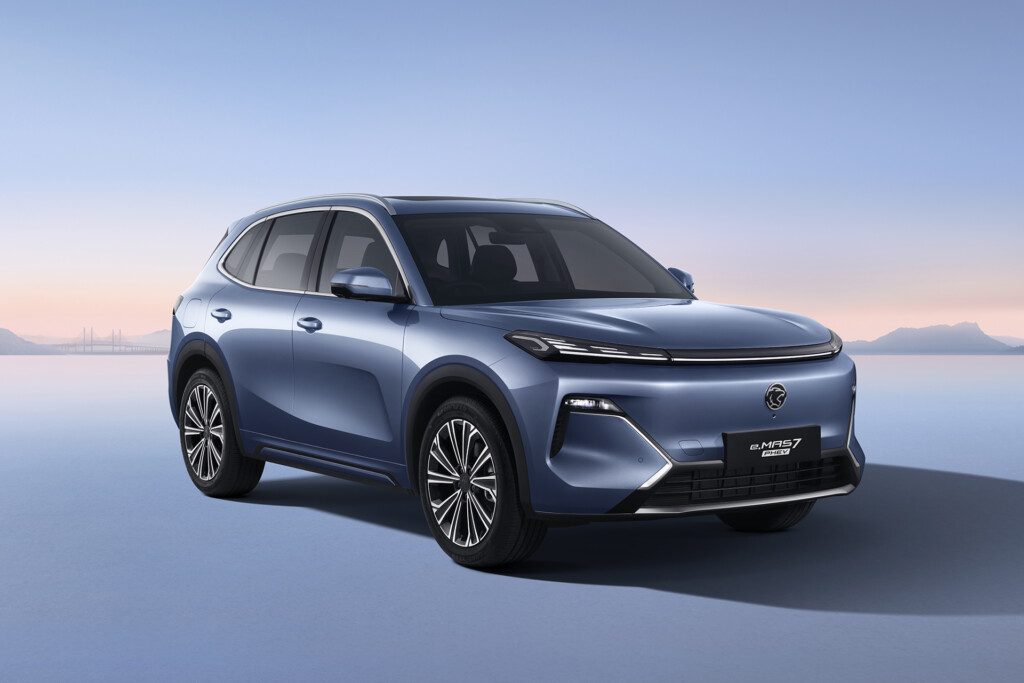
The e.MAS 7 PHEV feels like an important car for Proton. Not because it is revolutionary or because it rewrites the plug-in hybrid rulebook, but because it demonstrates just how quickly the company has matured in the electrified space.
It looks handsome, offers an impressively equipped cabin, delivers strong real-world usability, and possesses the sort of efficiency that should prove highly attractive to buyers not yet ready to make the full leap into electric motoring.
The plug-in hybrid formula remains one of the easiest gateways into electrification, offering many of the advantages of an EV without introducing range anxiety into the ownership equation. In that regard, Proton has understood its audience perfectly.
Read more automotive news at AutoApp, or check out our latest videos on YouTube and on TikTok!