
Singapore’s Land Transport Authority (LTA) has announced changes to the Preferential Additional Registration Fee (PARF) rebate structure, which will take effect for cars registered from 13 February 2026 onwards.
The move, unveiled as part of Budget 2026, tightens the rebate percentages and halves the maximum rebate cap — a shift that will affect owners who deregister their vehicles early, and could influence decisions around keeping or replacing cars.
What’s Changing
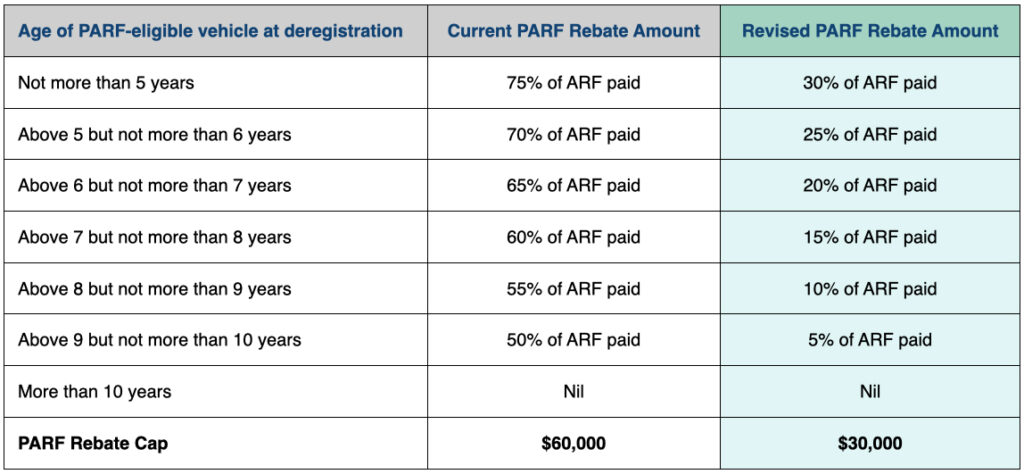
PARF rebates reward owners who deregister their cars early, effectively refunding a portion of the Additional Registration Fee (ARF) based on the vehicle’s age. The revised structure reduces both the percentage rebates and the cap, especially for newer cars.
Below is a comparison of the old and new PARF rebate schedules:

What This Means for Drivers
The reduction in rebate percentages — especially for younger cars — means owners will receive significantly less back if they choose to deregister early.
The lowered rebate cap (from $60,000 to $30,000) also limits the maximum payout, even if the calculated rebate would otherwise exceed the cap. This makes early deregistration less financially attractive than before.
On-the-ground impact:
- Over a 10-year cycle, annual depreciation increases.
- Used cars with the current scheme may seem more attractive.
- Owners who drive their car ’till the end’ will no longer have a sum to put into their next car.
- Banks, financial institutions, and insurance companies will begin to rely on projected residual values.
Likely to influence:
- How long owners keep their cars
- Decisions around exporting or replacing vehicles
- Used car pricing and trading patterns
Owners of vehicles outside the PARF scheme (such as certain commercial or speciality cars) remain unaffected.
Broader Context
The PARF revision builds on earlier changes that introduced the rebate cap alongside a more progressive ARF structure. At the same time, Singapore continues to promote cleaner transport through other schemes tailored to electric vehicles and lower-emission cars.

Final Take
The revised PARF rebates and lower cap mark a meaningful tightening of the policy, especially for cars deregistered early in their life. This change nudges owners to rethink the timing of deregistration and replacements, while reinforcing broader objectives for a newer, cleaner vehicle fleet. Will there be an even higher uptake on EVs?
Car owners, dealers and fleet planners should take note of these revisions as they make decisions in 2026 and beyond.