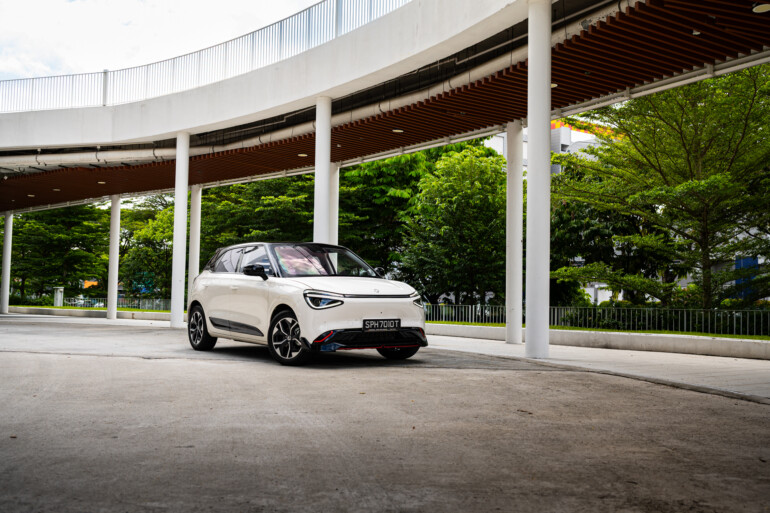
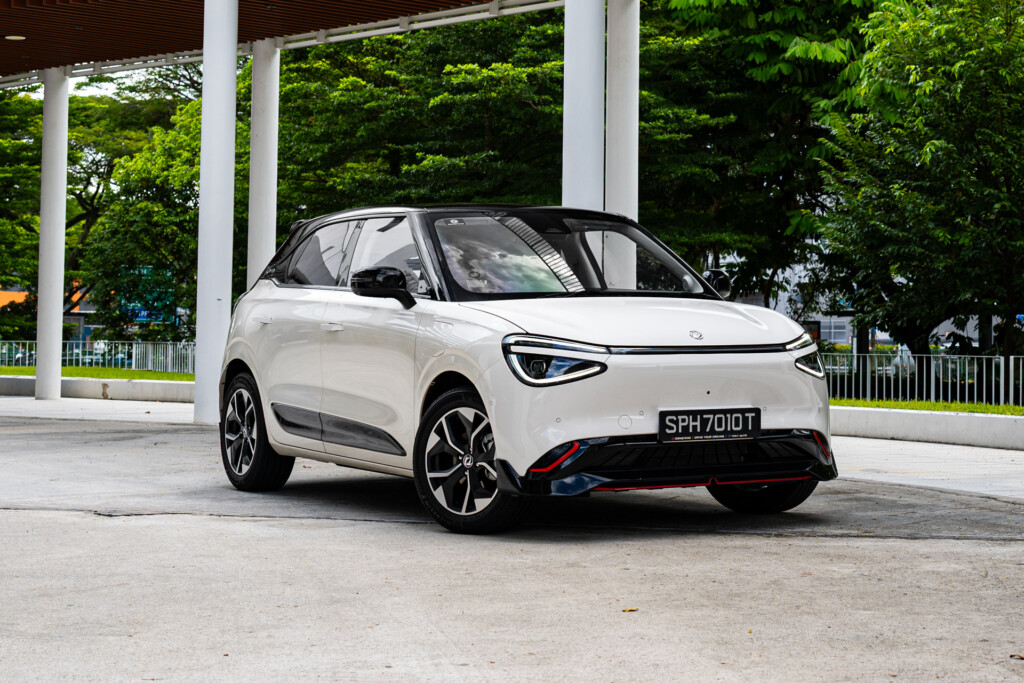
The Dongfeng Box R has red accents, a roof spoiler, sportier wheels and an R in its name. But, it would be more appropriate to label R as Refinement rather than Racing.
It still has 94bhp, so before anybody starts searching for lap times, perhaps some expectations need managing. This is not Dongfeng’s answer to the Volkswagen Golf R, Hyundai Ioniq 5 N or anything else designed to turn tyres into smoke.
Underneath, it is fundamentally the same Box I drove previously: the same 42.3kWh battery, the same 70kW electric motor and the same 160Nm of torque going through the front wheels.
What Dongfeng has done instead is give the Box a mild makeover with sharper clothes and better shoes.
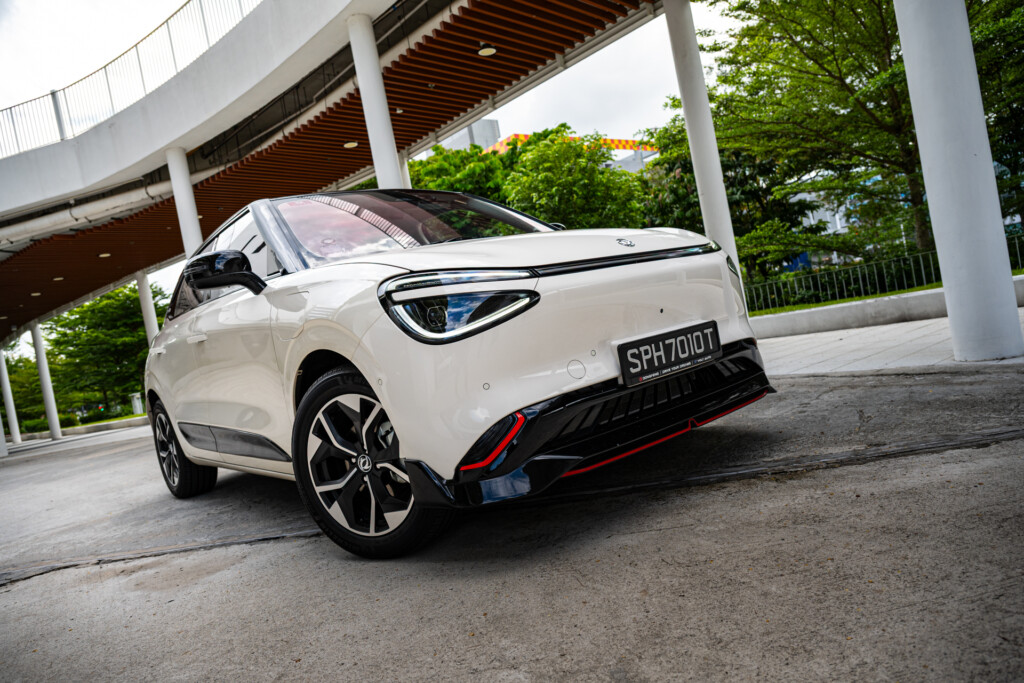
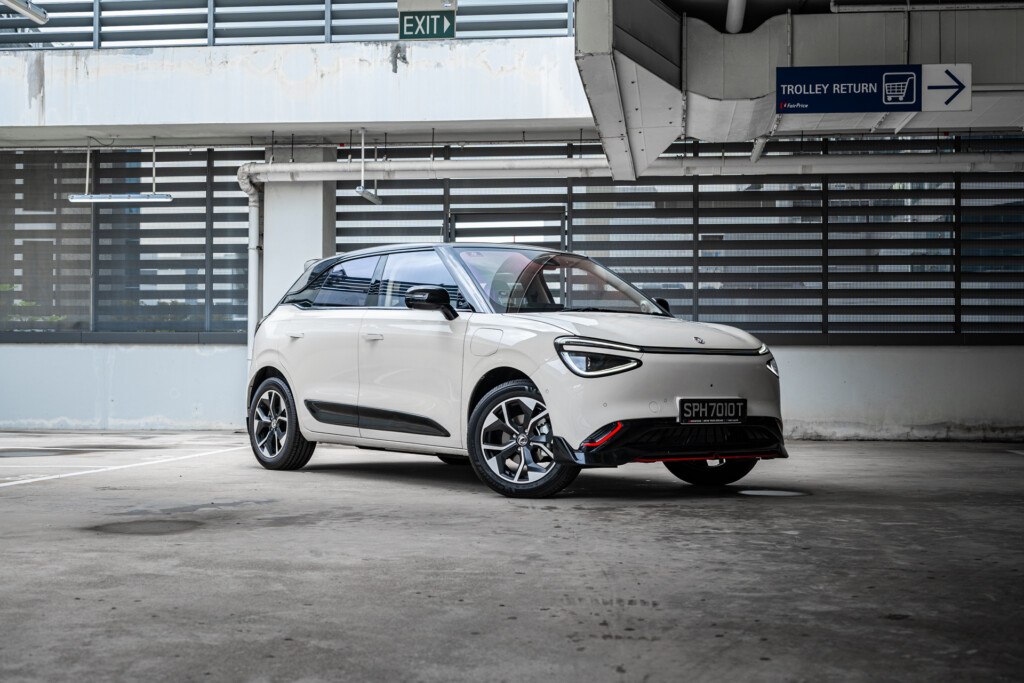
The original Box is unapologetically adorable. Its rounded body, expressive lighting and colourful paint choices make it look almost deliberately friendly, which is refreshing in an era where seemingly every small car wants to have an angry face.
The Box R instead tries to toughen things up. A new front lip gets red or yellow highlights depending on specification, matched by similar detailing around the rear bumper. Gloss-black trim now appears across the roof and portions of the doors, while a roof spoiler adds a little more visual aggression.
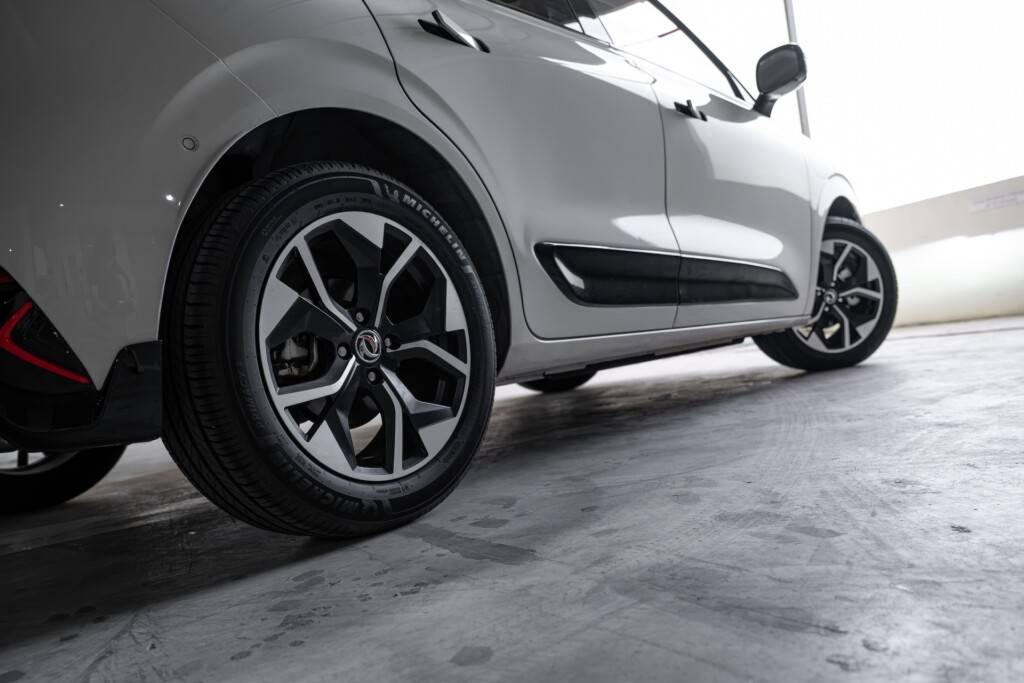
The 17-inch wheels are new as well; they are still the same diameter as before, but the design makes them appear larger, which helps fill out the arches slightly better.
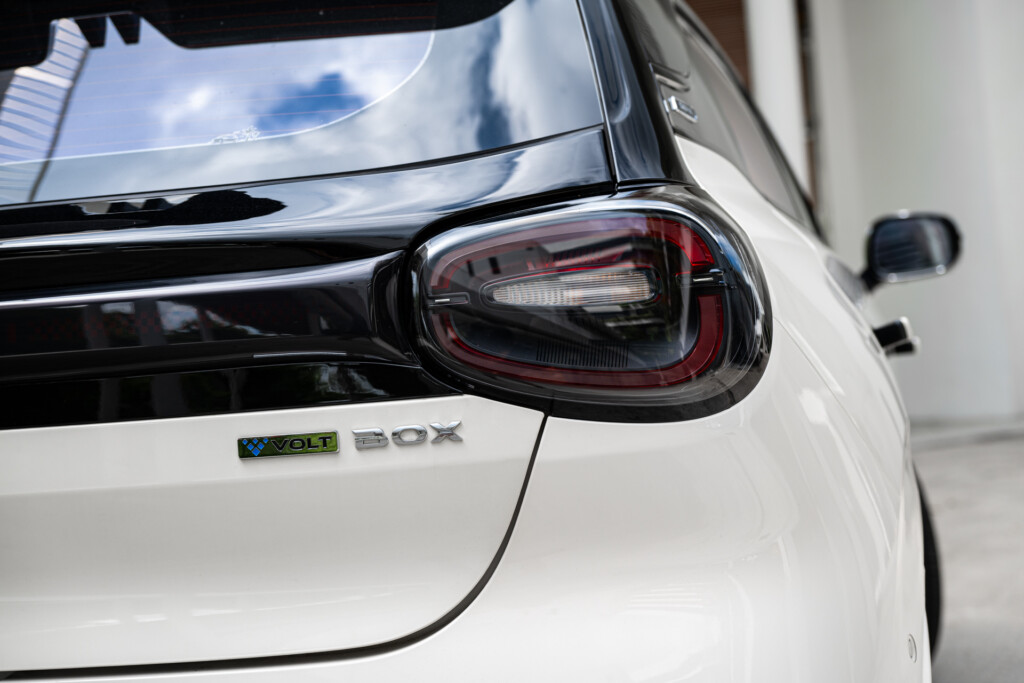
At the back, there is also a new central lighting element displaying the car’s domestic-market NAMMI name when the brakes are applied.
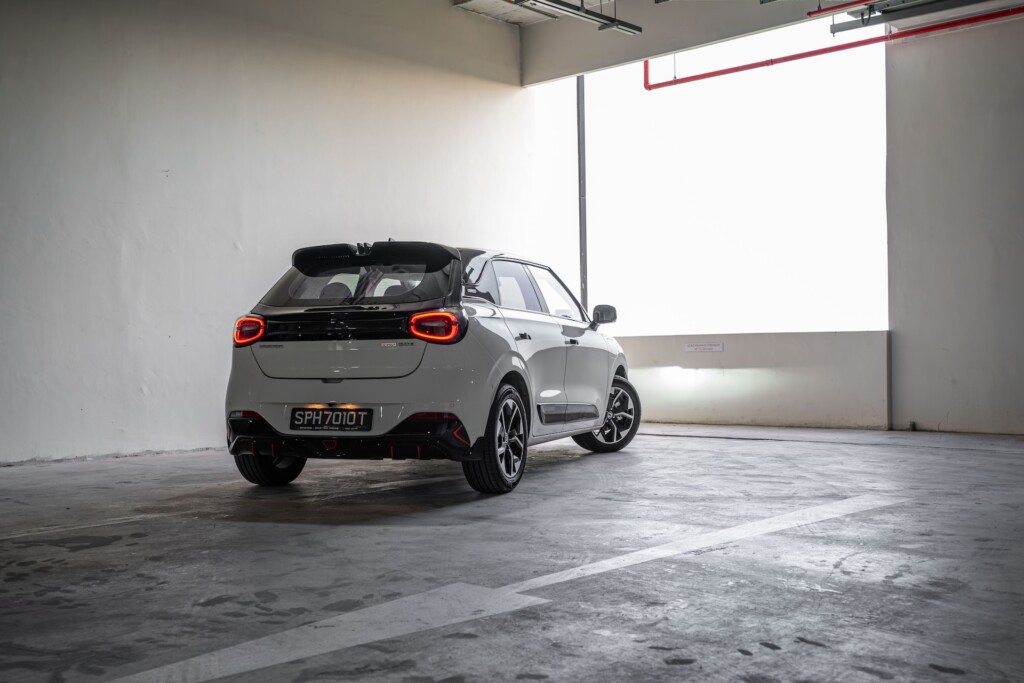
Thankfully, none of the cosmetic additions interferes with what made the original Box appealing.
At 4,030mm long and 1,810mm wide, it remains genuinely compact by modern standards, while the 2,660mm wheelbase is impressively generous relative to its overall length. That makes it a rather natural fit for Singapore.
And because there is a 540-degree camera system plus automatic parking, even those who regard parallel parking as a personal attack have plenty of assistance available.
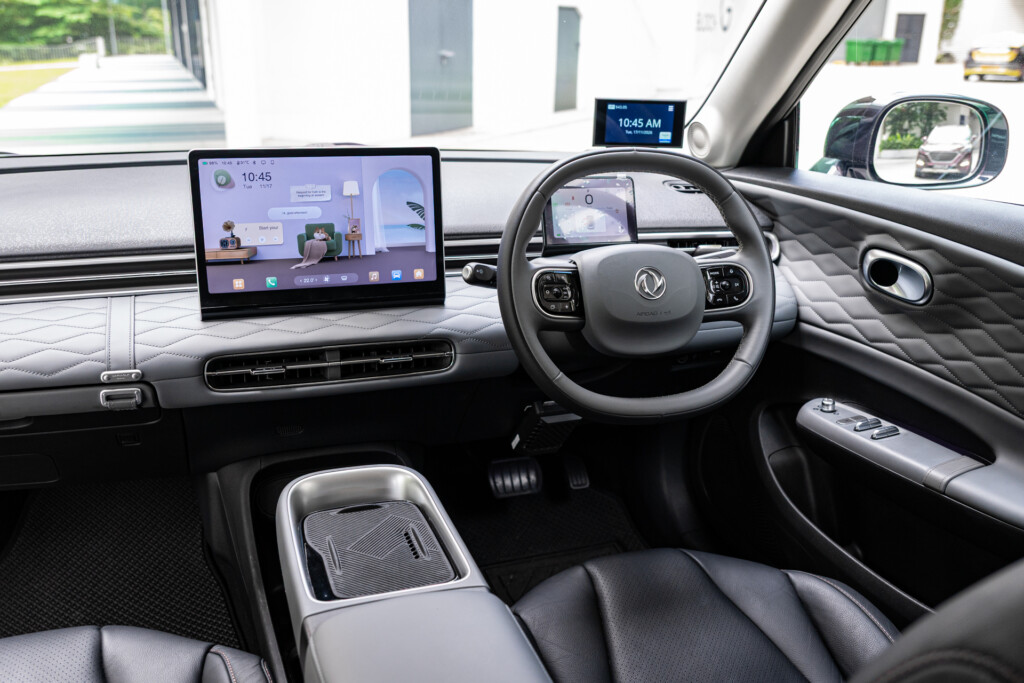
The R treatment becomes more meaningful once you open the doors. The regular Box uses synthetic upholstery, and only the driver’s seat gets ventilation.
The Box R upgrades all the seats to genuine leather, complete with coloured stitching that matches the exterior accents. More importantly, both front seats are now ventilated.
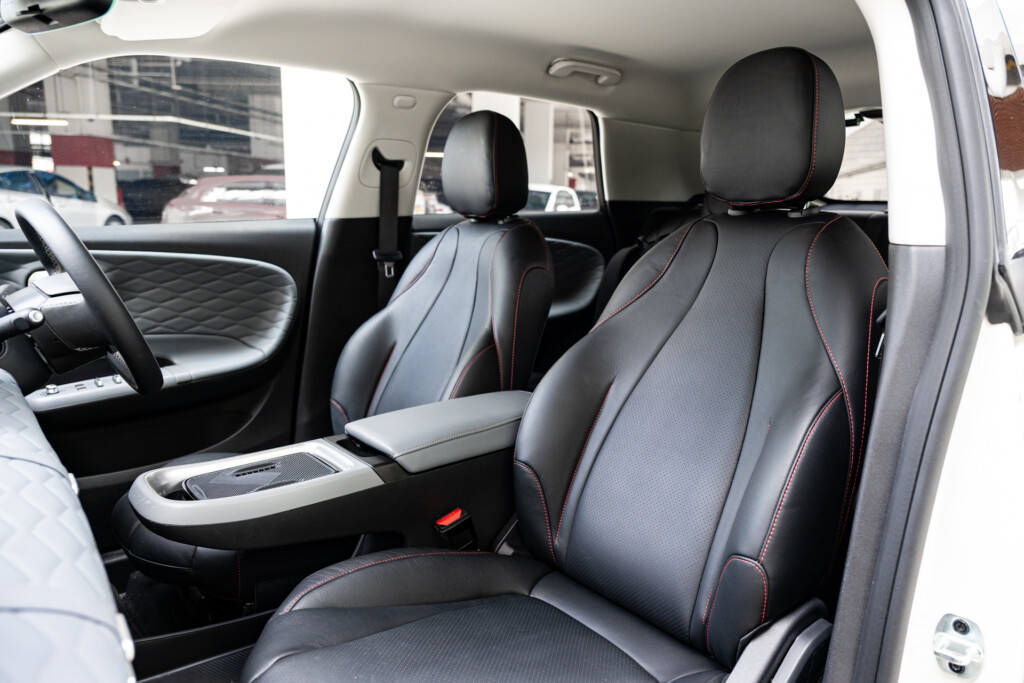
There is still a 12.8-inch central touchscreen offering wireless Apple CarPlay and Android Auto, accompanied by a small driver’s display ahead of the steering wheel. The interface is responsive enough, and most commonly used functions are straightforward once you become familiar with where everything lives.
Although, the infotainment system still lacks a proper dark mode. This becomes obvious at night when the bright display suddenly seems determined to illuminate your face for an interrogation.
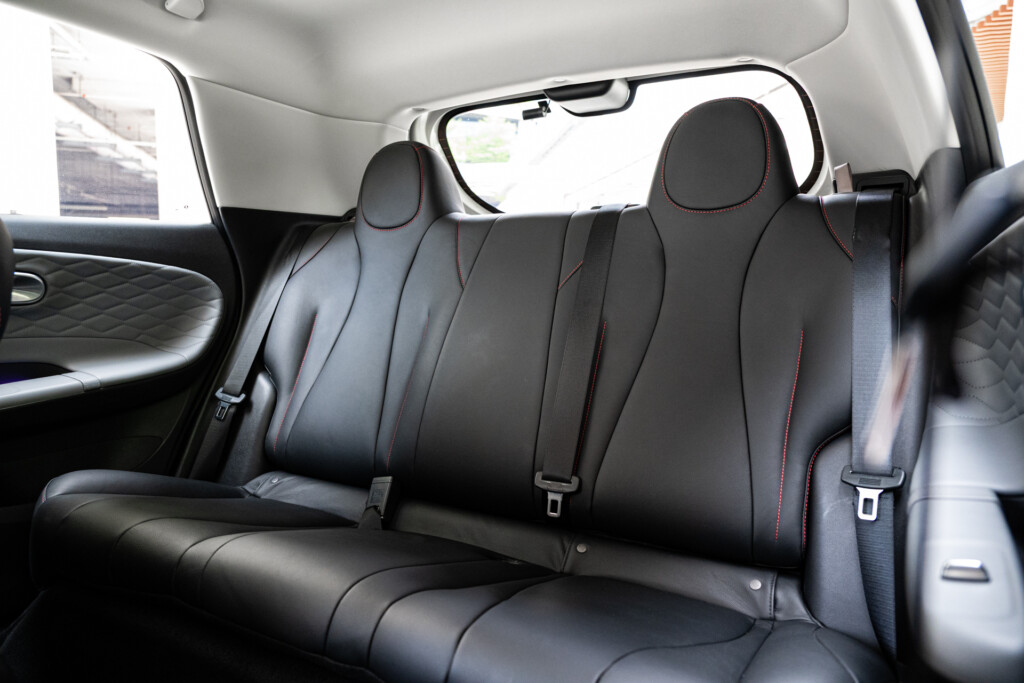
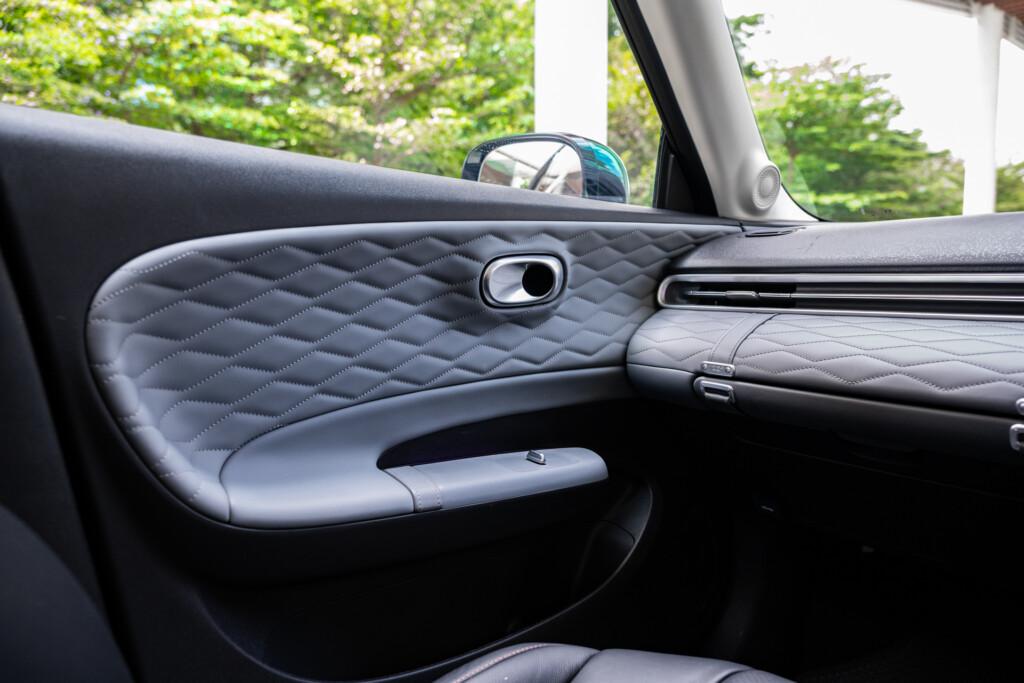
The cabin design is still whimsical without being ridiculous. Quilted surfaces, rounded elements and playful detailing prevent it from feeling like the cheapest car in the showroom.
And despite the compact exterior dimensions, the Box continues to offer surprisingly generous rear accommodation. There is a flat floor, decent knee room and enough width for two adults to sit comfortably.
Three will fit. Whether they remain comfortable depends on how fond they are of one another.
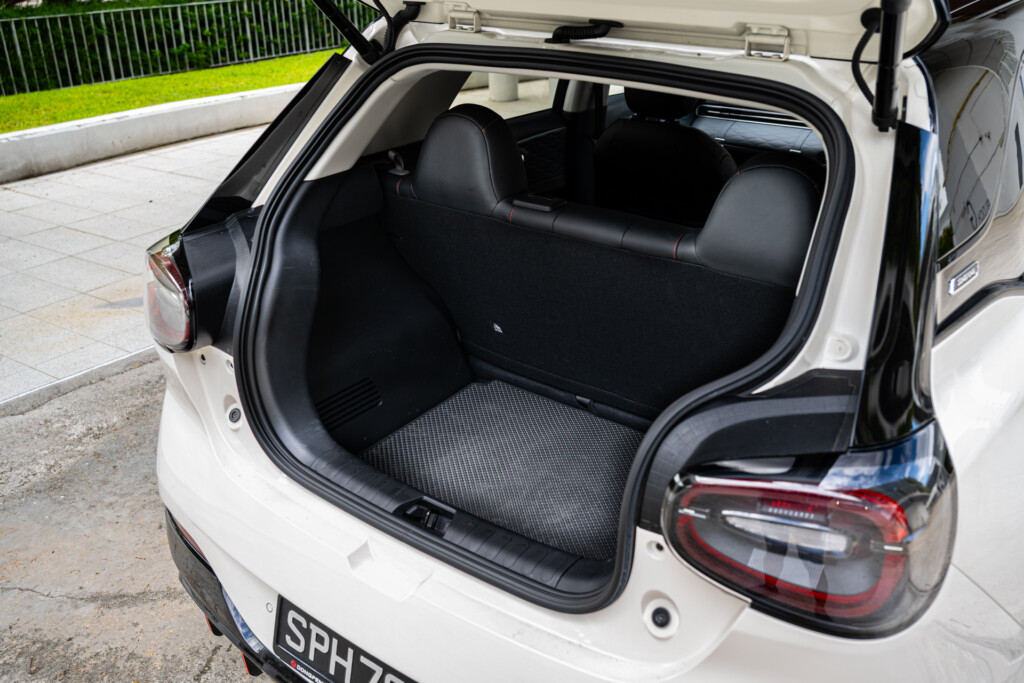
You still get 326 litres of luggage capacity with the rear seats upright, expanding to 945 litres once they are folded, proving once again that cars do not necessarily need to become enormous in order to become practical.
There is an electrically operated tailgate as well. On something this small, this feels slightly indulgent.
The Box R uses the same single permanent-magnet electric motor driving the front wheels, producing 70kW, or 94bhp, and 160Nm of torque.
If you were hoping for more performance to match the new styling, I have unfortunate news: there isn’t any.
But as with all EVs, electric motors provide their torque immediately, so the Box R feels much livelier during the part of acceleration that matters most in Singapore.
From a traffic light to 50km/h, it moves away smartly. And because the car weighs only around 1,342kg, it never feels as burdened by its modest output as the figures initially suggest.
The more important change is underneath the wheels, where the Box R gets Michelin Primacy 5 tyres, replacing the more budget-oriented rubber fitted to the regular Box.
The original Box had a reasonably capable chassis, but its factory tyres were often the limiting factor. Ask too much from them and the front end quickly reminded you that outright grip was not high on the specification sheet.
With the Michelins, there is noticeably more bite from the front tyres, particularly when accelerating out of tighter corners or carrying more speed through longer bends. Wheelspin is less eager to appear, and the car generally feels more secure when the road gets wet.
The rest of the driving experience remains familiar. The steering is light, which makes the Box effortless to manoeuvre. The suspension is tuned towards comfort, absorbing ordinary urban bumps without becoming excessively floaty.
And because the car itself is relatively narrow and light, there is a pleasant sense of agility that many larger EVs simply cannot replicate.
Plus, the Box R retains adaptive cruise control, lane-keeping assistance, the comprehensive camera system and automatic parking that was already available on the normal Box. There is also keyless entry, powered front-seat adjustment, wireless smartphone connectivity and a host of active-safety functions.
Battery capacity remains 42.3kWh, with Dongfeng quoting up to 430km (CLTC). Real-world testing puts achievable range closer to roughly 375km, depending on conditions and driving style.
AC charging tops out at 6.6kW, while DC fast charging reaches around 70kW on the latest local specifications. Dongfeng quotes roughly 30 minutes for a 30-to-80 per cent DC charge, which is entirely manageable given the battery’s size.
When the Dongfeng Box arrived in Singapore in 2024, the affordable EV hatchback category was relatively empty. Since then, cars such as the BYD Atto 1 and Aion UT have since arrived, giving buyers more choice around the lower end of the Cat A EV market.
At the time of this review, the Box R is priced from S$186,888, against S$180,888 for the regular Box. Is that worth S$6,000 to upgrade? I think it is.
Dongfeng has taken an already likeable little EV and tidied up some of the details that mattered. So perhaps the badge was right after all. R just stands for the wrong thing.
Technical Specifications
Dongfeng Box R
Powertrain: Single Electric Motor, Front-Wheel Drive
Power: 70 kW (94 bhp)
Torque: 160 Nm
Gearbox: Single-Speed (A)
Acceleration: 12.5 Seconds (0-100km/h)
Top Speed: 140 km/h
Battery Capacity: 42.3 kWh
Drive Range: 430 km (CLTC)
Energy Consumption: 5.2 km/kWh
Price: S$186,888 with COE (accurate at the time of this article)
Read more automotive news at AutoApp, or check out our latest videos on YouTube and on TikTok!