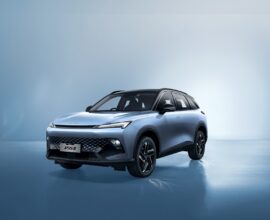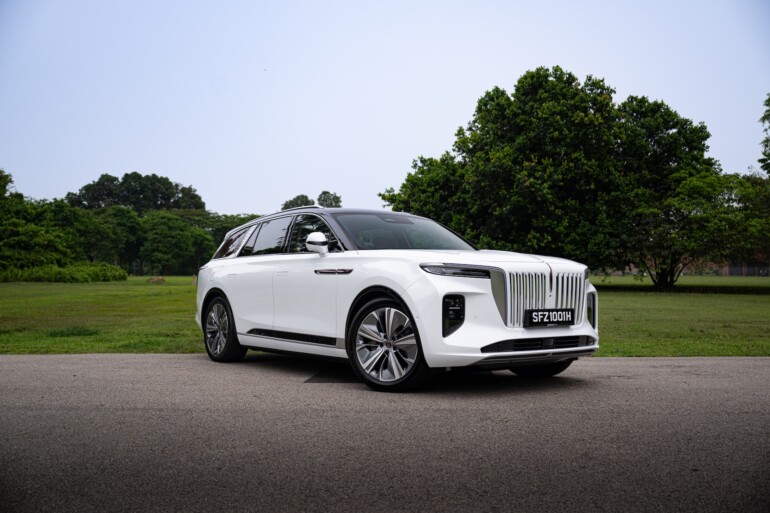
The Hongqi E-HS9 is more than five metres long, weighs 2.6 tonnes and has a grille that looks capable of issuing diplomatic instructions.
Something peculiar happens when you drive a Hongqi E-HS9. Traffic moves.
Not dramatically. Nobody mounts the kerb or salutes as you pass. But there is an unmistakable sense that people notice this enormous SUV appearing in their mirrors and quietly decide that perhaps now would be a good time to leave a little more room.
It may be the sheer size, or perhaps Hongqi’s long association with Chinese dignitaries has somehow been absorbed into the sheet metal.
Whatever the reason, the E-HS9 possesses amazing presence. And at half a million dollars, this behemoth makes you feel something before you even turn it on.
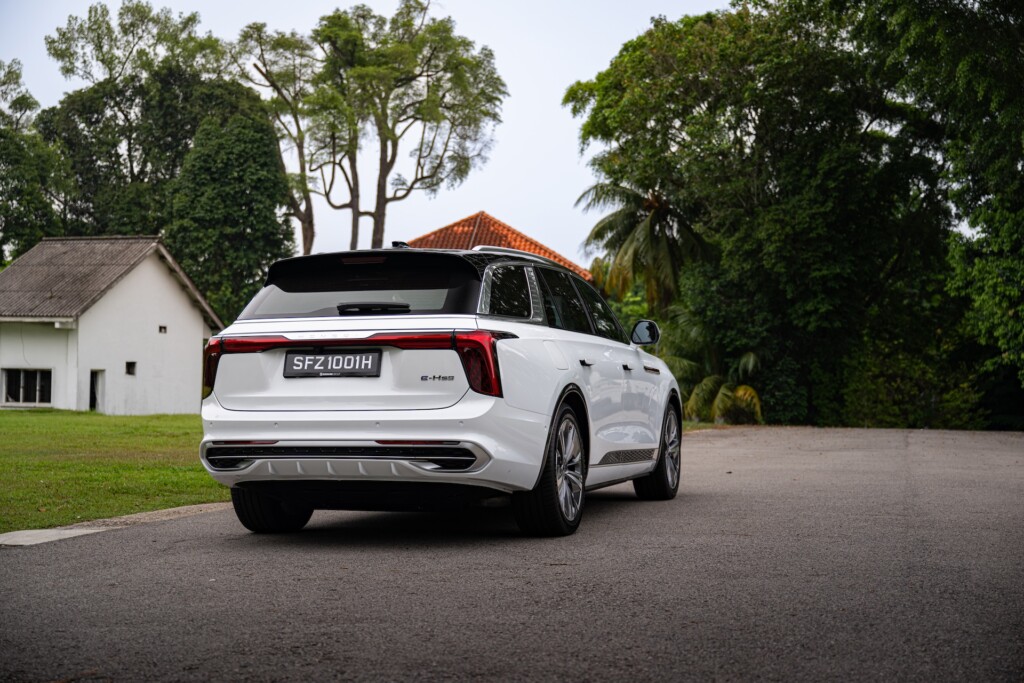
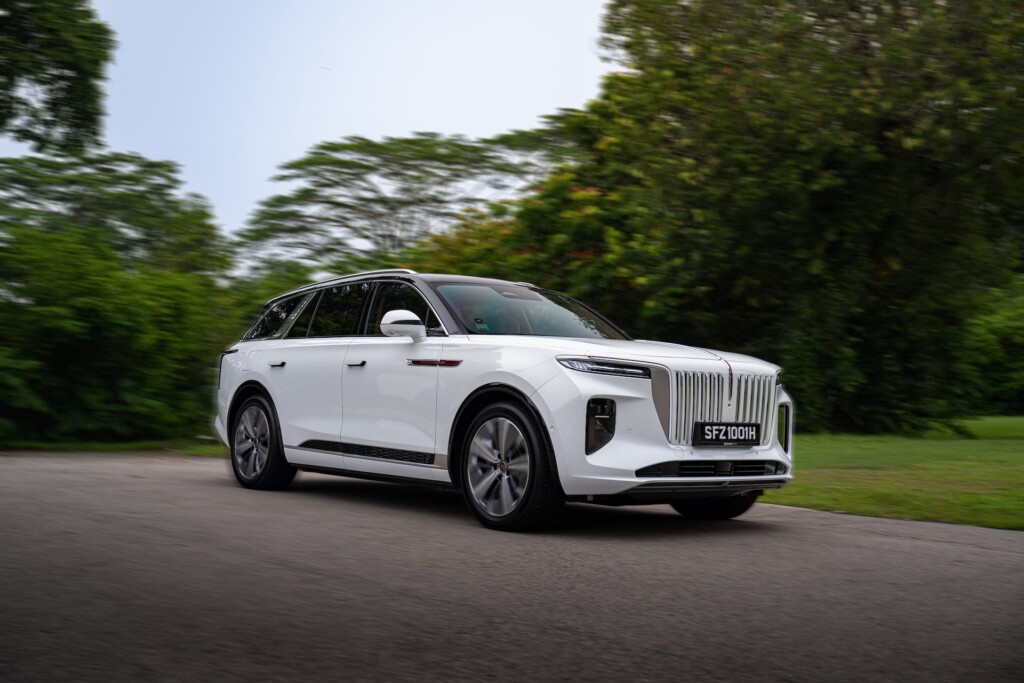
The first thing to understand is that the E-HS9 is enormous. Measuring 5,209mm long and 2,010mm wide, with a 3,110mm wheelbase, it is marginally larger than some of the already substantial luxury SUVs from BMW and Mercedes-Benz.
The scale is exaggerated by the styling, where an enormous vertical grille at the front is divided by chrome slats and bisected by Hongqi’s distinctive red motif. A long bonnet stretches away from the windscreen, while relatively formal surfacing makes the car look stately.
Hongqi’s modern design language was later shaped under Giles Taylor, formerly design director at Rolls-Royce Motor Cars. This explains why the E-HS9 has occasionally been called a Chinese Rolls-Royce.
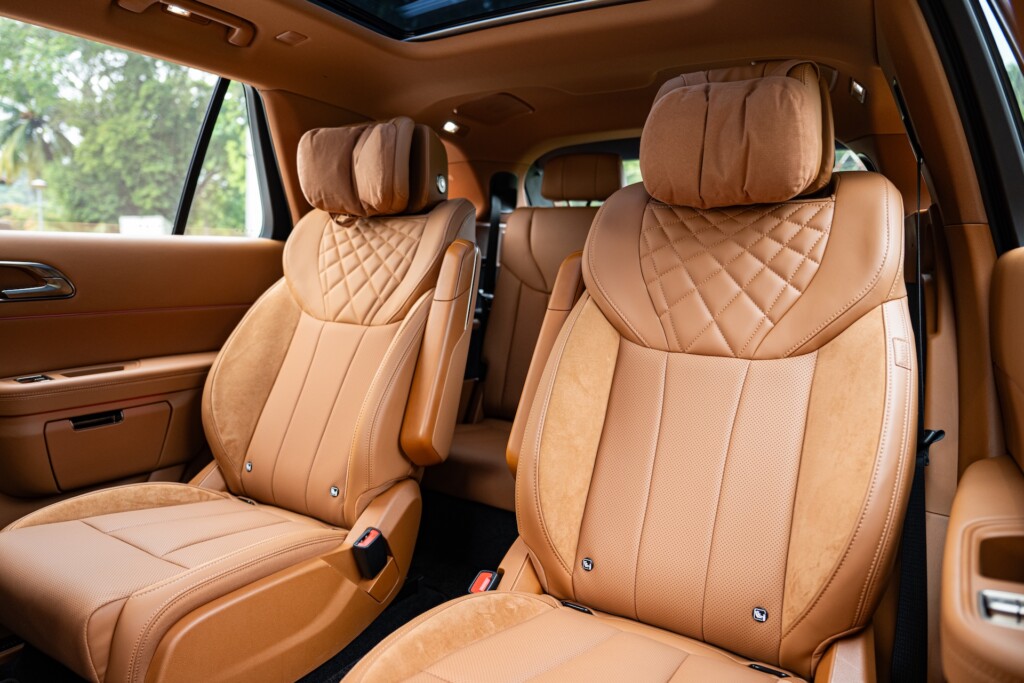
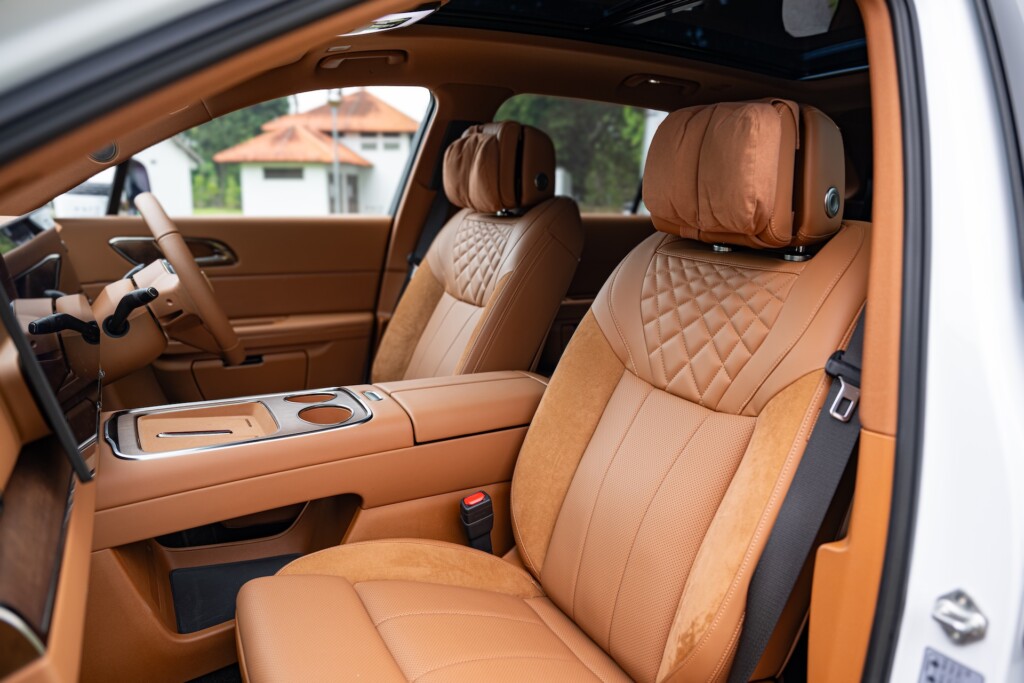
The Singapore-specification E-HS9 is configured as a six-seater, with two individual chairs in the second row and another pair of seats behind them. Premium leather, Alcantara, wood trim and metal detailing do their best to emulate the car’s flagship status.
There are soft pillows attached to the headrests. The front seats are ventilated and offer massage functions. The two chairs in row two are ventilated as well, while four-zone climate control looks after much of the cabin.
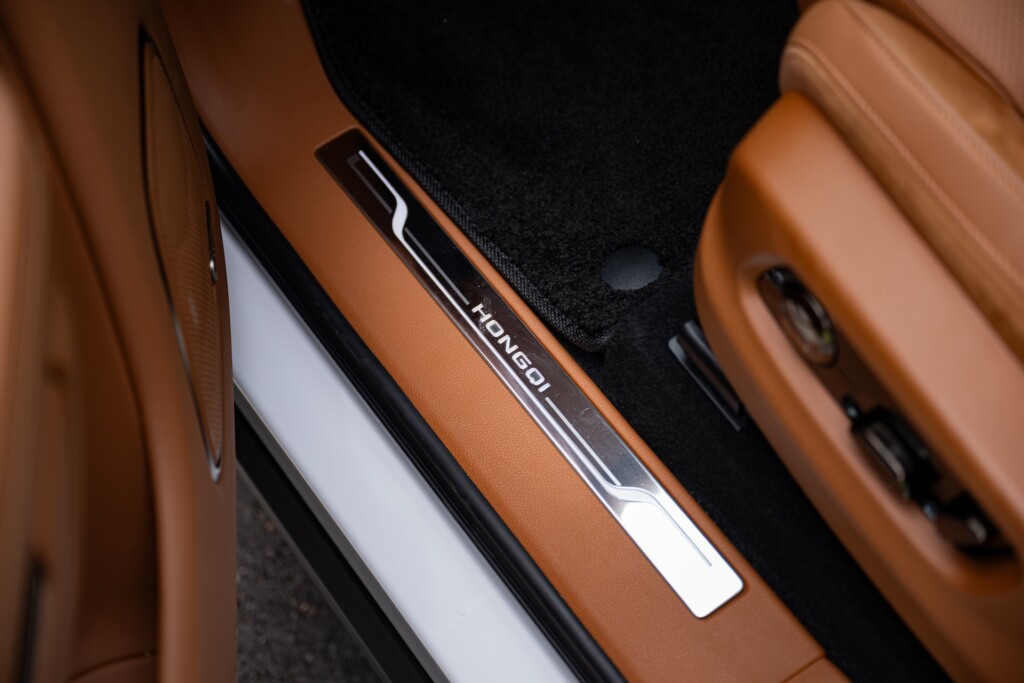
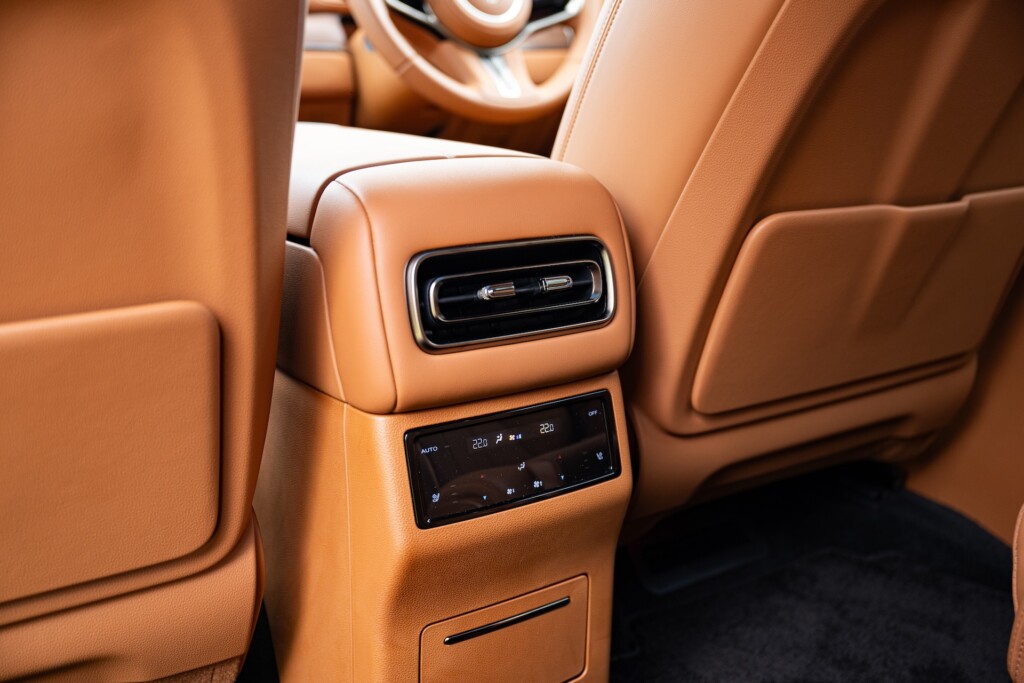
You quickly get the impression that the E-HS9 has been designed around being driven in rather than merely driven, and this becomes especially obvious in the second row.
Sink into one of those individual chairs, look out through the acoustic glass and the outside world begins to seem slightly less important. That is proper luxury.
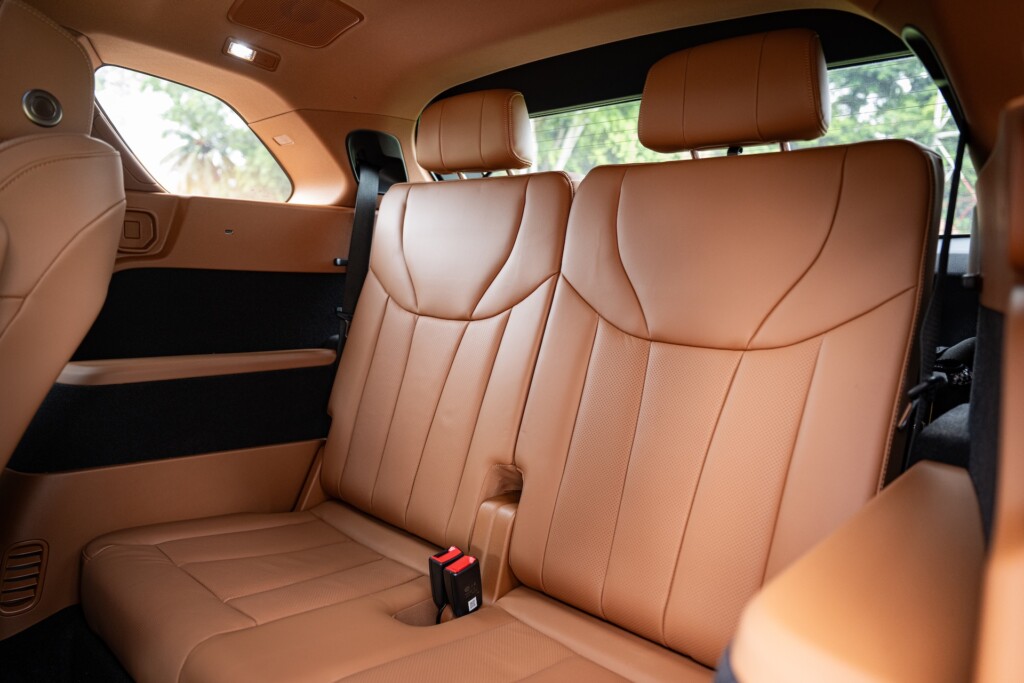
Civilisation becomes slightly less advanced in row three. Access is straightforward thanks to the gap between the second-row chairs, but legroom requires those ahead to surrender some of theirs. More strangely for something this large, there are no dedicated air-conditioning vents for the third row.
The final row therefore feels best reserved for children, shorter adults or people whose position in the family hierarchy has recently deteriorated.
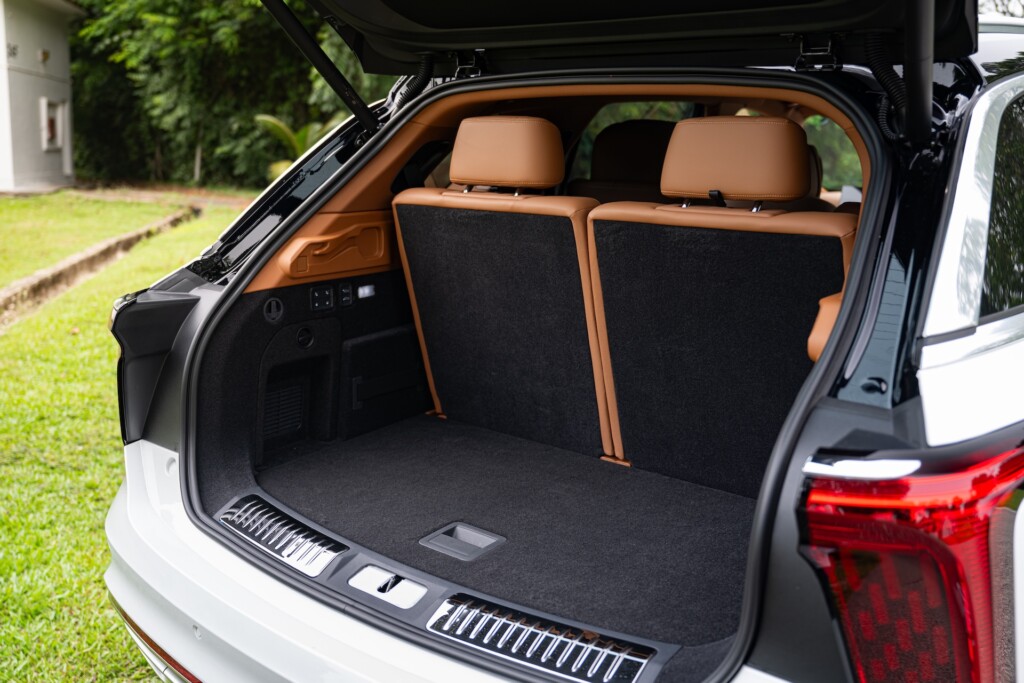
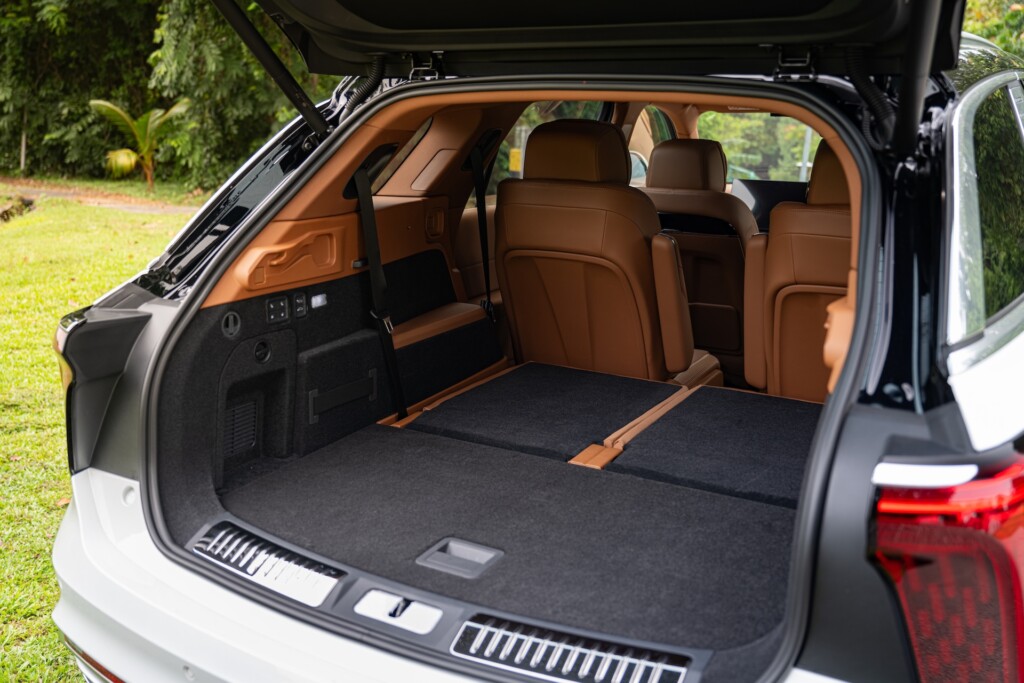
At least luggage space remains usable; with all six seats occupied, there are 255 litres available. Fold the rear rows and total capacity can expand to 1,747 litres.
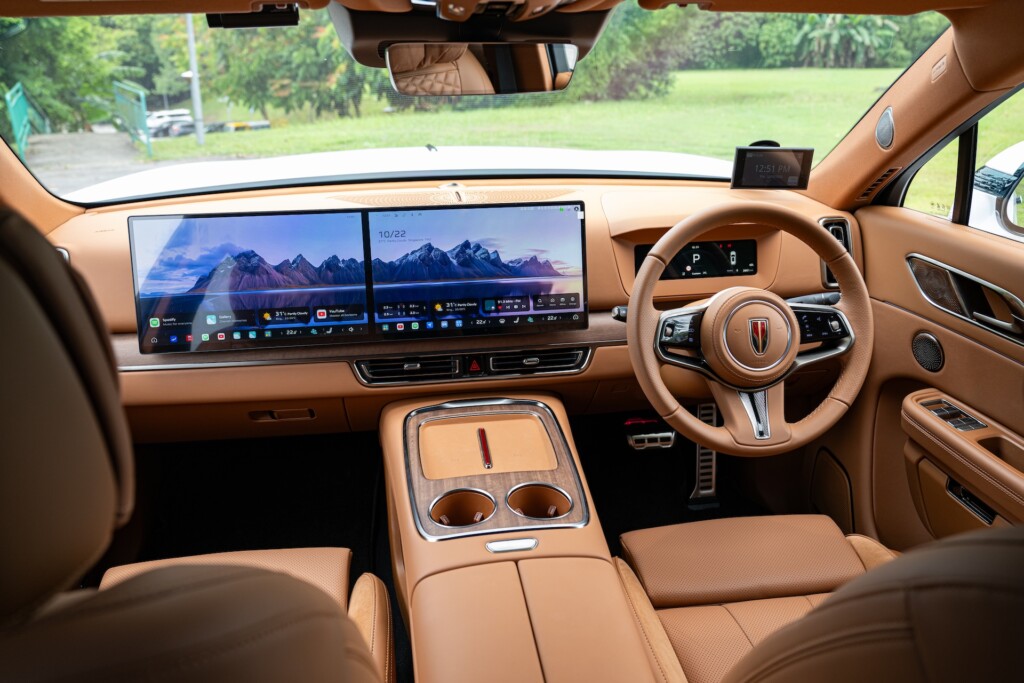
Up front, an 8.8-inch driver’s display is joined by two 15.6-inch touchscreens, one serving the central infotainment system and another facing the front passenger. A 16-speaker Bose audio system is standard.
The screens are large and colourful, with some particularly attractive oriental-themed backgrounds available.
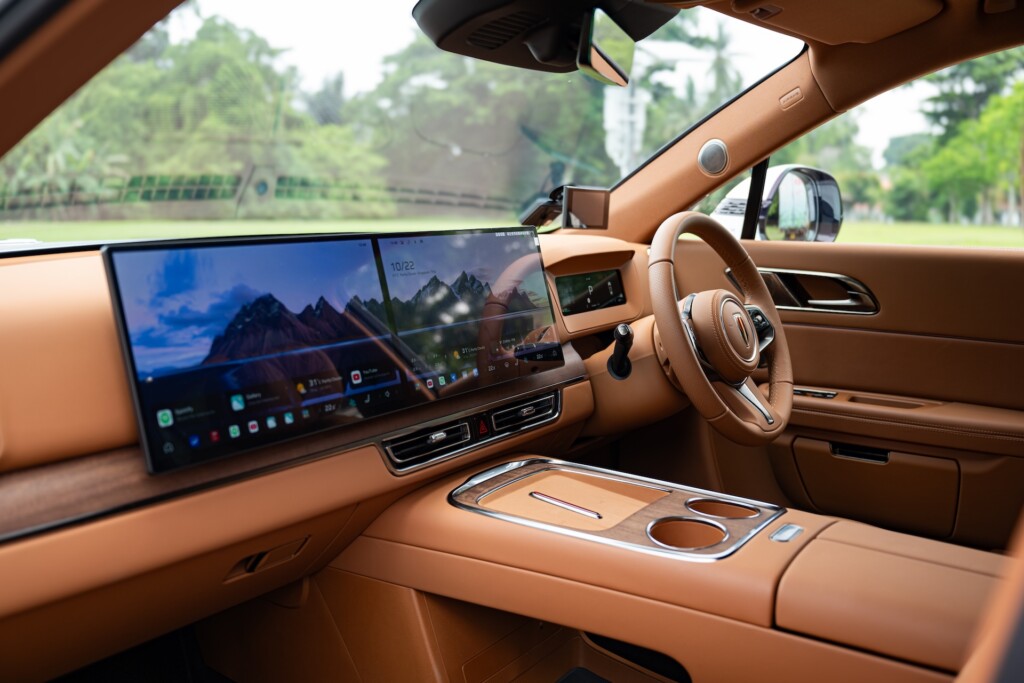
But, while the surrounding interior has traditional luxury cues – leather, wood, metal, broad surfaces – the displays appear almost as though somebody arrived late in the design process carrying two enormous tablets.
None of this ruins the experience. It merely reminds you that luxury is often found in integration rather than quantity.
There are two electric motors, one for each axle, giving the E-HS9 all-wheel drive. Together, they produce 367kW, or roughly 492bhp, and 606Nm of torque. This is enough to propel 2.6 tonnes of Chinese luxury from 0 to 100kmh in 5.5 seconds.
Most performance EVs seem determined to demonstrate their power by launching your internal organs towards the rear seats, but the Hongqi prefers to disguise how quickly it is moving.
Press the accelerator gently and it glides forwards. Press harder, and the scenery simply begins arriving faster.
There is no violent step in the power delivery and relatively little sensation of the drivetrain struggling against the car’s considerable mass.
You occasionally look down at the speedometer and realise you have gathered speed considerably more quickly than expected. That is what 492bhp feels like when the car would rather be a dignified limousine than a drag racer.
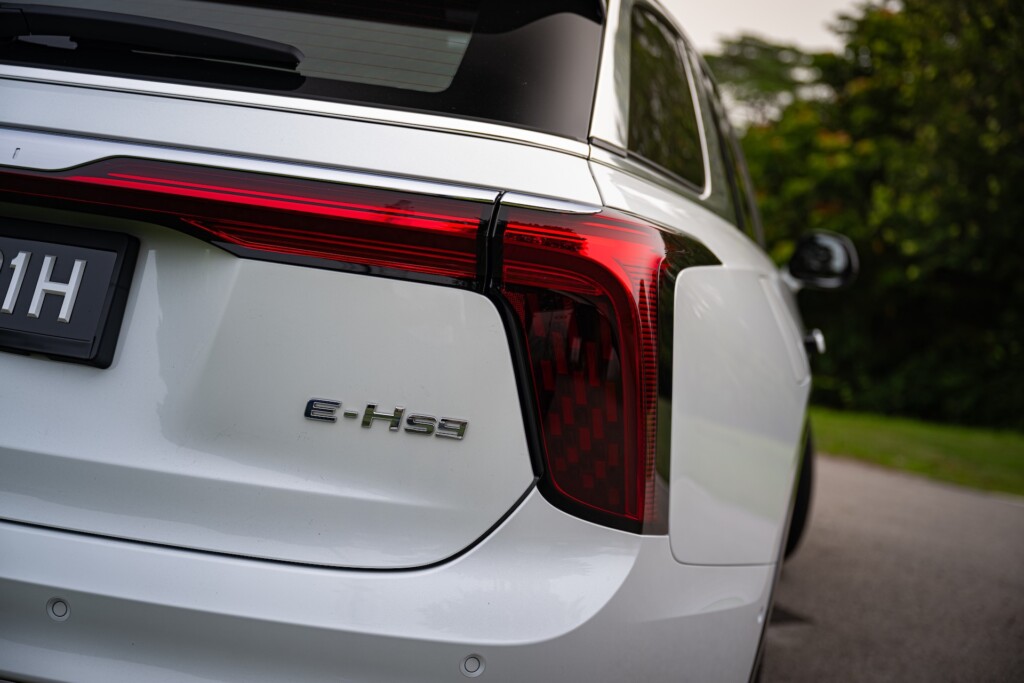
Even coming to a stop has been engineered around smoothness. The E-HS9 has a comfort-stop function designed to reduce the final little pitch that normally occurs as a car comes to rest.
Nobody sitting in the back wants to admire your late-braking technique. They want to finish replying to an email without their head nodding forward at every traffic light, so this feature is greatly appreciated.
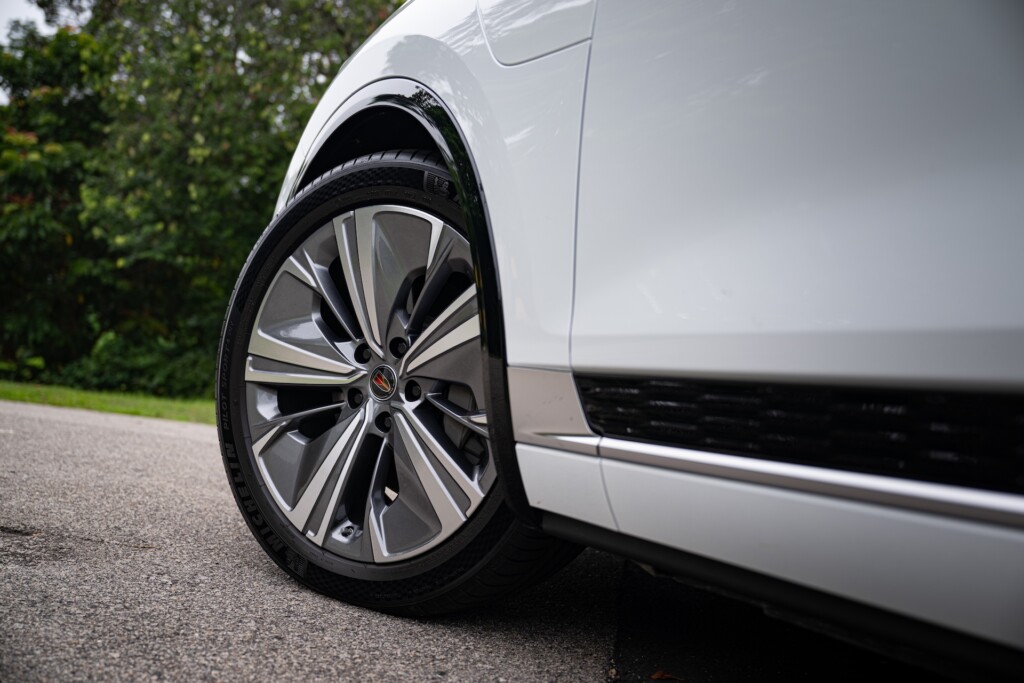
The best part of the E-HS9’s driving experience is its air suspension.
The system combines air springs with continuous damping control and can vary ride height by as much as 105mm. More importantly, it makes Singapore’s patchwork of expansion joints, road repairs and sunken surfaces feel irrelevant.
The car floats over most imperfections with an impressively soft first response, then settles without excessive secondary movement.
The steering is sensibly weighted and the body remains composed enough that you can guide it along a winding road without feeling as though you are captaining a small ferry.
Switching into Sport mode tightens things further, though anyone driving an E-HS9 aggressively may have slightly misunderstood their job description.
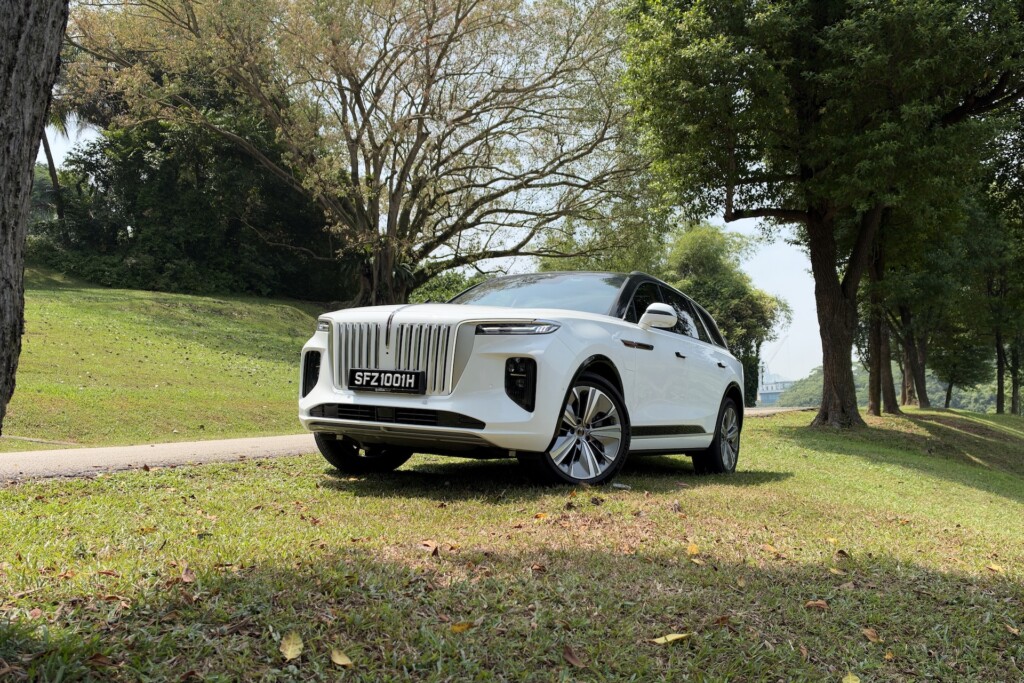
And you will not have to charge particularly often. The E-HS9 carries a gigantic 120kWh nickel-manganese-cobalt battery, currently one of the largest packs fitted to a passenger vehicle sold here.
Official WLTP range is 570km, so you could spend days going between home, work, Orchard Road and school runs before the battery display began making cautious gestures.
The drawback is charging speed. Since the E-HS9 uses a 400-volt electrical architecture, DC charging is maxed out at 140kW and AC at 11kW. A 10-to-80 per cent DC charge takes around 48 minutes. While it is perfectly usable, it is also no longer cutting edge.
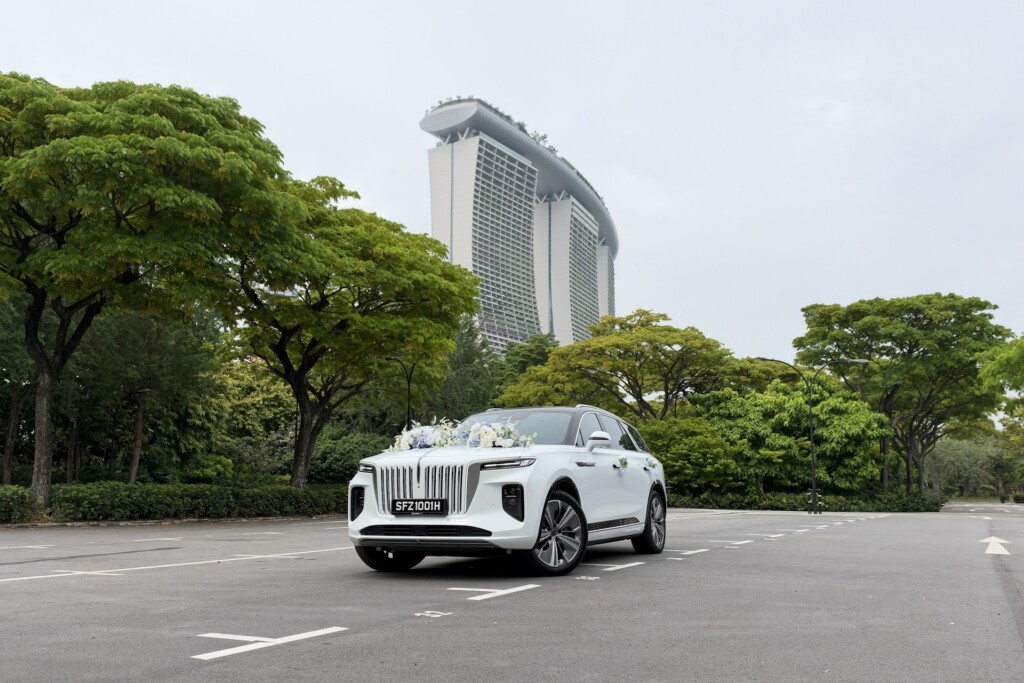
The official efficiency figure is 21.7kWh/100km, which is hardly surprising given the E-HS9’s dimensions and weight. Then again, nobody bought a penthouse because the utility bills looked economical.
I had the incredible pleasure of utilising the E-HS9 for wedding duties, and not once did it give me any range anxiety. Even after a weekend of intense travelling around the island, it still had more than a quarter charge left.
When you’re driving an EV, the last thing you want is to constantly wince over how little range you have left before a charge is required. The important thing is that the Hongqi’s huge battery provides enough range that the consumption does not become annoying.
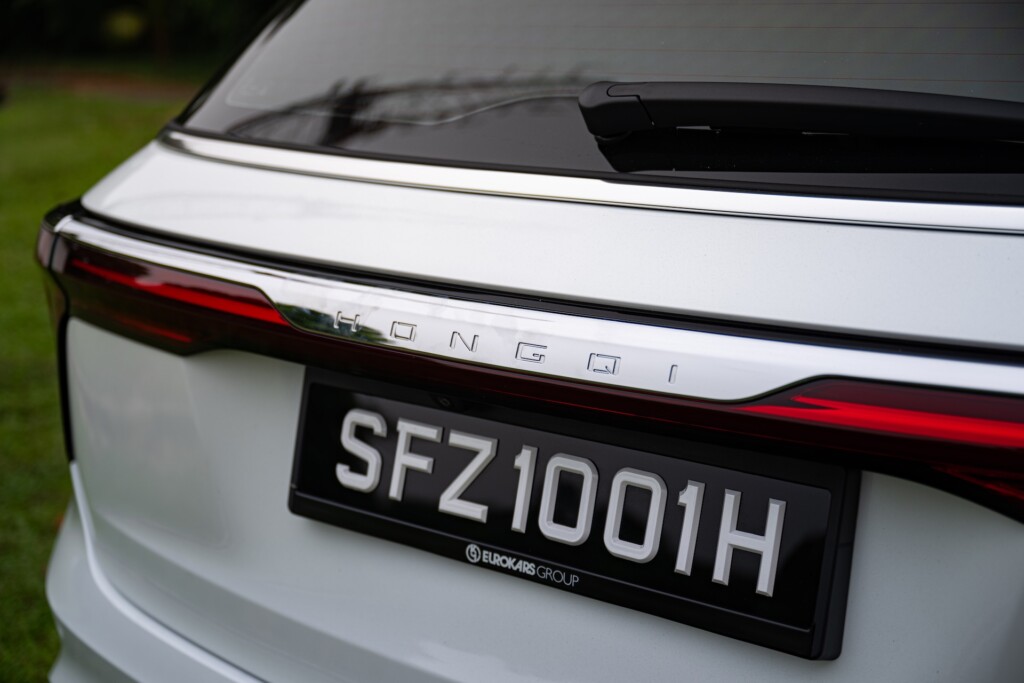
The E-HS9 currently costs S$498,888 with COE in Singapore. There is no universe in which that qualifies as cheap, but when a comparable German flagship SUV can cost significantly more, half a million dollars buys a remarkable amount of car.
Not long ago, the idea of a Chinese flagship being discussed alongside an S-Class would have sounded like marketing optimism. Now, the comparison itself no longer seems ridiculous, and that is impressive progress.
The question now becomes whether buyers spending half a million dollars are prepared to choose a red flag on the bonnet instead of a three-pointed star, blue-and-white roundel or four rings.
Hongqi has plenty of heritage in China, but in Singapore, it has to build recognition almost from zero. That may take time, but the E-HS9 is one hell of an introduction.
Luxury brands sell reassurance, heritage, and recognition as much as cars. Perhaps the badge matters less when the car itself already knows how to make an entrance.
Hongqi E-HS9
Powertrain: Dual electric motors, all-wheel drive
Power/Torque: 367 kW (492 bhp) / 606 Nm
Battery: 120 kWh lithium nickel-manganese-cobalt
Range: 570 km (WLTP)
0-100kmh: 5.5 seconds
Top speed: 200 km/h
AC charging: 11kW
DC charging: Up to 140kW
Length/Width: 5,209mm / 2,010mm
Wheelbase: 3,110mm
Price: S$498,888 with COE (at the time of writing)
Read more automotive news at AutoApp, or check out our latest videos on YouTube and on TikTok!