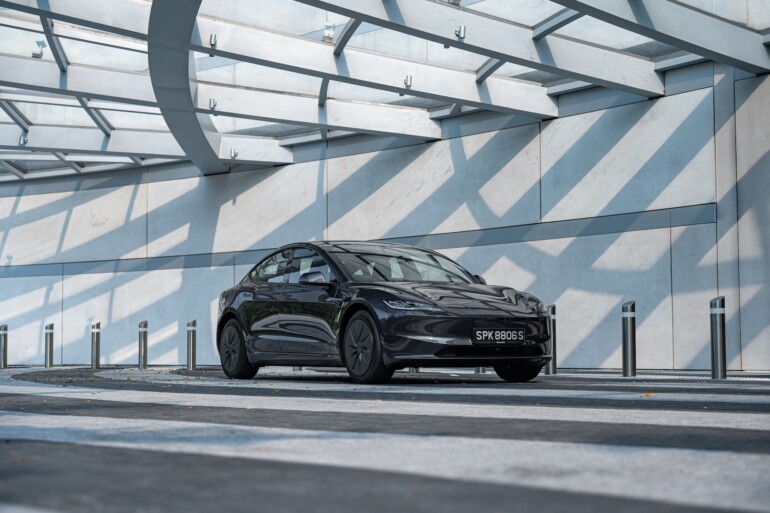
Tesla has finally put the indicator stalk back into the Model 3. Then it removed the switches for adjusting the front seats.
Tesla has finally admitted that stalks are useful. The latest Model 3 once again has a conventional indicator stalk sprouting from the steering column, which will come as welcome news to anyone who has attempted to signal halfway around a roundabout using touch-sensitive buttons on a rotating steering wheel.
Progress. Then you look down at the side of the seat.
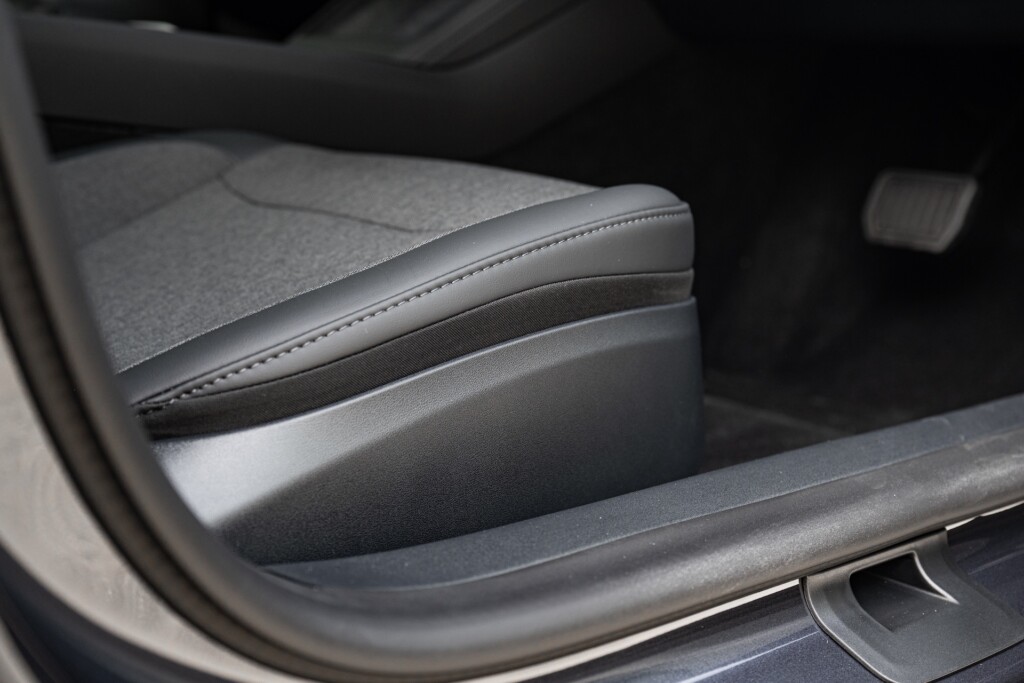
The adjustment switches have disappeared. To move your chair forwards, backwards or change the backrest angle in this entry-level Model 3, you now use the touchscreen. Tesla itself proudly describes this as controlling your seating position through the screen.
One step forwards, but one switch backwards?
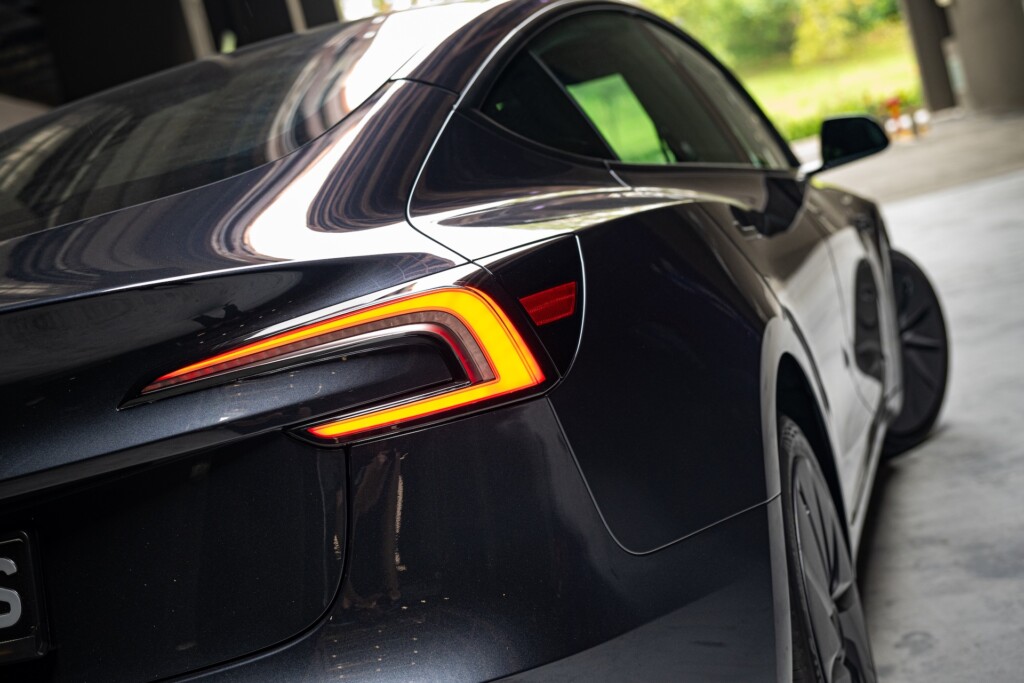
This particular Model 3 is the Rear-Wheel Drive 110, the Cat A-friendly version built specifically around markets such as Singapore. It uses a single motor at the rear, produces 110kW or 148bhp, and gets a 62.5kWh battery. The century sprint takes 8.6 seconds.
The new RWD 110 feels remarkably tranquil on the move. Press the accelerator from a standstill and you still get the instant response peculiar to electric cars. The 110 will not rearrange your internal organs the way a Model 3 Performance can, but it is brisk enough away from traffic lights and has no difficulty finding gaps on the expressway.
Only at higher speeds does its modest output become obvious. The initial shove tapers off, and overtaking from already elevated speeds requires slightly more patience than in Tesla’s more powerful models.
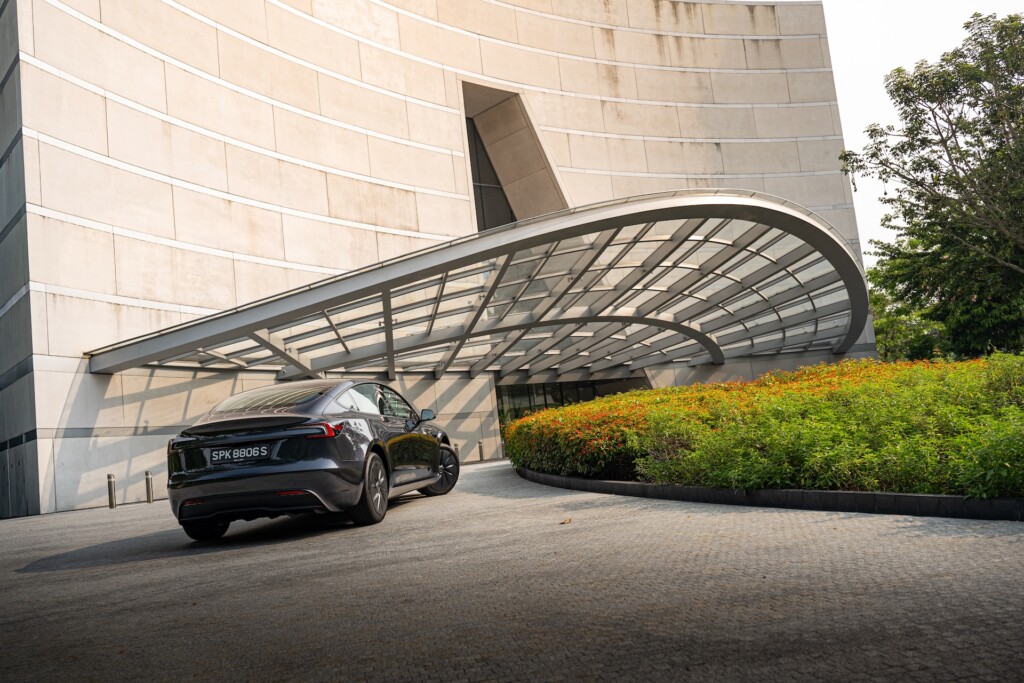
The pleasing thing is that Tesla has not neutered the chassis along with the motor. The Model 3’s steering is quick and direct, the centre of gravity feels low, and there is a pleasing sense that the car turns around you rather than dragging several tonnes of battery behind it.
There is enough agility to make an empty slip road mildly entertaining without the ride becoming unnecessarily harsh.
Tesla made substantial improvements to refinement when the Highland facelift arrived, and those benefits remain obvious: the cabin is quieter, the suspension deals with poor surfaces more gracefully and the entire car feels more mature than early Model 3s. With a frugal foot, you can get up to 572km of range for this particular variant.
The Model 3 has always been good at turning a relatively modest battery into respectable distance, rather than solving range anxiety by simply installing a battery the size of a refrigerator.
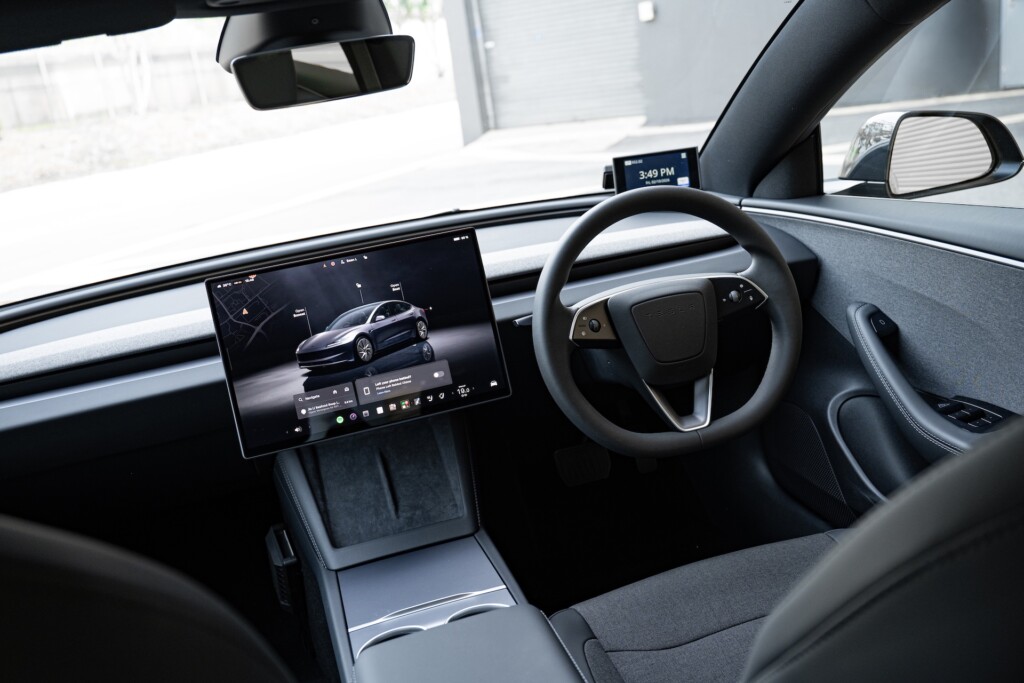
The cabin will also look familiar. There is still one enormous 15.4-inch screen dominating the dashboard. There is still no conventional instrument binnacle.
There is still a long strip of ambient lighting running around an interior so clean that leaving a parking coupon on the dashboard would probably ruin the aesthetic.
The problem is that Tesla continues to interpret minimalism as a challenge: how many physical controls can we remove before somebody complains?
Quite a few, apparently.
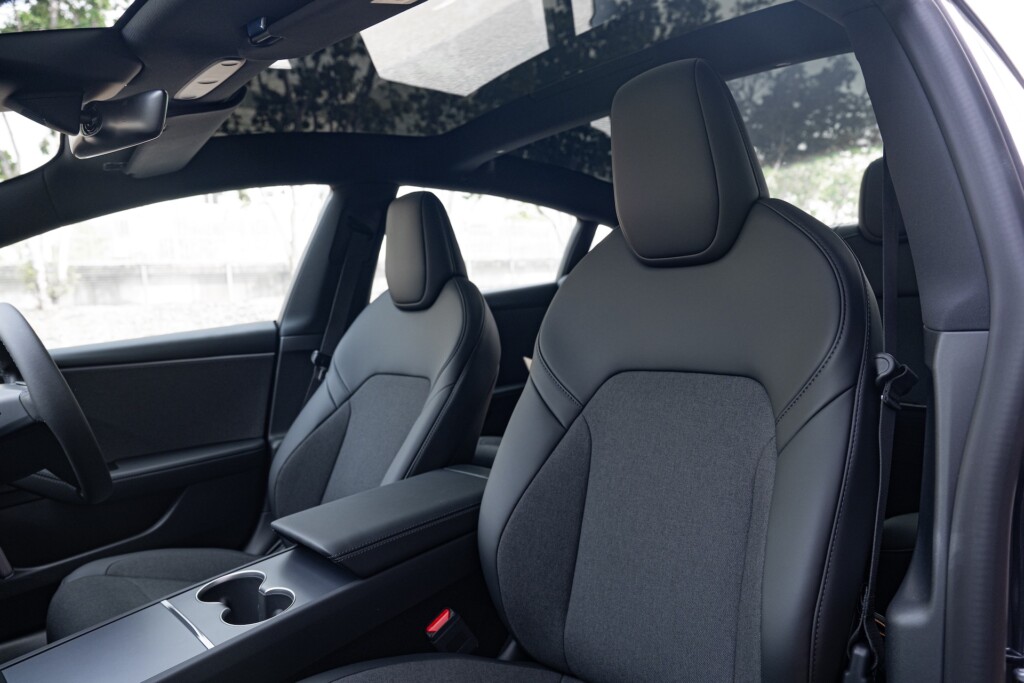
The new entry-level car loses several conveniences from the better-equipped Model 3 Premium.
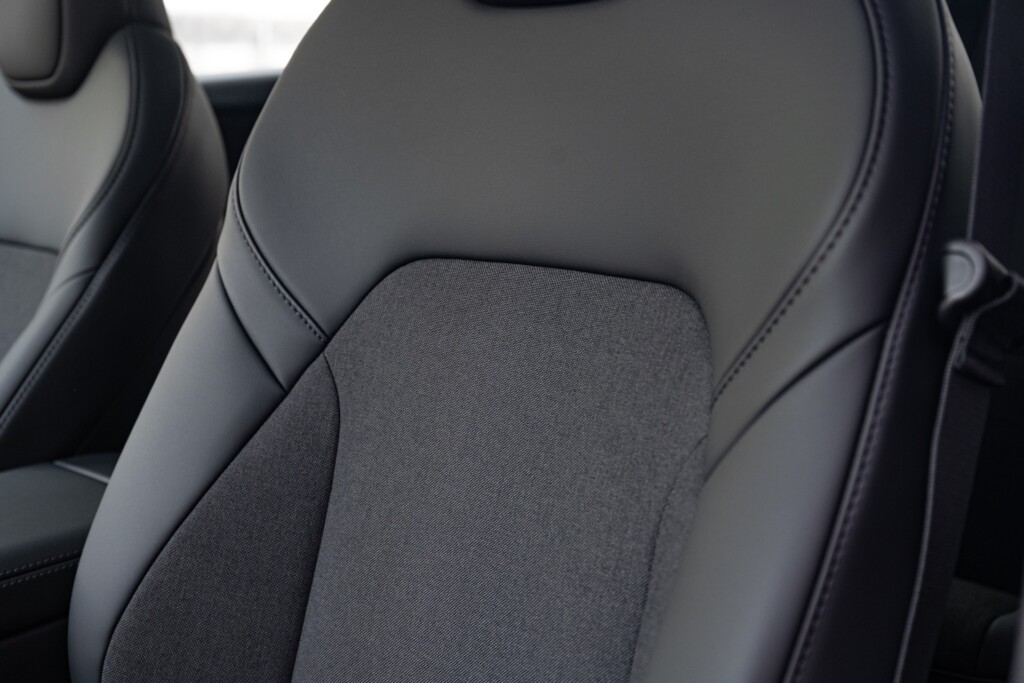
The front seats are now clad partly in textile rather than the more expensive upholstery elsewhere in the range. The rear passenger touchscreen disappears. The audio system drops to seven speakers, while some comfort equipment is pared back.
Most of this is understandable, as this is the cheaper Model 3. But removing the physical seat adjustment switches is harder to defend.
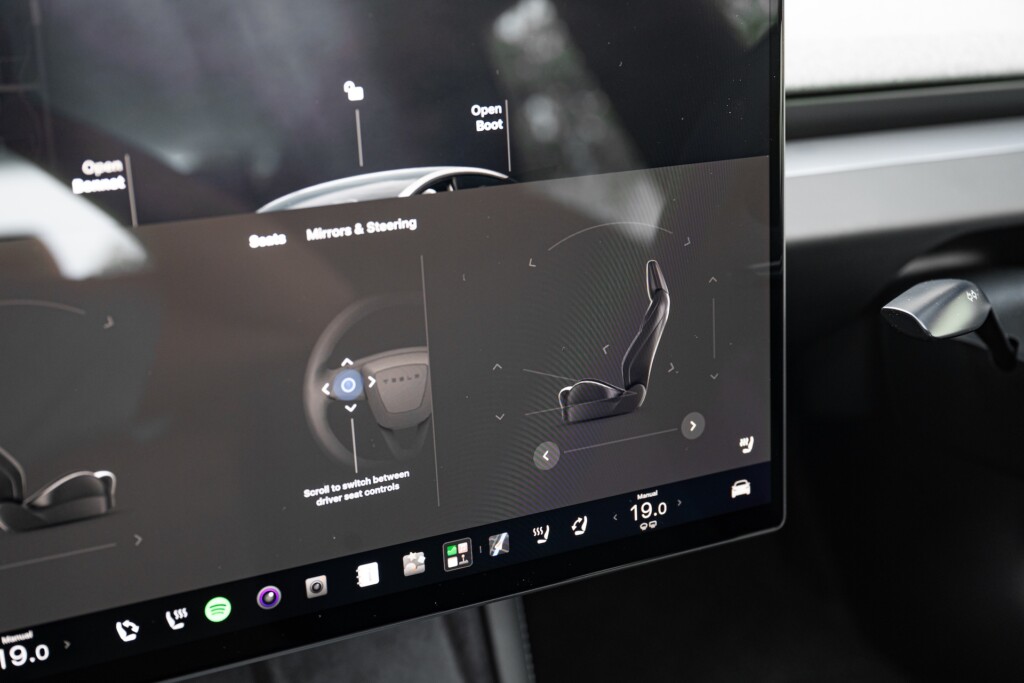
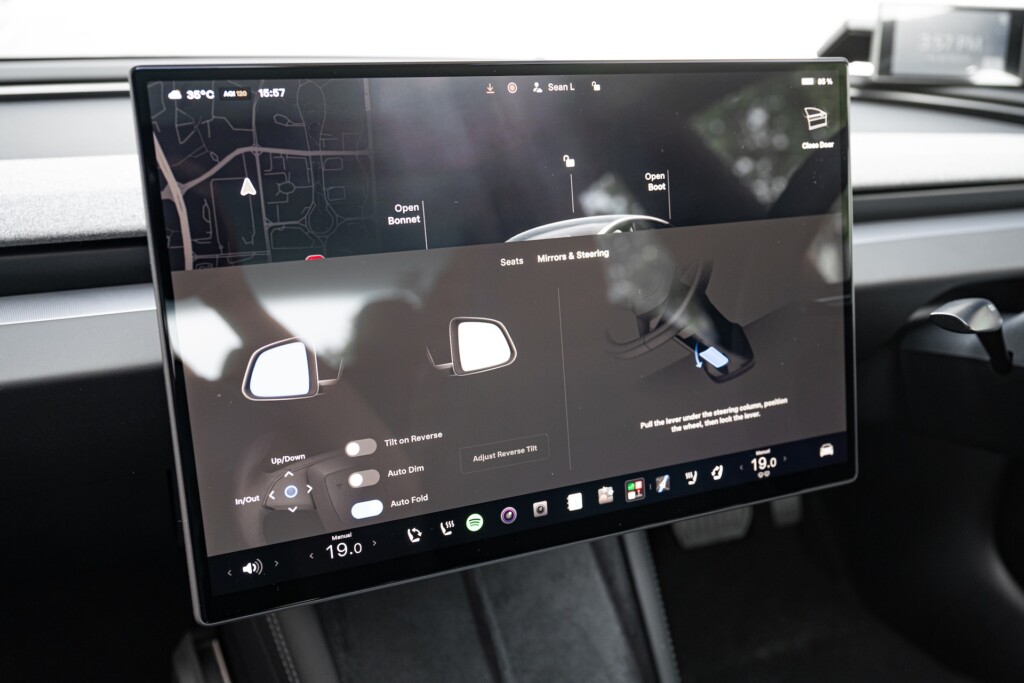
Normally, adjusting a seat involves reaching down and finding the switch. You move it, done.
In the new Model 3, you summon the seat controls on the central display, then adjust the chair through the screen.
To Tesla’s credit, once your driving position is saved to your profile you probably will not touch it very often. That is fine if you are the only driver. If the car is shared, or if a passenger regularly adjusts their chair, the novelty wears off quickly.
The steering wheel is manually adjustable now, too. Ironically, that may be preferable. Pull lever, move wheel, release lever. Sometimes technology advances so far that it discovers 1998.
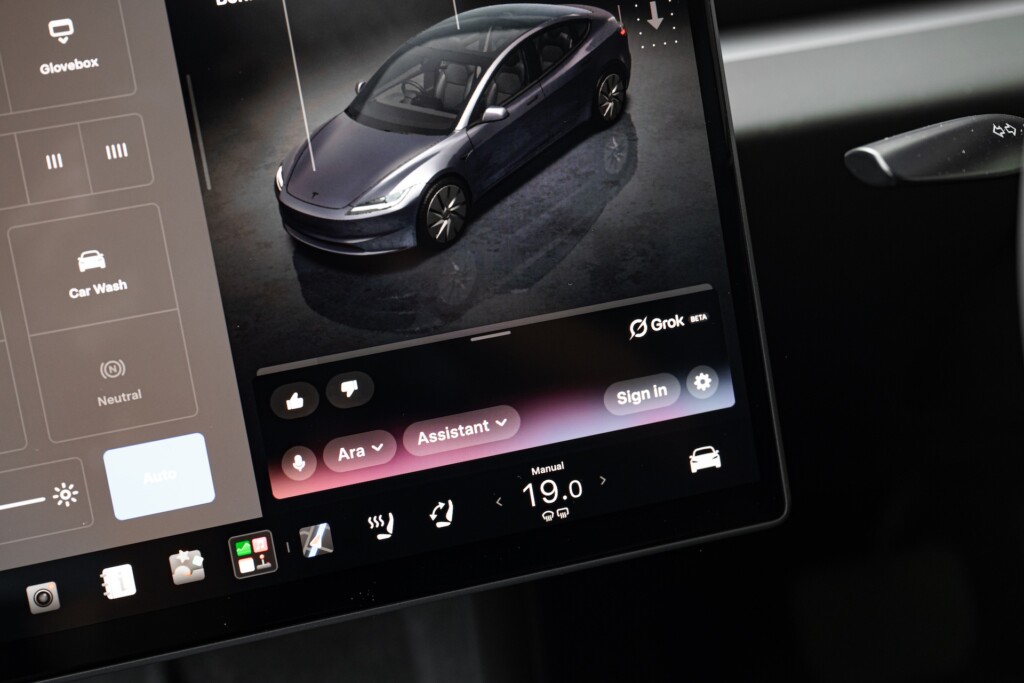
While Tesla has made the physical interface worse in places, the software has become substantially more useful, and the biggest addition is Grok.
Tesla’s in-car version of xAI’s assistant can be activated from the app launcher, by holding the right steering-wheel scroll control, or with a “Hey Grok” voice command where supported. With the Assistant personality selected, Tesla says it can handle navigation, phone calls, media playback and various vehicle functions, including climate and seat heating or cooling.
After actually living with Grok, I found it extremely useful.
Traditional automotive voice control generally has two modes. It either misunderstands you completely, or confidently navigates to somewhere 300km away with a vaguely similar name. Grok feels different, and you can speak more naturally. You do not need to memorise the exact syntax the car expects.
Ask it for somewhere suitable to eat near your route, a particular shop, or a destination described in normal conversational terms and it can work out what you are getting at.
Previously, the Model 3’s excellent navigation still depended on you knowing roughly what to search for. Grok changes this very interaction. You can ask a question first, then navigate based on the answer.
Instead of: “Navigate to 123 Example Street”, it becomes: “Find me a coffee place near where I’m going that is still open.” And because Tesla’s route planning already integrates charging information and battery predictions, getting a better way to interact with navigation makes an already strong system more useful.
This is what artificial intelligence in cars should be doing. Removing friction.
Elsewhere, the Model 3 retains the ecosystem advantages that have always made it easier to recommend.
The Tesla app remains excellent. You can check charging status, pre-condition the cabin, locate the car and control various functions remotely.
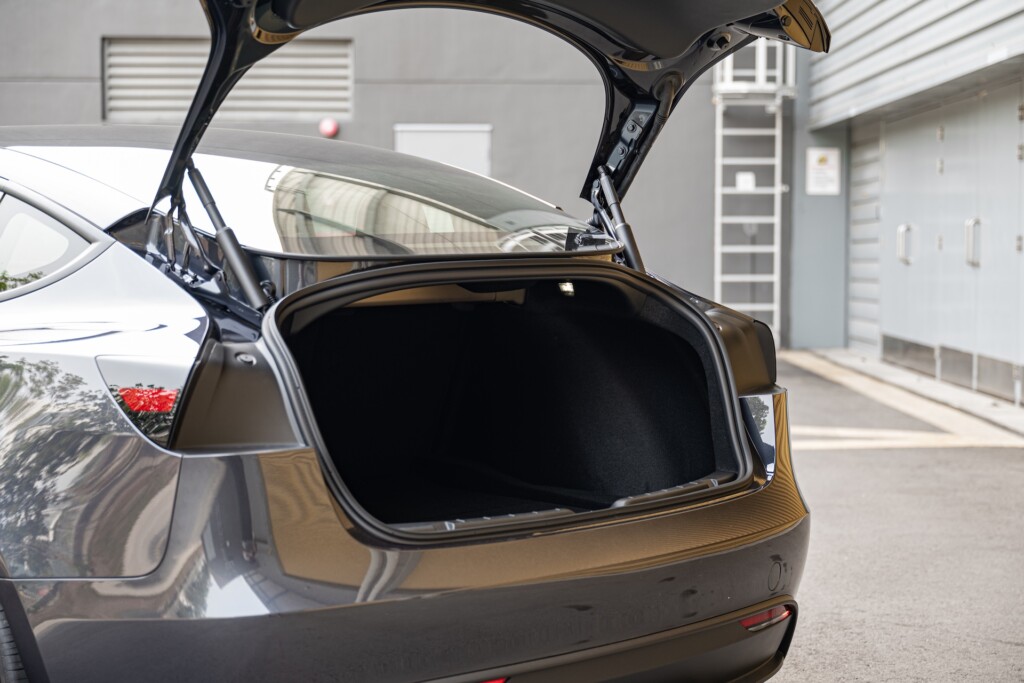
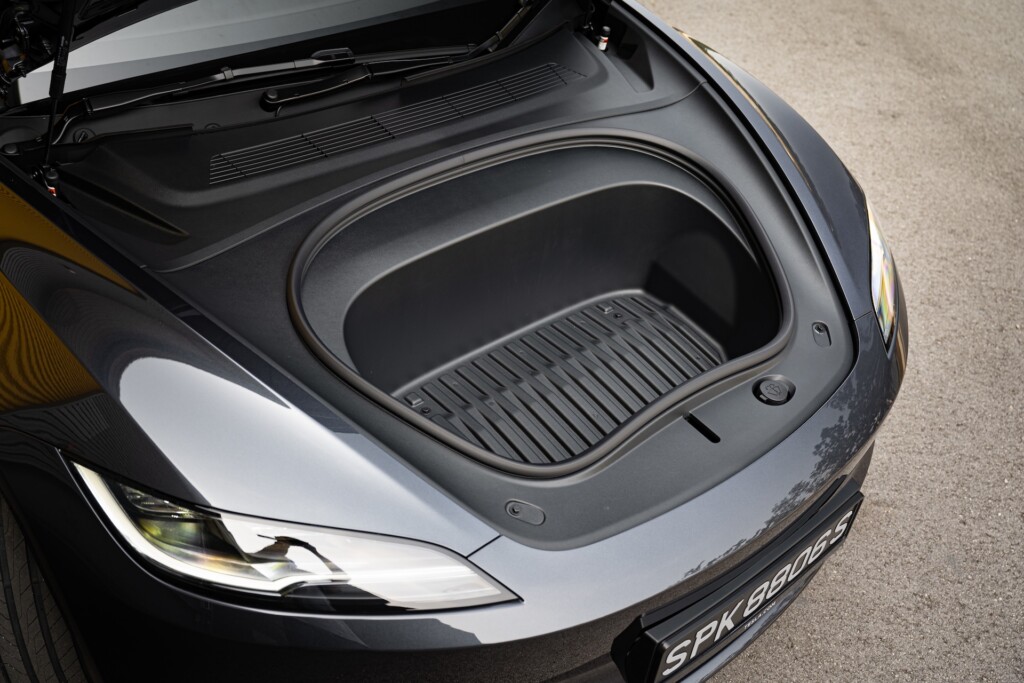
There is plenty of space, too. The Model 3 boasts 682 litres of total cargo capacity, and the combination of a conventional rear boot plus a front compartment remains genuinely useful.
The rear seats offer decent legroom, although the low floor-to-seat relationship still means taller passengers sit with their knees slightly elevated.
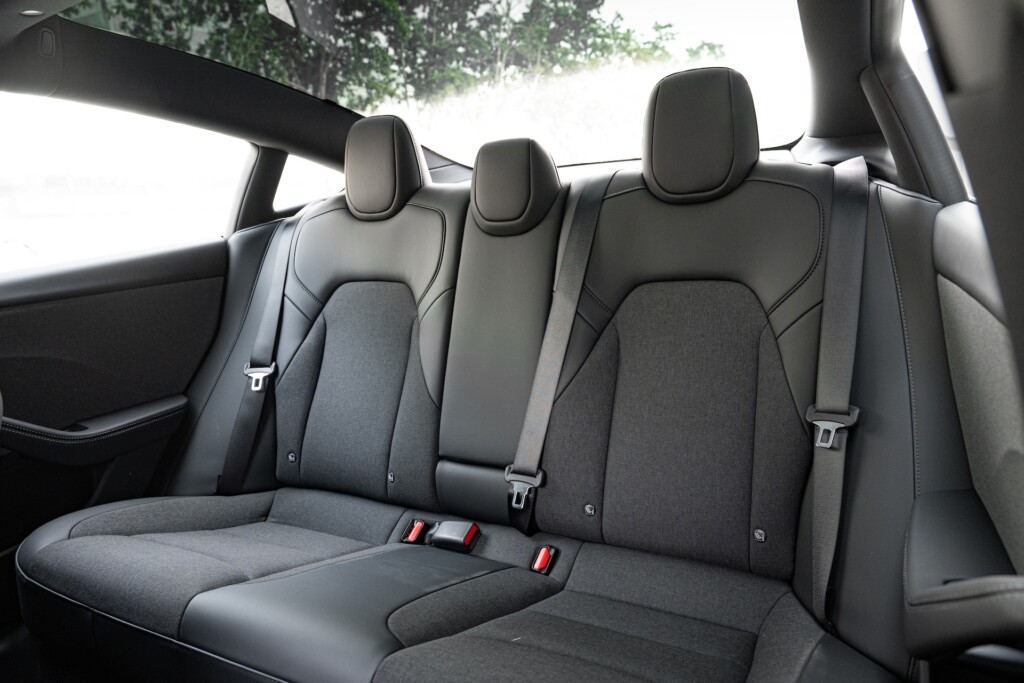
The glass roof keeps the cabin airy. It also reminds you very quickly that Singapore is located approximately 137km from the Equator.
Thankfully, Tesla’s climate pre-conditioning means you can cool the interior before approaching it.
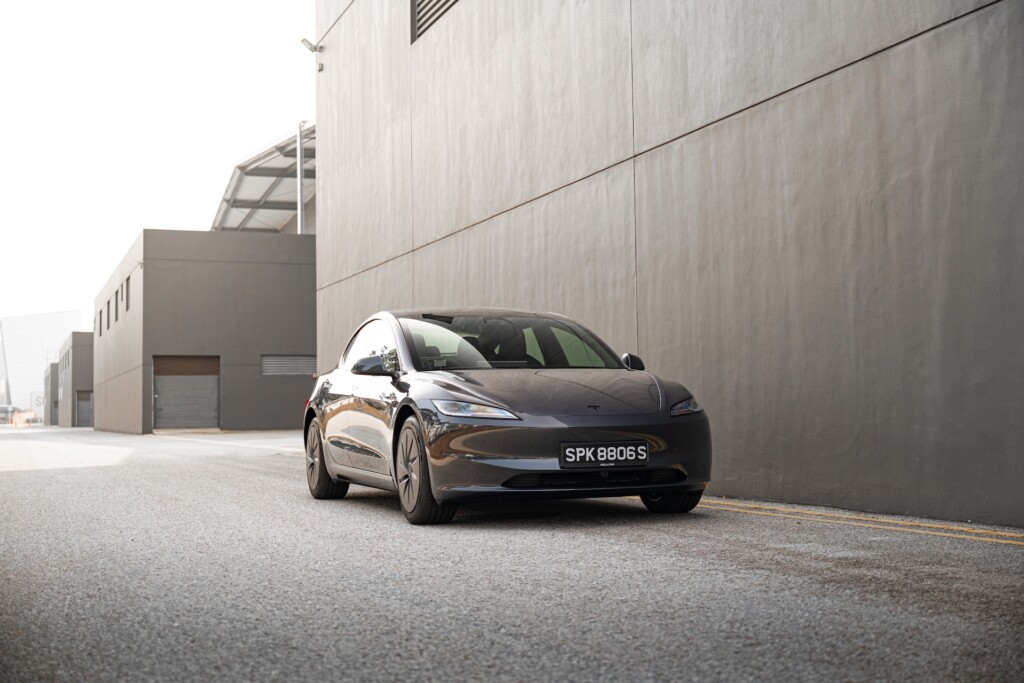
This button-lite Model 3 RWD 110 is currently the cheapest Model 3 in Singapore.
You could pay more for the Premium 110 and retain the same basic performance while gaining additional equipment, or step further up the range for substantially more power and range.
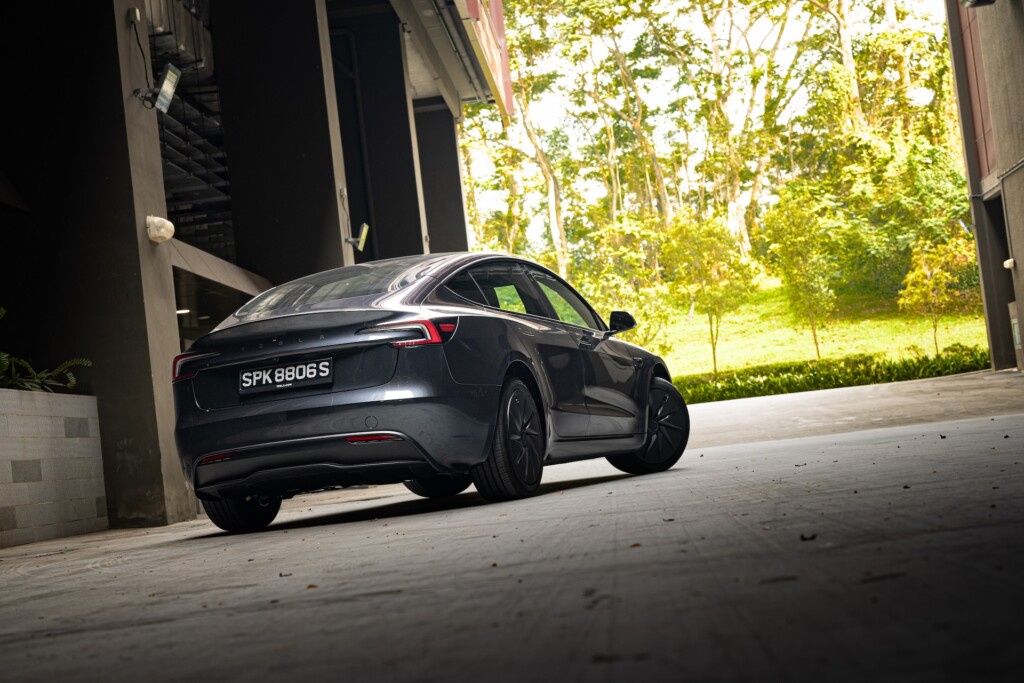
This entry model contains most of the things that make a Model 3 fundamentally appealing.
What you lose is mainly luxury rather than ability. Dynamically, relatively little has changed. It is still quick enough, quiet enough, comfortable enough and efficient enough to make an extremely convincing everyday EV. What has changed is the relationship between driver and machine.
For the first time, Tesla’s desire to make the touchscreen the centre of everything is being complemented by an interface that lets you avoid touching the screen altogether.
Instead of learning where Tesla placed a function, you can increasingly just ask for it. That is a much more interesting vision of the future.
Technical Specifications
Tesla Model 3 RWD 110
Powertrain: Single electric motor, rear-wheel drive
Power: 110 kW (148 bhp)
Torque: 350 Nm
Battery: 62.5 kWh
0-100kmh: 8.6 seconds
Top speed: 201 km/h
Efficiency: 7.7 km/kWh (claimed)
Range: Up to 572km (WLTP)
DC charging: 175 kW
AC charging: 11 kW
Price: S$186,999 with COE (at the time of writing)
Read more automotive news at AutoApp, or check out our latest videos on YouTube and on TikTok!