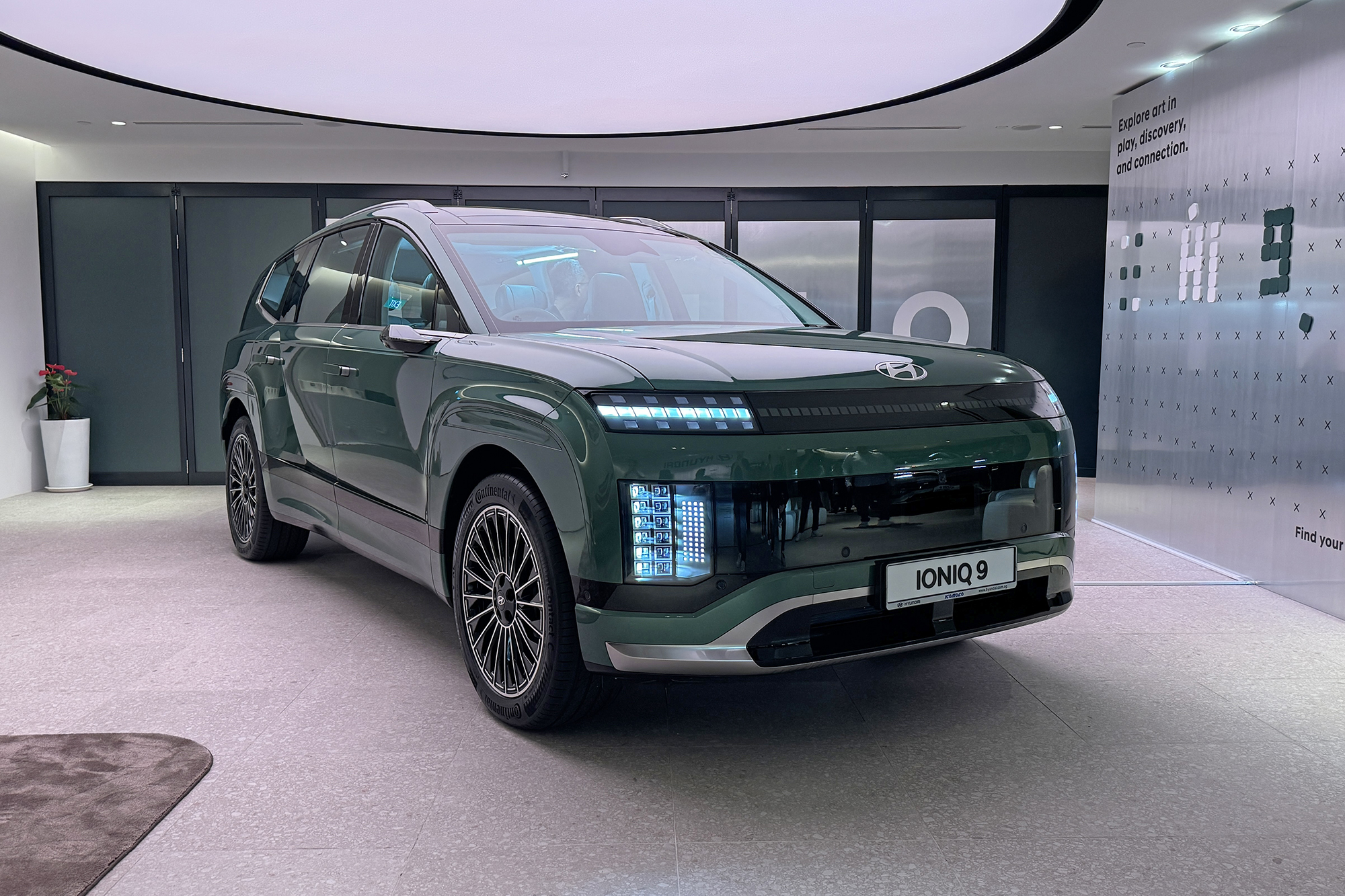
Komoco Motors closed out 2025 by unveiling Hyundai’s flagship electric SUV, the IONIQ 9, at its Alexandra Road showroom.
The IONIQ 9 arrives in three flavours. There’s the Standard, a rear-wheel-drive, seven-seater aimed squarely at those who value range and space. Sitting above it are the Calligraphy variants, both dual-motor all-wheel drive, offered as either a six- or seven-seater.
One is sensible, the other indulgent; both are unapologetically premium.
At 5,060mm long, 1,980mm wide and 1,790mm tall, with a 3,130mm wheelbase, the IONIQ 9 is not shy about its footprint. In Singapore, that means certain older carparks will demand a little more patience and perhaps a deep breath.
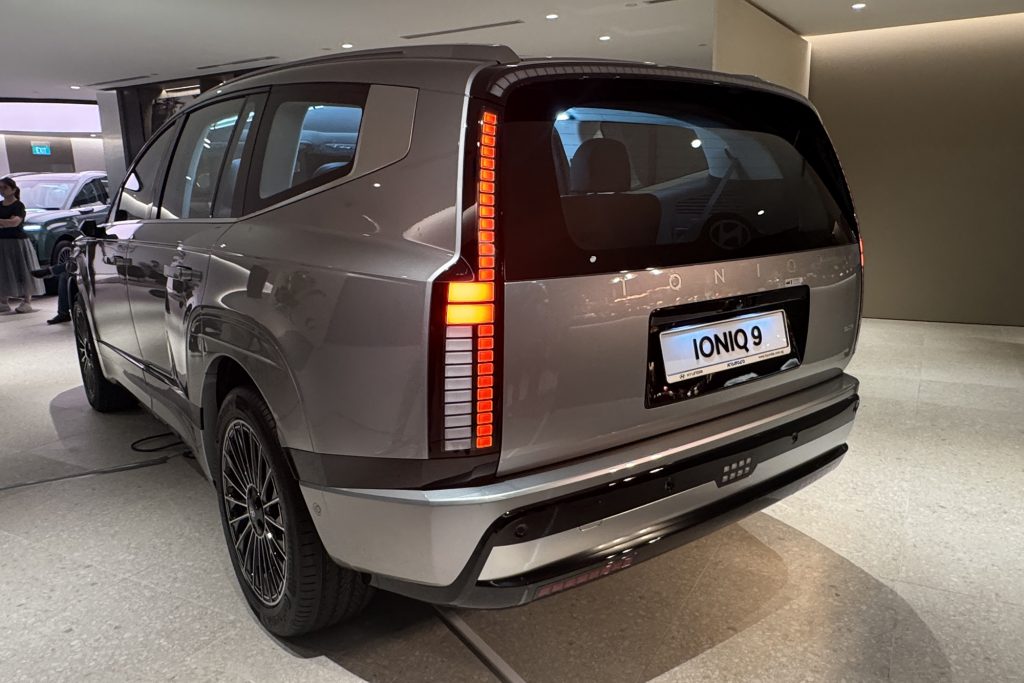
Despite its mass and stature, the IONIQ 9 boasts a drag coefficient of just 0.259Cd, which is impressive for something that could comfortably carry three rows of adults.
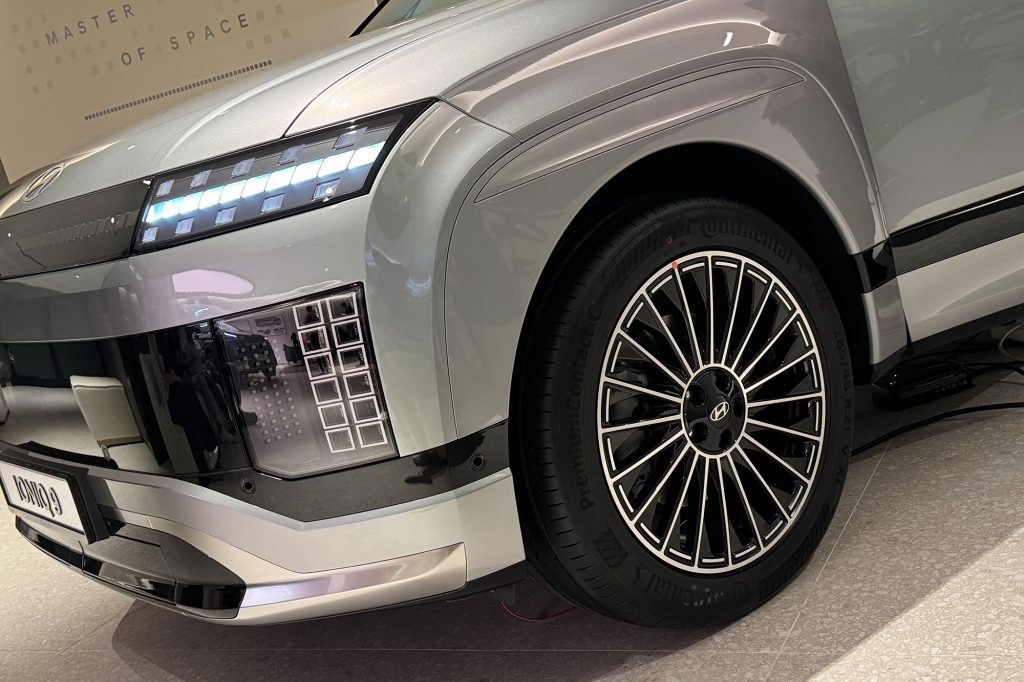
Hyundai’s now-familiar Parametric Pixel lighting signature (seen on the IONIQ 5 and 6) returns here, lending the car a cohesive, almost architectural identity.
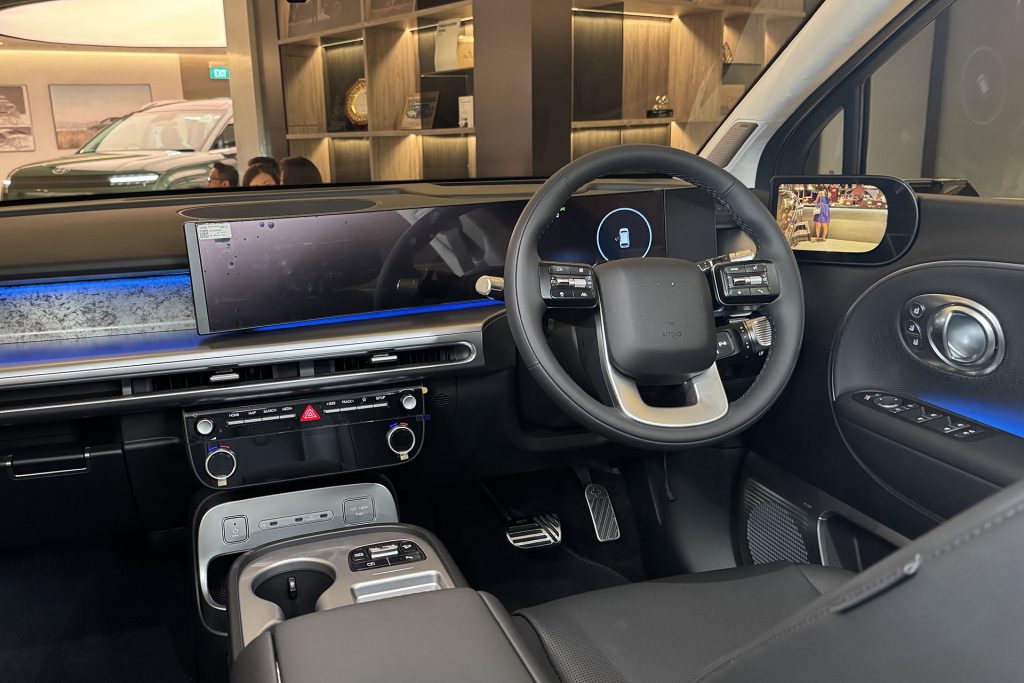
The dashboard is dominated by a panoramic curved display, seamlessly merging a 12-inch digital instrument cluster with a 12-inch infotainment screen. Physical buttons are kept to a minimum, and the gear selector migrates to the steering column, freeing up space where it matters.
That space is put to good use via Universal Island 2.0, Hyundai’s sliding centre console. The upper tray offers 5.6 litres of storage, while the lower tray swallows 12.6 litres. Better still, the entire unit slides up to 190mm, allowing second-row passengers easier movement through the cabin.
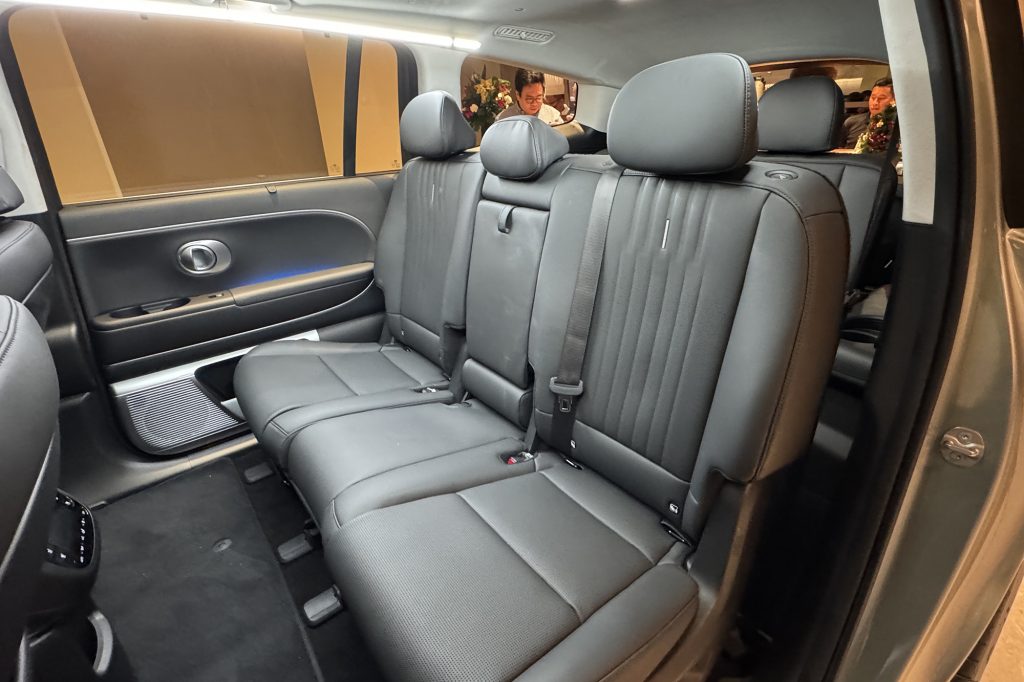
The captain’s chairs in the six-seater Calligraphy are heated, ventilated, with extendable leg rests and powered sliding functions. A single button slides them forward or back to ease access to the third row.
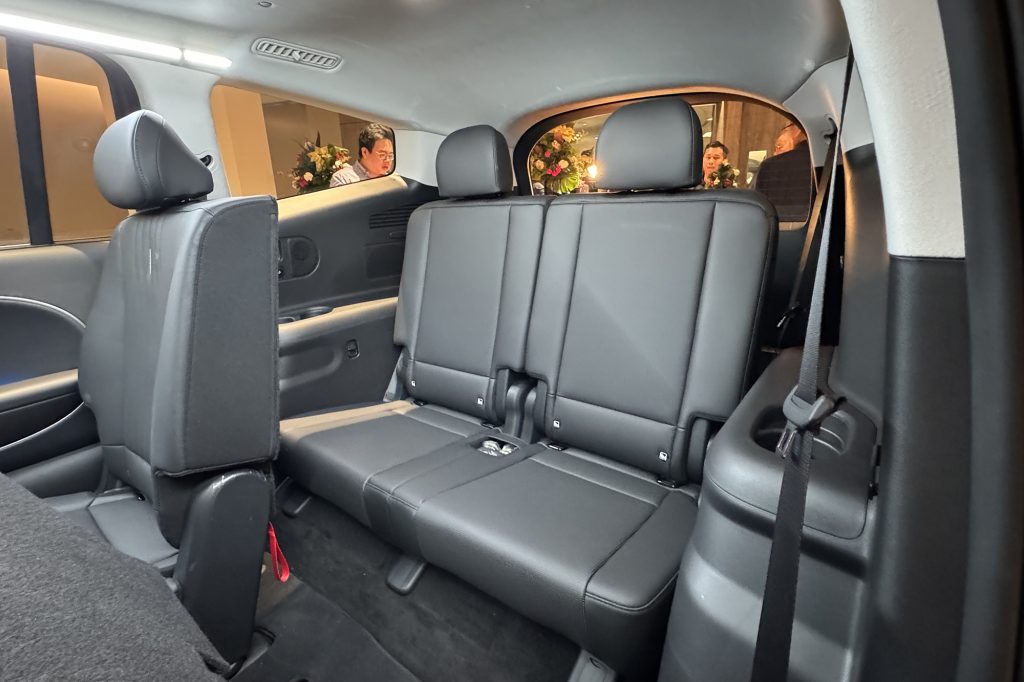
Rear passengers enjoy full-size seats, electric reclining and their own overhead air-conditioning vents.
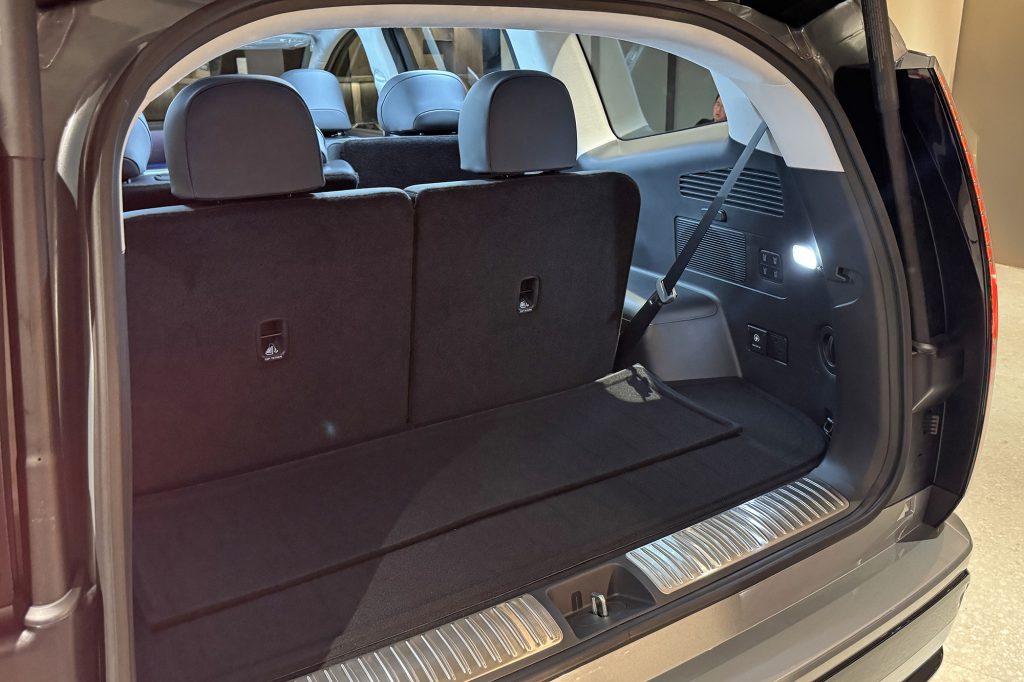
With all three rows in place, the boot offers 338 litres. Fold the third row and that figure expands to 908 litres. Up front, there’s a frunk too: 88 litres in the Standard model, slightly reduced to 52 litres in the dual-motor Calligraphy variants.
The IONIQ 9 Standard uses a single rear-mounted motor producing 160kW (215bhp) and 350Nm of torque. It reaches 100km/h in 9.4 seconds. Its party trick is range: a substantial 110.3kWh battery delivers up to 620km on a charge.
Step up to the Calligraphy, and things sharpen noticeably. Dual motors deliver 226.1kW (303bhp) and 605Nm, cutting the century sprint to 6.7 seconds. Range dips slightly to 600km, but remains more than respectable given the extra performance and traction.
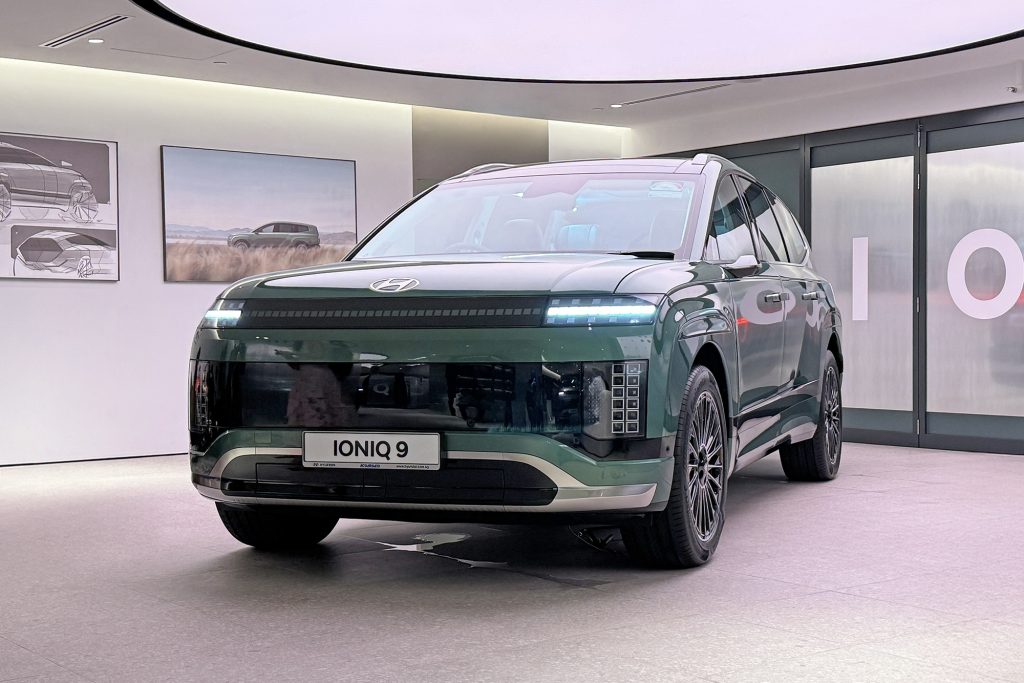
The IONIQ 9 will make a public appearance at the Singapore Motor Show in January 2026, where it’s likely to draw crowds simply because there’s very little else like it on the market.
Pricing (inclusive of COE, at press time)
- Hyundai IONIQ 9 Standard 7-Seater (110.3kWh): $309,999
- Hyundai IONIQ 9 Calligraphy 7-Seater (110.3kWh): $349,999
- Hyundai IONIQ 9 Calligraphy 6-Seater (110.3kWh): $355,999
Read more automotive news at AutoApp, or check out our latest videos on YouTube and on TikTok!