Polestar has built the most ambitious car in its short history with the 5, and it sees no reason to look back.
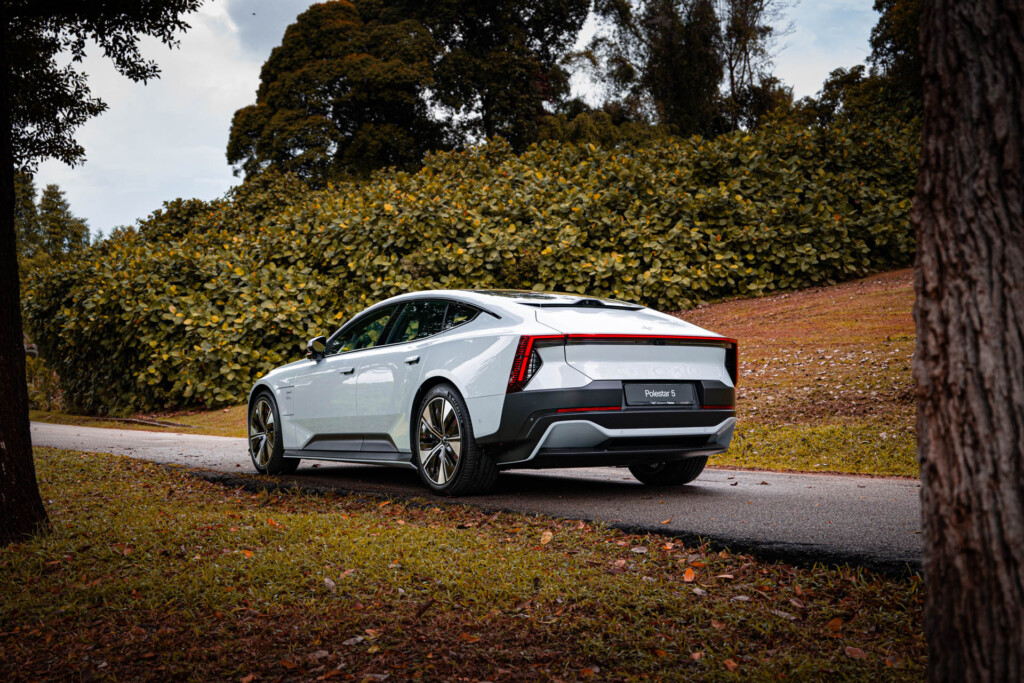
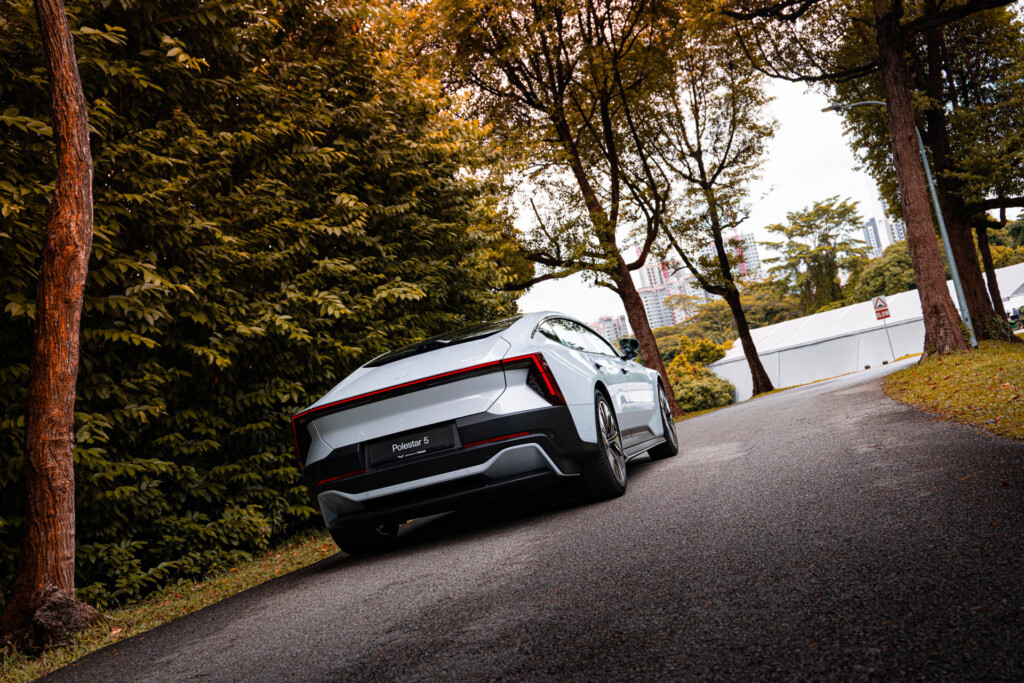
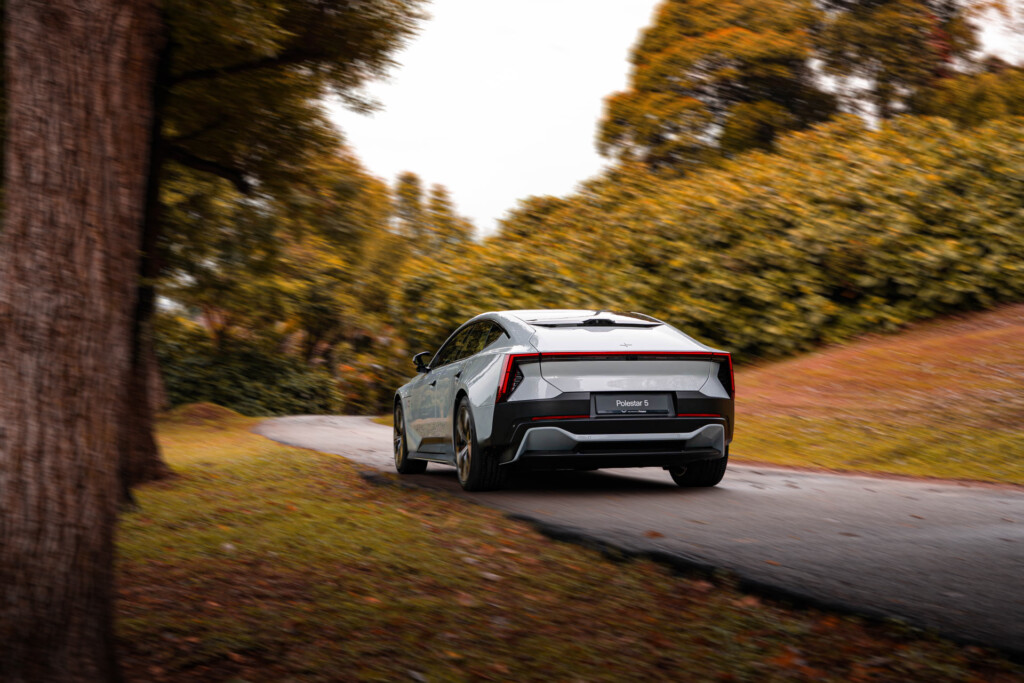
You physically cannot look back anyway, because there is bodywork where you would normally expect to find a pane of glass. A camera mounted on the roof instead sends a live feed to a digital rear-view mirror inside.
Polestar already did something similar with the Polestar 4, but on its new flagship grand tourer, this design trait feels even more deliberate. You are not supposed to look back, which in this case seems appropriate, because the Polestar 5 represents perhaps the clearest indication yet of where the company wants to go.
The Polestar 5 began life as the Precept concept unveiled back in 2020.
Concept cars normally undergo an unfortunate transformation on their way to production. Eventually, what began life looking like something from 2040 arrives at the dealership resembling a slightly adventurous family crossover.
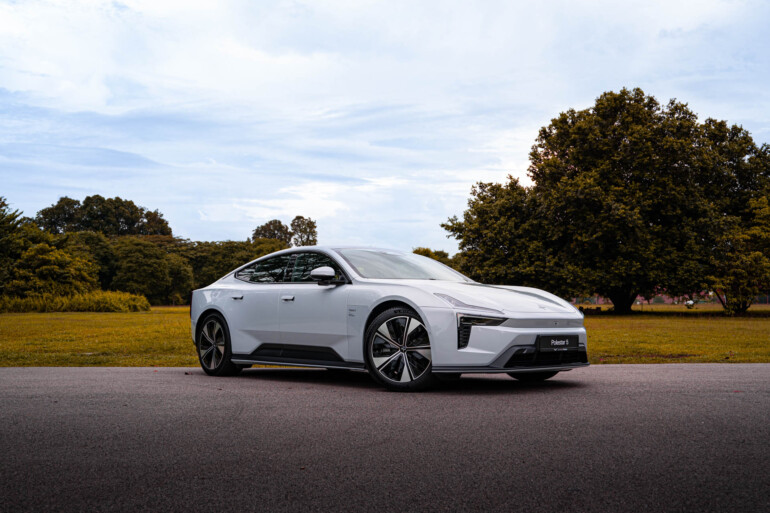
The Polestar 5 has escaped remarkably intact. It sits just 1.4 metres tall, yet stretches 5 metres long and 2 metres wide, giving it the sort of low and broad proportions increasingly rare in a world obsessed with SUVs.
There is a chopped-off Kamm tail, huge wheelarches and relatively little decorative nonsense interrupting the sleek bodywork. Even the absence of the rear windscreen helps.
Without having to accommodate conventional glass, Polestar could extend the roof structure further backwards while retaining the clean shape of the Precept concept.
Previous Polestars have relied heavily on platforms shared with other cars within the Geely empire.
The Polestar 5 instead debuts with Polestar Performance Architecture, developed specifically for this car using a bonded aluminium structure engineered largely by Polestar’s team in the United Kingdom.
The technique creates an exceptionally stiff structure while keeping weight lower than a conventional steel equivalent, giving the suspension a more stable foundation to work from.
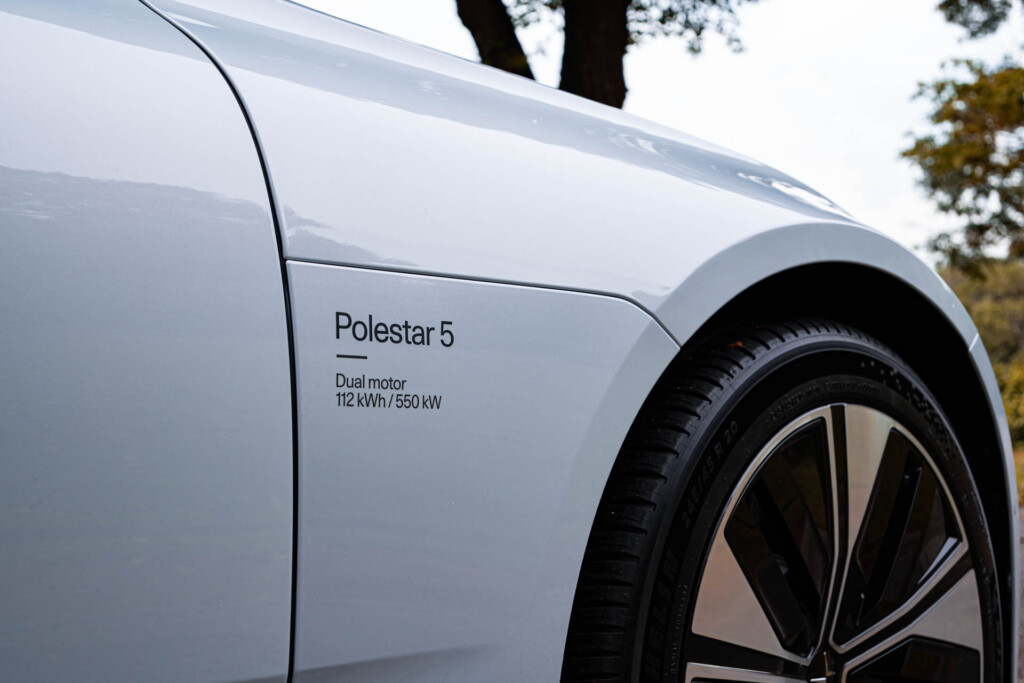
Polestar claims torsional rigidity comparable with, or exceeding, that of some two-seat sports cars. Relevant when you realise the rest of the car weighs 2,462kg.
When there is a 112kWh battery beneath the floor and two enormous electric motors involved, you take the victories where you can find them.
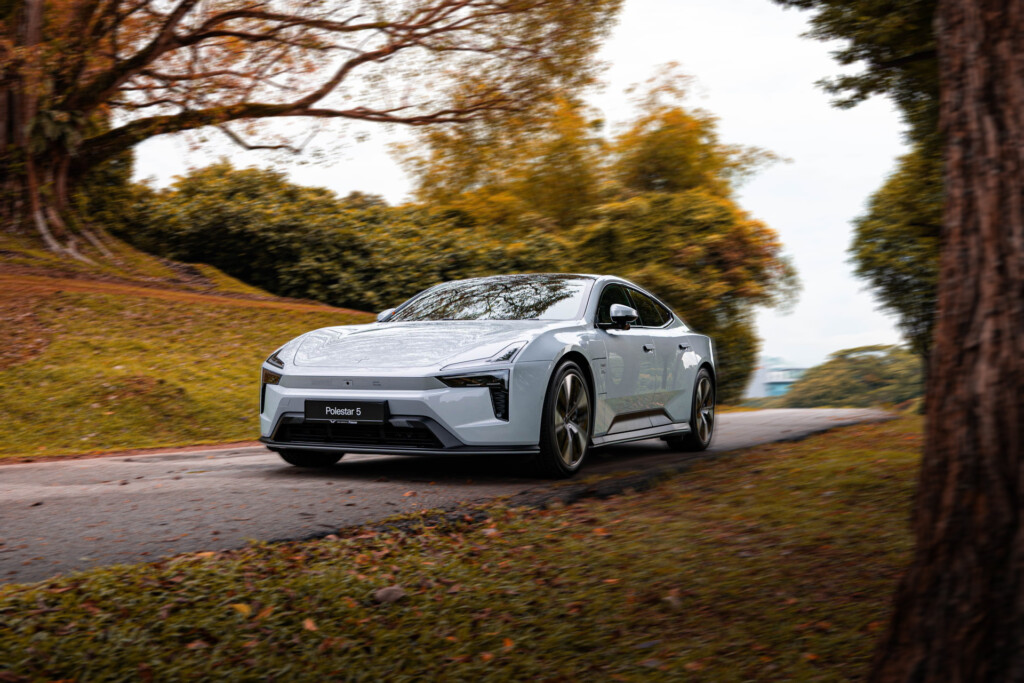
The standard Polestar 5 Dual Motor is the “slower” version. It produces 550kW (738bhp) and 812Nm of torque. The century sprint takes 3.9 seconds, and top speed is 250km/h. Calling this the slower version tells you everything you need to know about modern performance cars.
A full squeeze of the accelerator produces the sort of sustained surge that makes distances shrink very quickly. There is colossal performance available, but the Polestar does not seem obsessed with demonstrating it every time you move away from a junction.
It is enormously fast without feeling unnecessarily violent, making it marvellous for city roads.
At ordinary speeds, the drivetrain barely seems to be trying. Overtaking requires almost no planning, and the reserves available at expressway speeds mean the car always feels effortless.
When the roads gets bendy, there is still a sense of mass, but the Polestar responds to steering inputs with far more enthusiasm than its dimensions suggest.
And rather than feeling as though you are sitting on top of a large battery pack trying to persuade it around a corner, the car rotates naturally around the driver.
This standard Dual Motor gets a conventionally damped chassis rather than the Performance model’s MagneRide adaptive setup, but the underlying architecture remains the same.
The other half of the equation is comfort.
A car capable of 250km/h and 3.9-second sprints is amusing for approximately 20 minutes if the suspension spends the rest of your ownership attacking your spine. Thankfully, the Polestar understands the difference between performance and punishment.
At higher speeds, the body settles into an impressively planted rhythm. Wind noise is well suppressed and the drivetrain is, naturally, almost silent.
There is still some tyre noise because 20-inch wheels and performance rubber have consequences, but the overall experience is tranquil.
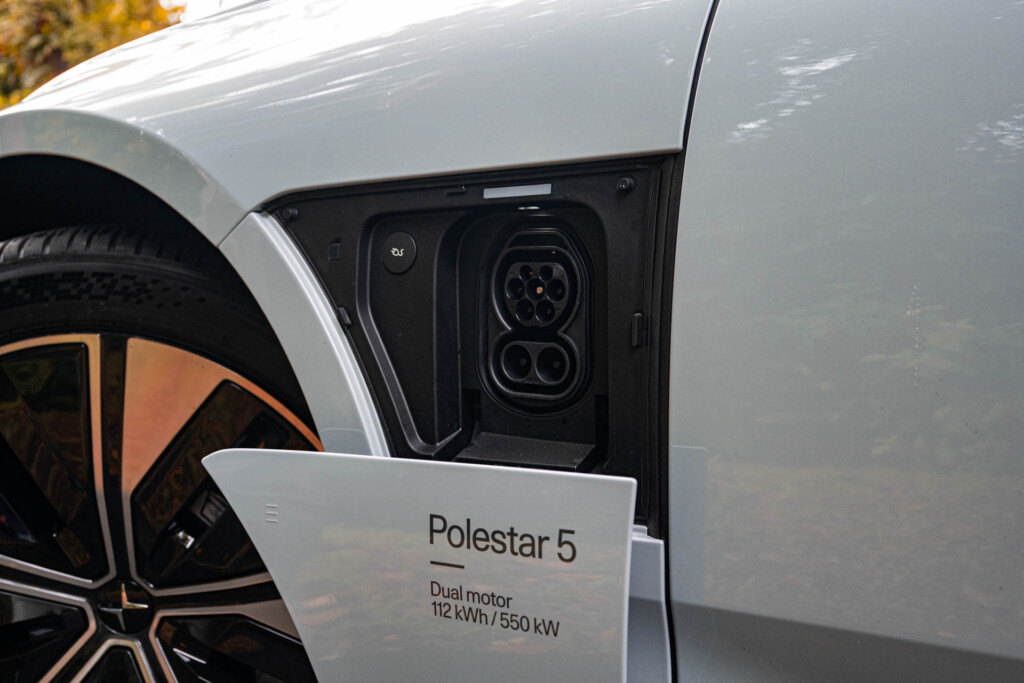
Under the floor is a 112kWh nickel-manganese-cobalt battery. Official WLTP range for the Dual Motor is 678km, which is impressive.
With sensible planning, longer trips stop feeling like EV expeditions and start feeling like ordinary road trips. And if you ever need to top it up, the Polestar 5 uses an 800-volt architecture and can accept up to 350kW DC charging.
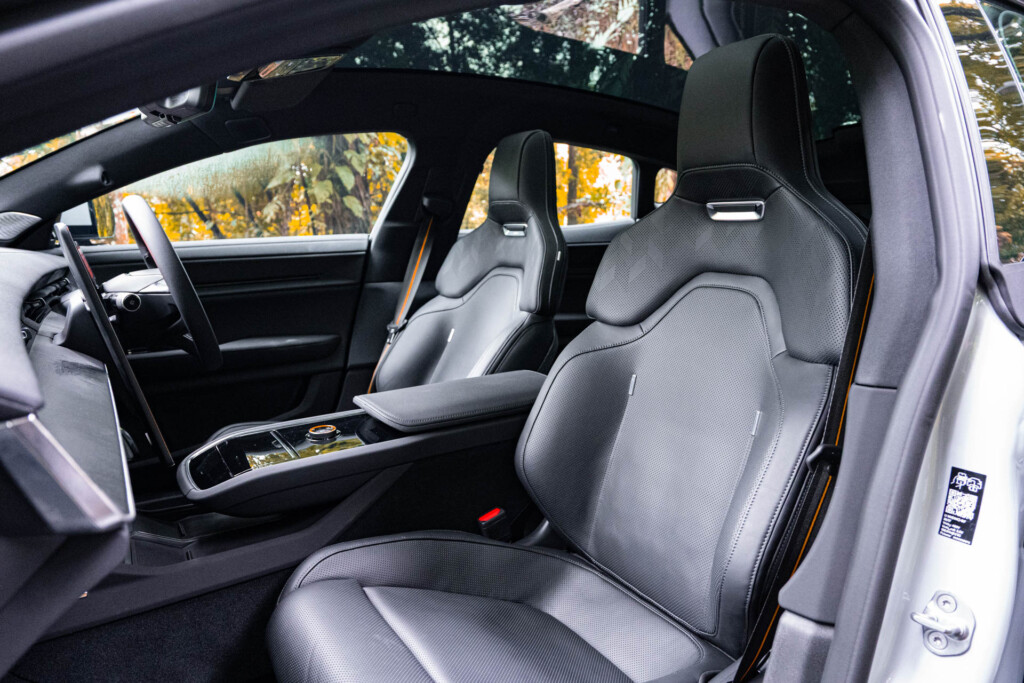
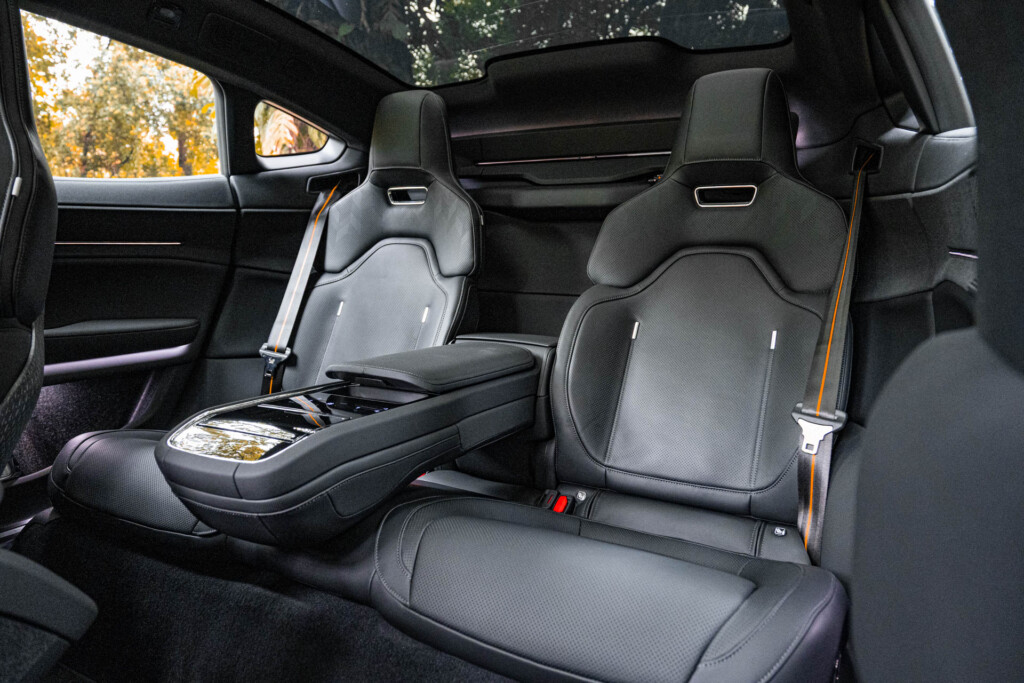
The cabin is arranged as a 4+1 seater. Why? The centre position exists in much the same way that the middle seat on an aeroplane exists: technically functional, but nobody would want it willingly.
The outer chairs are individually shaped and recline slightly, with the battery cleverly packaged so rear passengers can sit relatively low rather than assuming the knees-up posture common in many EVs. The centre armrest can then be raised to reveal the occasional fifth seat.
For four people, the Polestar 5 is properly luxurious. For five, friendship may become important.
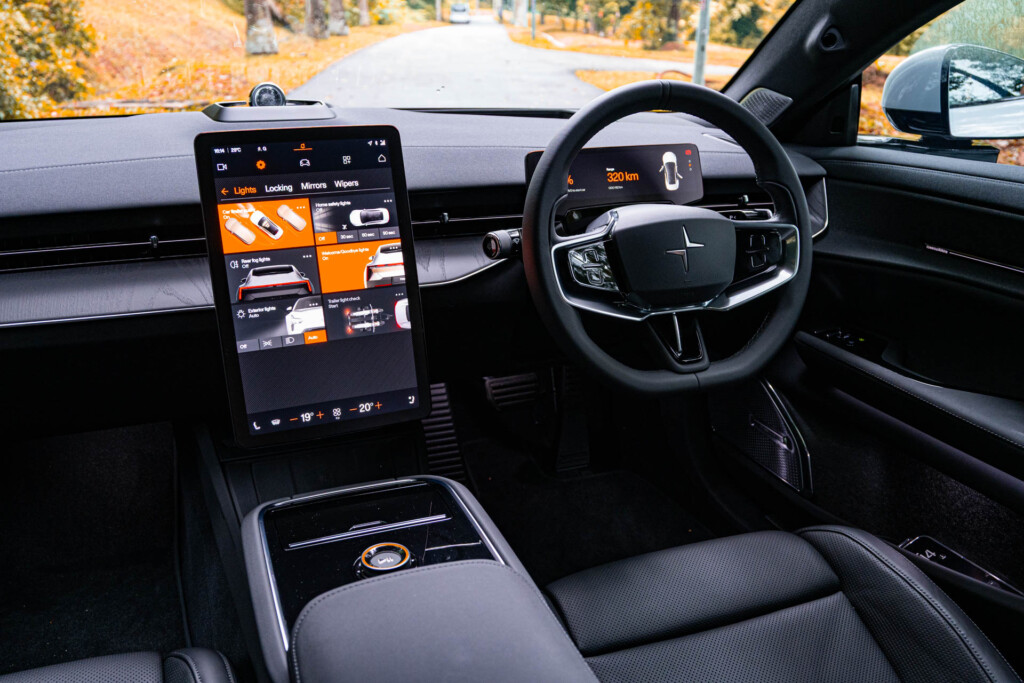
Up front, things are very clean. There is a 14.5-inch portrait touchscreen, a 9.0-inch driver’s display and a 9.3-inch head-up display. Physical controls are limited.
Polestar, like many manufacturers, has embraced the philosophy that a clean dashboard is worth moving previously simple functions into software. The system itself is slick and Google-based, so navigating around it is relatively intuitive. But, you can’t help but wonder that there are occasions when a button would still be quicker.
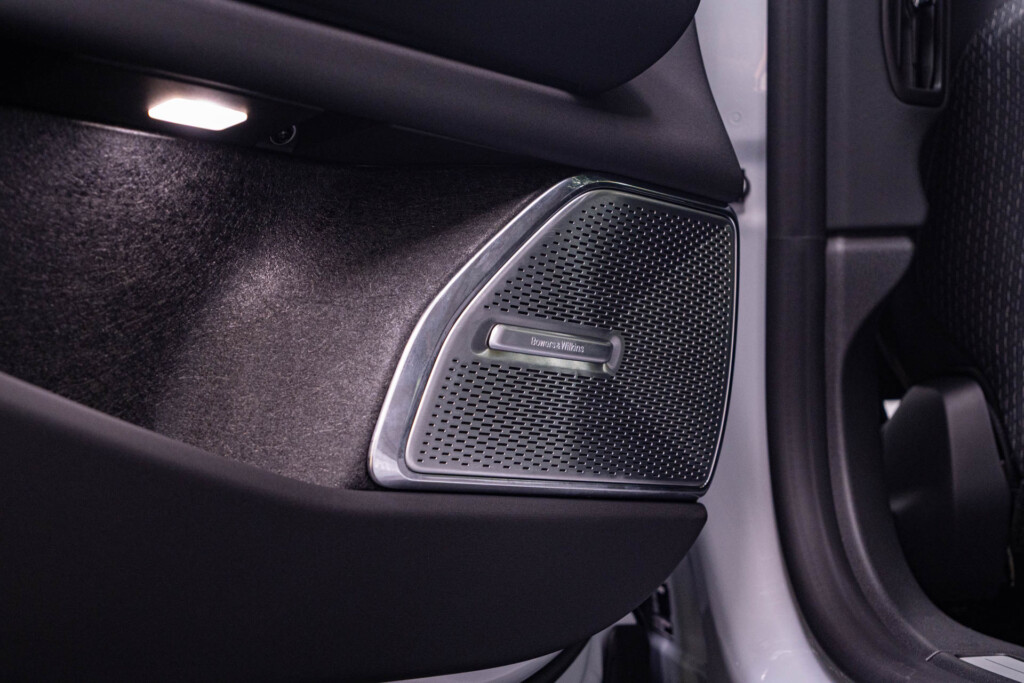
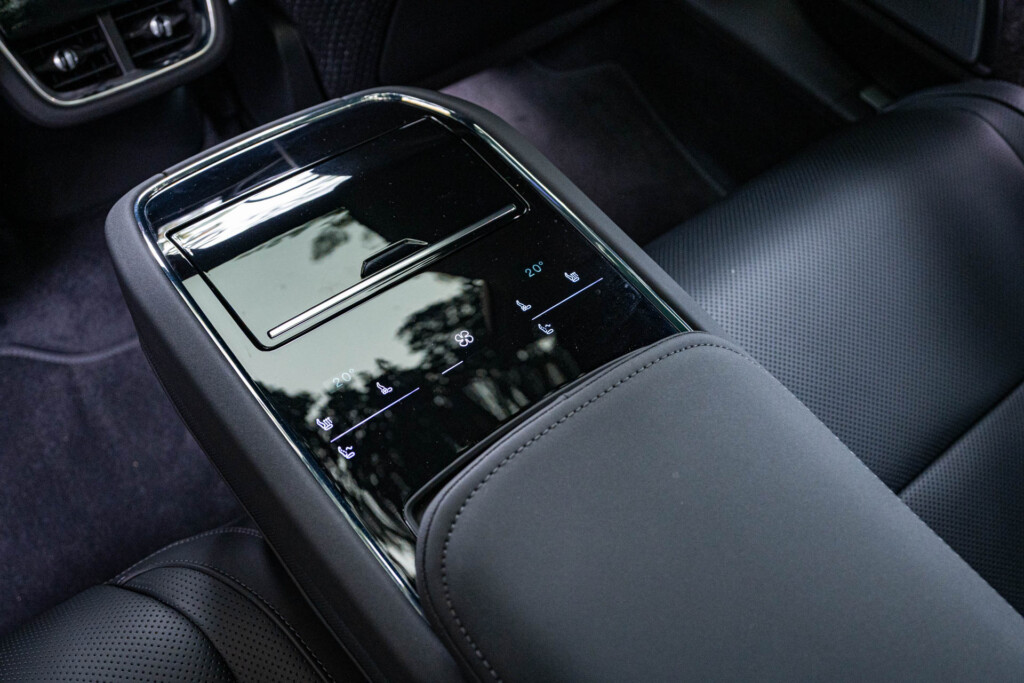
At least, since there is a lot of surfaces to cover, the Polestar distinguishes itself in material quality. There is a deliberate emphasis on lower-impact and recycled materials, and they do not feel like the environmental option.
The front seats were developed with Recaro, while the cabin combines tailored fabrics, metal detailing and Polestar’s familiar flashes of Swedish gold. Even the expensive bits appear reluctant to tell you what they cost.
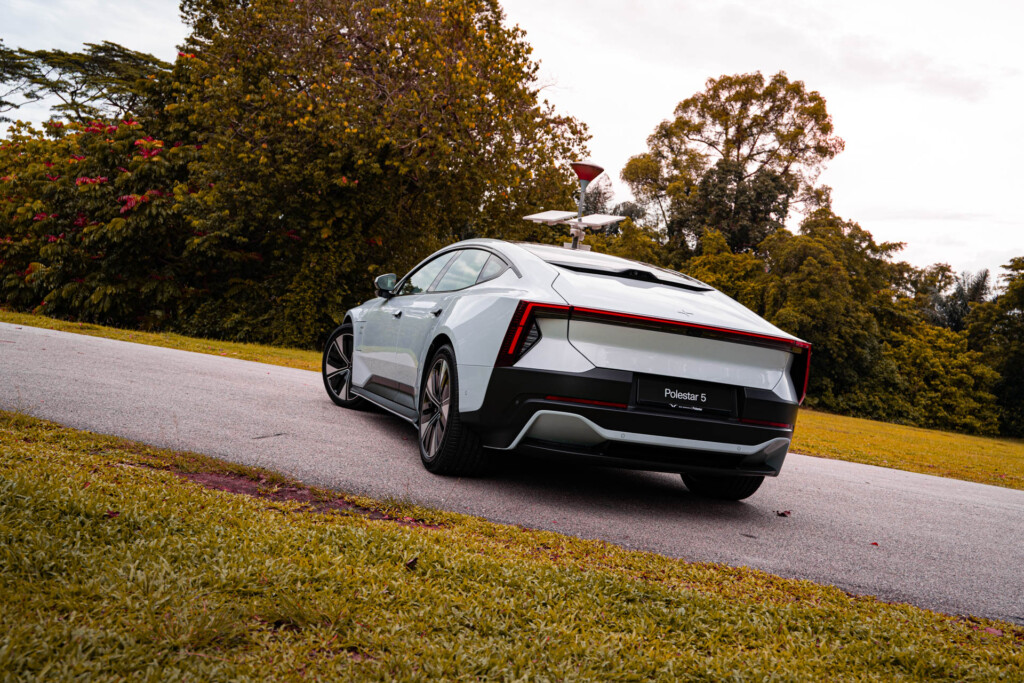
Because there is no rear glass, the Polestar uses a camera mounted at the top of the car to provide the driver with a live video feed. Because the camera is mounted externally, the field of vision can actually be broader than what you would see through a conventional mirror.
It works remarkably well once your eyes adjust to focusing on a screen rather than a reflected image, but it can still take time to adjust.
And if you prefer old-fashioned optics, the display can be switched into a conventional reflective mode. Useful for checking rear passengers, less useful for seeing the road behind because, once again, there is no window.
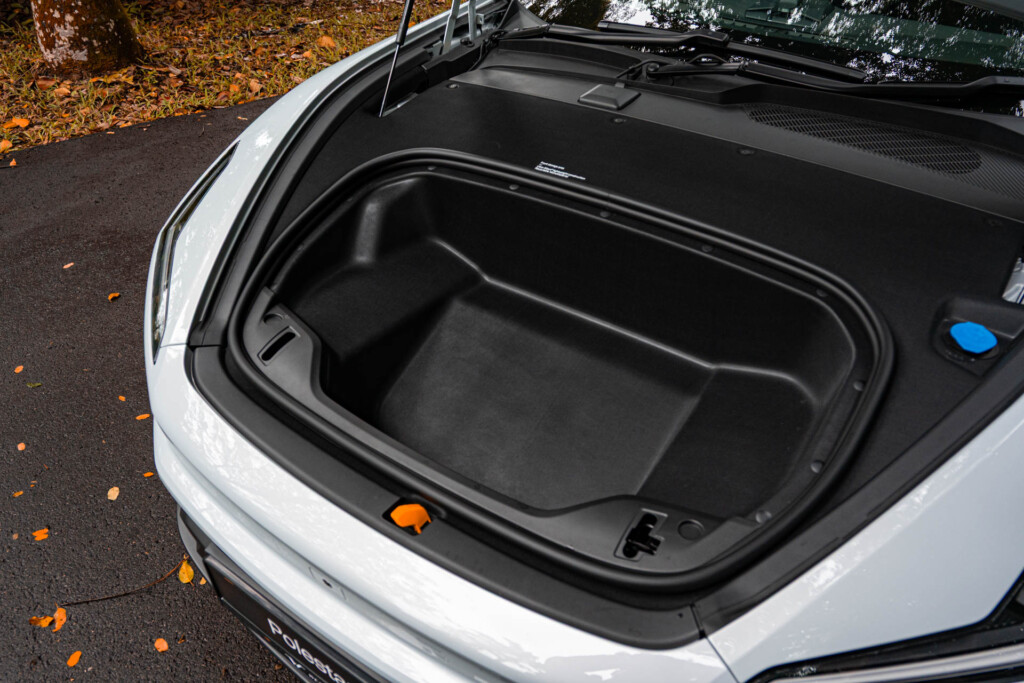
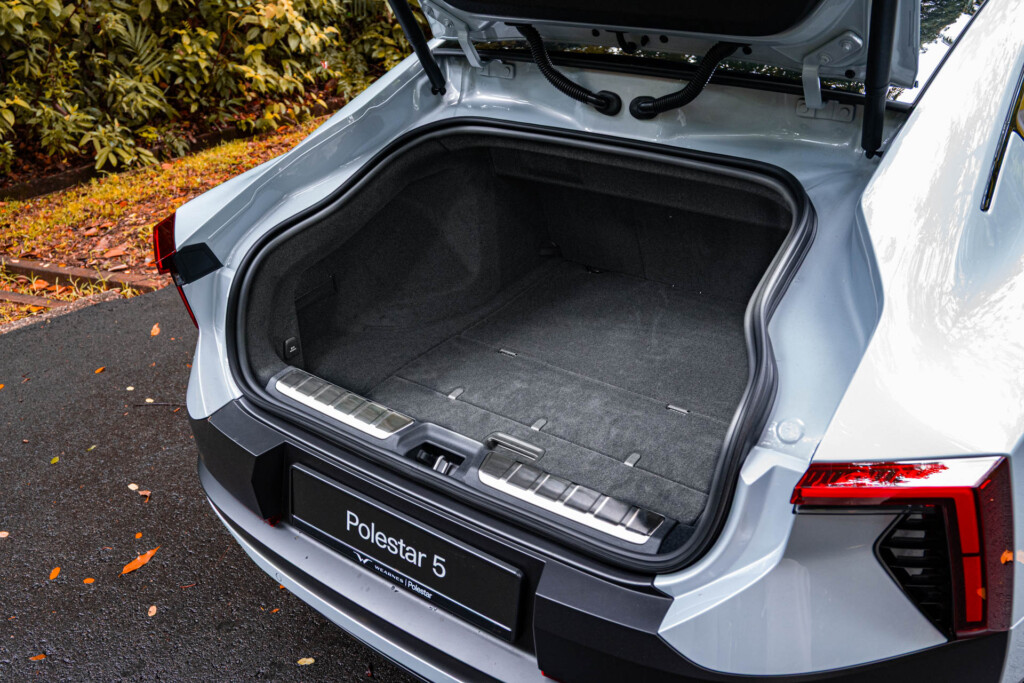
The lack of a rear window also means this is not a conventional hatchback despite its fastback appearance, and you will notice that when opening the 365 litre boot.
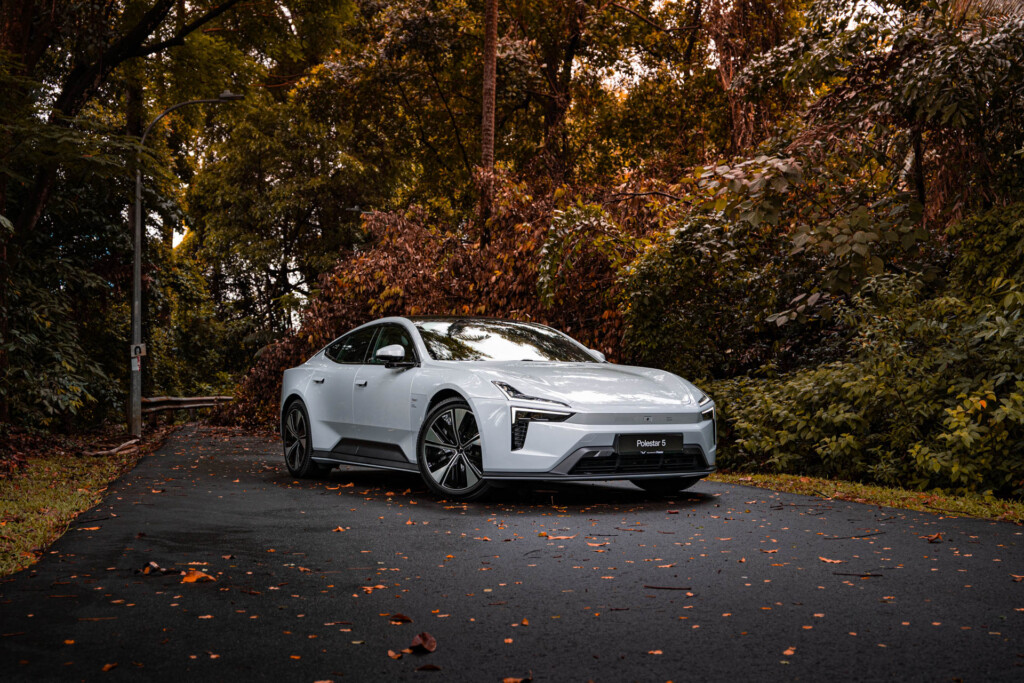
At more than half a million of your hard-earned dollars, the Polestar invites competition from the likes of the Porsche Taycan, Audi e-tron GT and Lotus Emeya.
These are not vehicles bought because somebody has carefully calculated the cheapest cost per kilometre, but rather by the heart.
Porsche has decades of sports-car history. Audi has four rings recognised almost everywhere. Lotus has Colin Chapman, Formula One championships and a catalogue of cars enthusiasts will happily bore you about.
Polestar is comparatively new, but with the 5, it finally feels like there’s a flagship product worth your money. It shaped all of that into something capable of travelling enormous distances very quickly without forgetting that grand touring is supposed to be comfortable.
This is a car that repeatedly chooses the more difficult route, with its bespoke bonded-aluminium platform, low-slung GT body, and a camera where everyone else puts glass.
This feels like a car created to establish what Polestar actually is, and it sees no reason to look back.
Technical Specifications
Polestar 5
Powertrain: Dual Electric Motors, All-Wheel Drive
Power: 550 kW (738 bhp)
Torque: 812 Nm
Gearbox: Single-Speed (A)
Acceleration: 3.9 Seconds (0-100km/h)
Top Speed: 250 km/h
Battery Capacity: 112 kWh
Drive Range: 678 km
Energy Consumption: 5.6 km/kWh
Price: S$587,000 with COE (accurate at the time of this article)
Read more automotive news at AutoApp, or check out our latest videos on YouTube and on TikTok!