Something is reassuring about a big Volvo. Not in the way a supercar reassures you with speed, or a luxury SUV reassures you with sheer presence, but in a more understated, almost philosophical way.
It feels like a machine designed by people who have thought deeply about what a car should do for you, rather than how loudly it should announce itself.
The Volvo ES90 is exactly that sort of car.
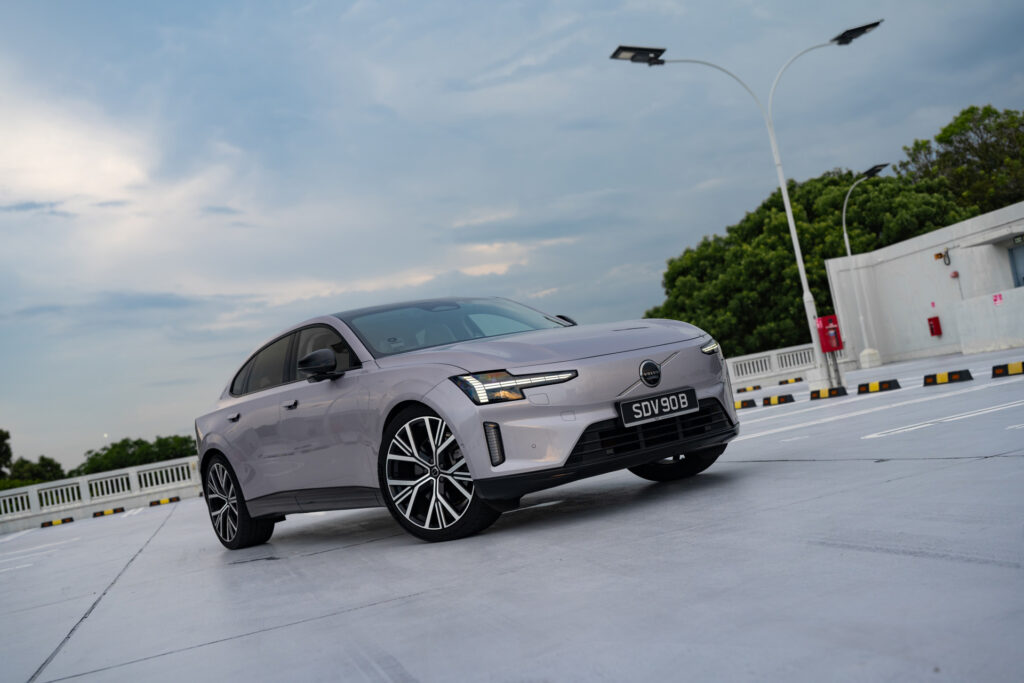
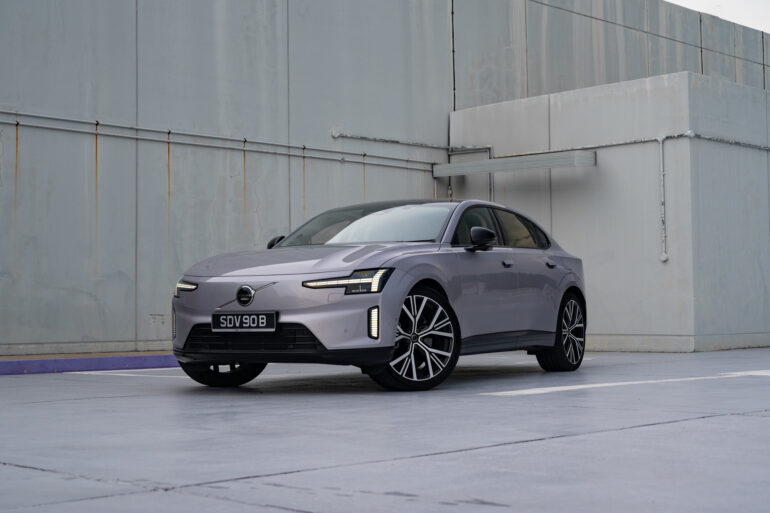
At just over five metres long, with a wheelbase that stretches out like a limousine’s, it carries itself with authority.
But, call it a saloon, and you would only be half right. The ES90 sits higher than you expect, almost as if it cannot quite decide whether it wants to be a traditional executive four-door or something more contemporary. A “saloon-over”, perhaps.
And when the market is populated by the likes of the BMW i5, Mercedes-Benz EQE, Audi A6 e-tron, and Porsche Taycan, standing out may well be the boldest move of all.
A Design That Whispers
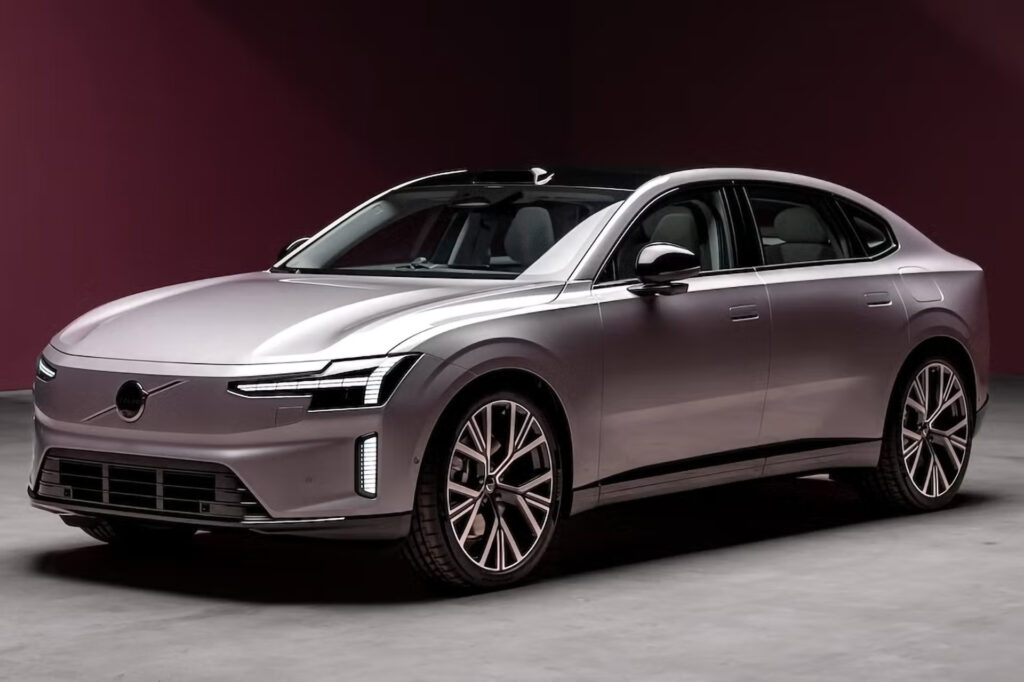
At launch, you may remember the ES90 wearing what could only be described as a rather prominent “forehead bump”, which was a LIDAR sensor perched on the roof like an overenthusiastic hat. That has since been quietly retired, following Volvo’s decision to part ways with its supplier.
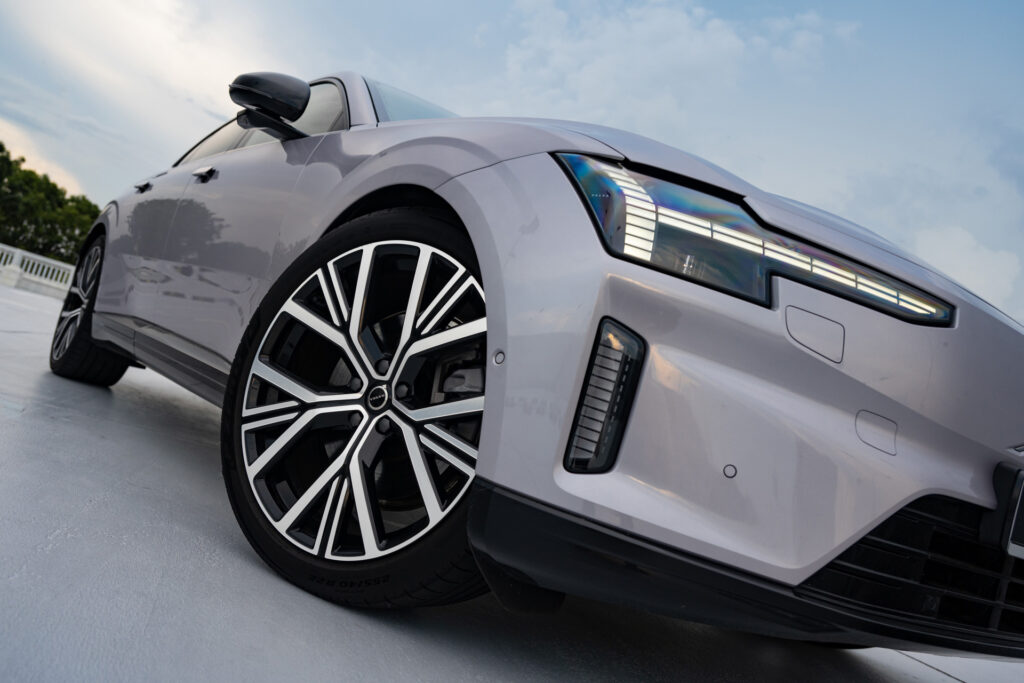
Without that visual interruption, the ES90’s Scandinavian restraint comes to the fore. The signature “Thor’s Hammer” daytime running lights now sit with a sharper, more grounded presence, matching the smooth, grille-less front end.
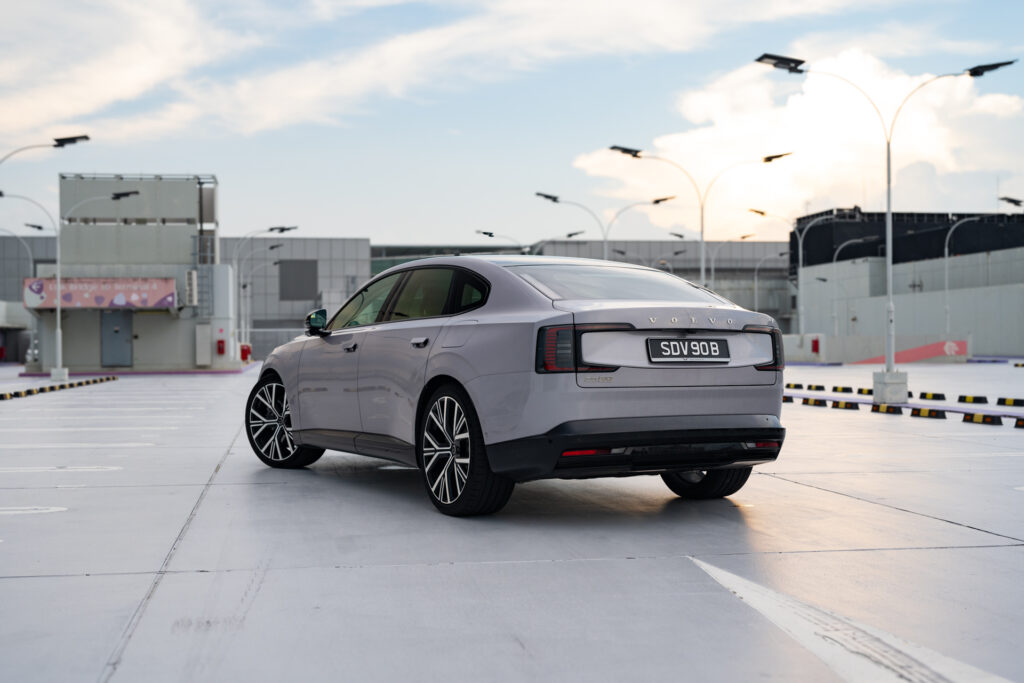
The raised driving position feels almost SUV-like, and the fastback rear deviates from traditional saloon orthodoxy. But there is logic here. Volvo wants to blend the commanding view of an SUV with the elegance of a luxury saloon.
Whether that works visually is a matter of taste. But aerodynamically, at least, with a drag coefficient of 0.25, this is a car that slices through air rather than bludgeons it.
A Cabin That Feels Thoughtful
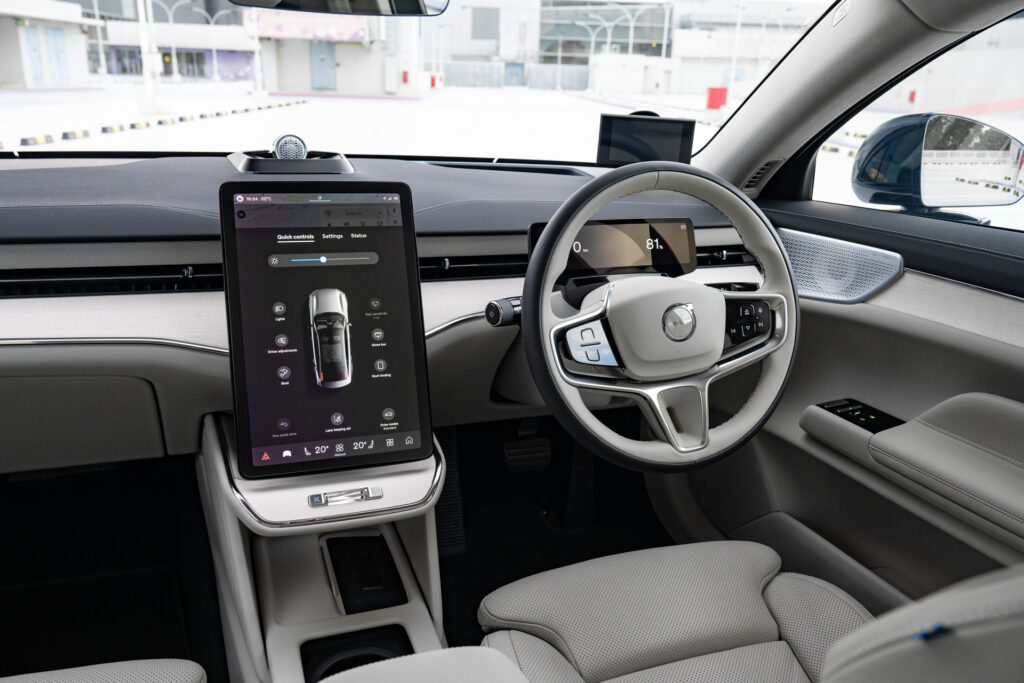
Step inside, and the ES90 reveals its true character. If some German rivals feel like high-tech command centres, this feels more like a carefully curated living space.
Materials are rich but not ostentatious. The birch wood inlays, the Nordico upholstery and the soft, ambient lighting all contribute to an environment that feels considered.
Even the details carry a sense of quiet wit. The dashboard spells out “Volvo” in Morse code through its lighting pattern.
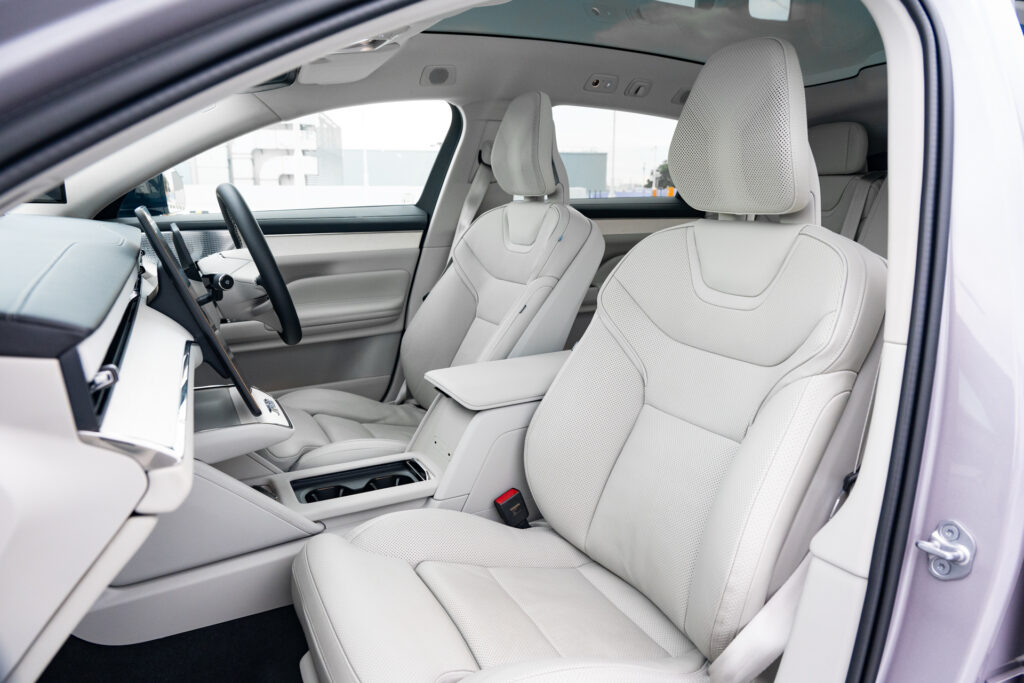
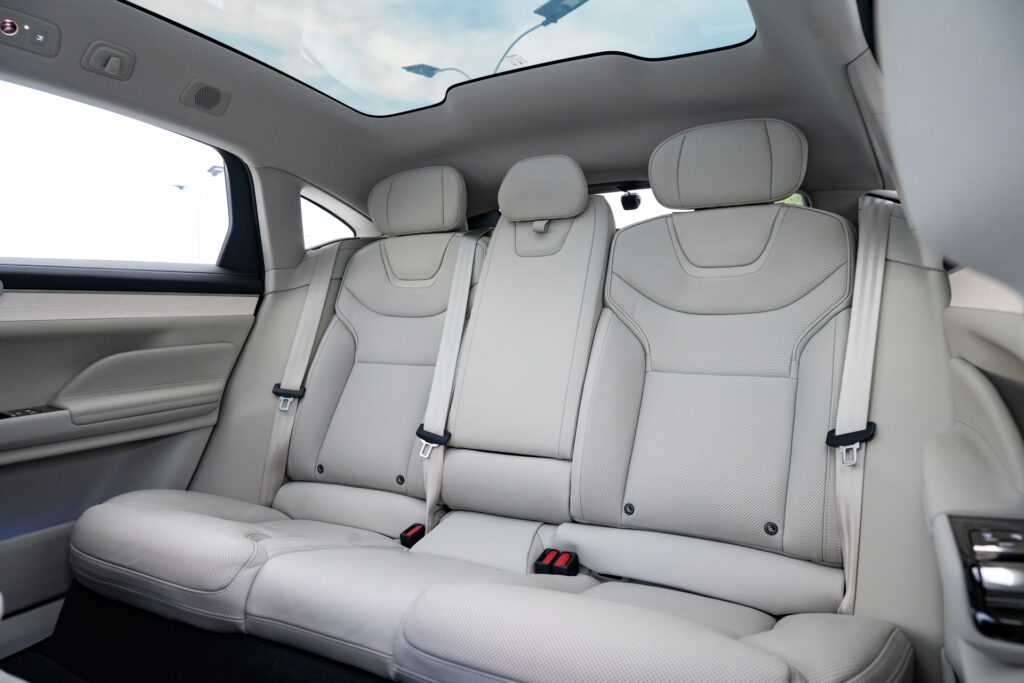
For a car of this size, practicality is, as expected, strong.
You sit slightly higher than expected, which initially feels unusual, but quickly becomes second nature. Visibility is excellent, and the seats themselves are supremely comfortable, the sort of chairs you settle into and forget about entirely.
Rear passengers are treated to generous legroom and a near-limousine sense of space, although the slightly raised seating position does compromise foot space under the front seats.
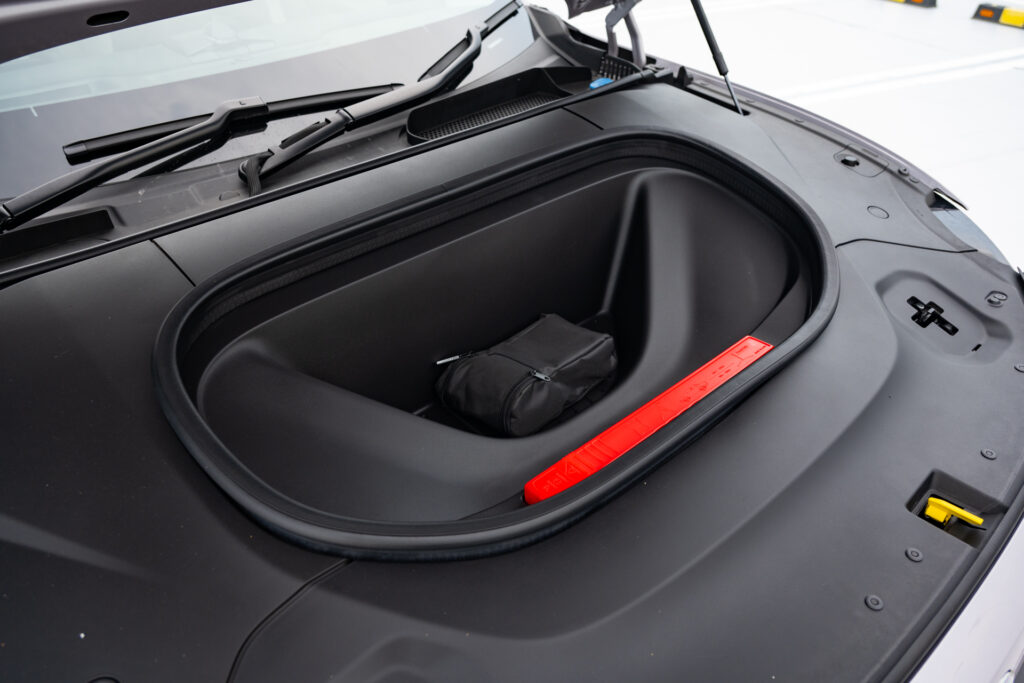
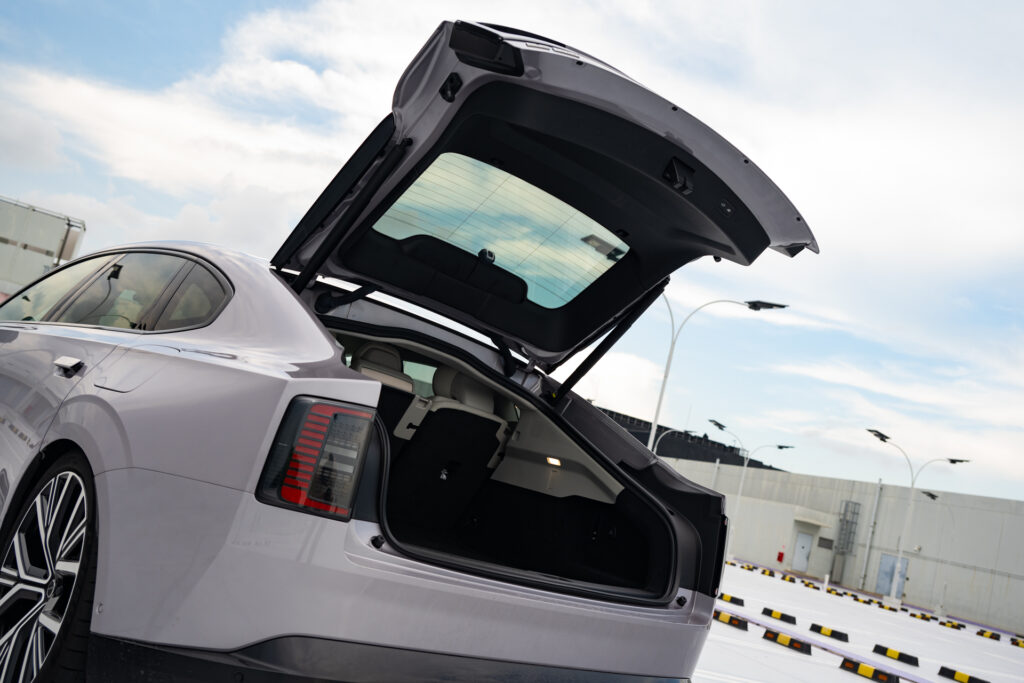
The boot, accessed via a hatchback-style opening, offers 424 litres of space, expanding to 1,427 litres with the seats folded. There is even a small “will it fit?” guide inside the tailgate, a delightfully pragmatic touch that feels quintessentially Volvo.
Double-Edged Technology Sword
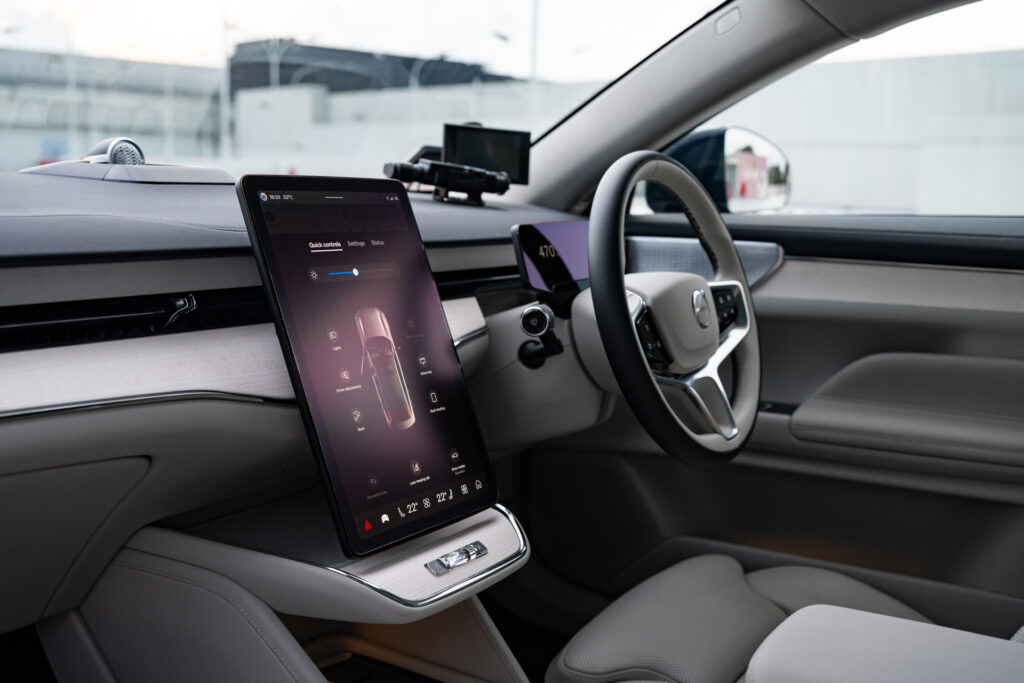
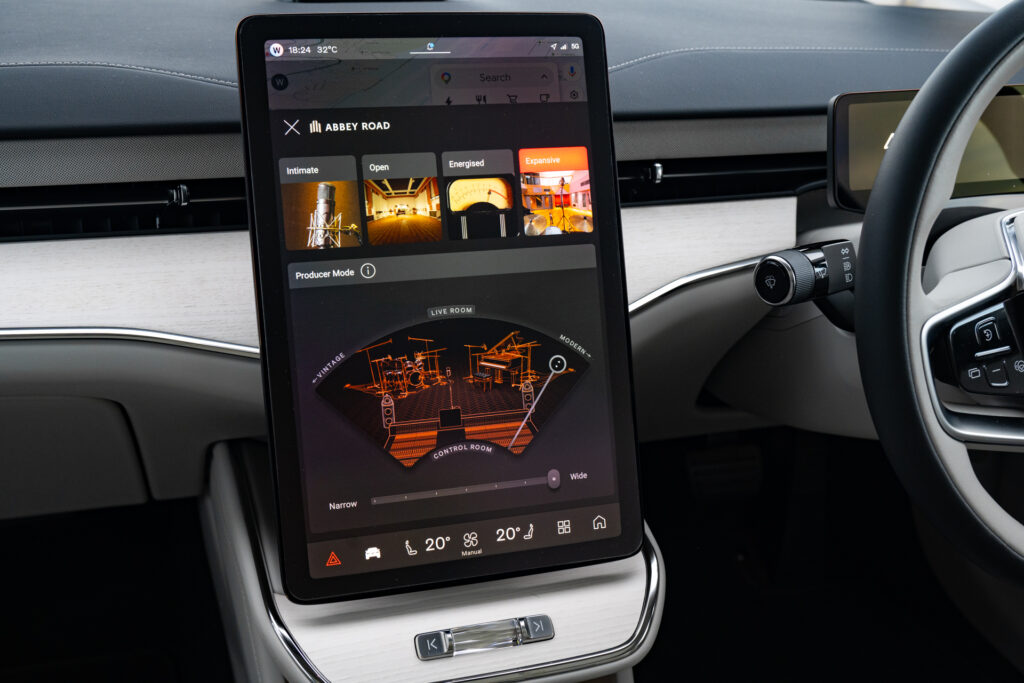
Of course, no modern Volvo would be complete without a heavy dose of technology.
The ES90’s interface revolves around a large 14.5-inch central touchscreen, supported by a smaller driver display and a head-up display. It is clean, responsive, and powered by Google-based services, including Maps, Assistant, and the Play Store.
In practice, Volvo has moved many key controls into the touchscreen. It is a decision that feels at odds with the brand’s heritage of intuitive, glove-friendly ergonomics. Swedish winters, after all, are not known for encouraging touchscreen precision.
Once set up, most owners will likely leave everything as is. But if you are the sort who likes to tweak things on the move, you may find the experience mildly frustrating.
A Study In Refinement
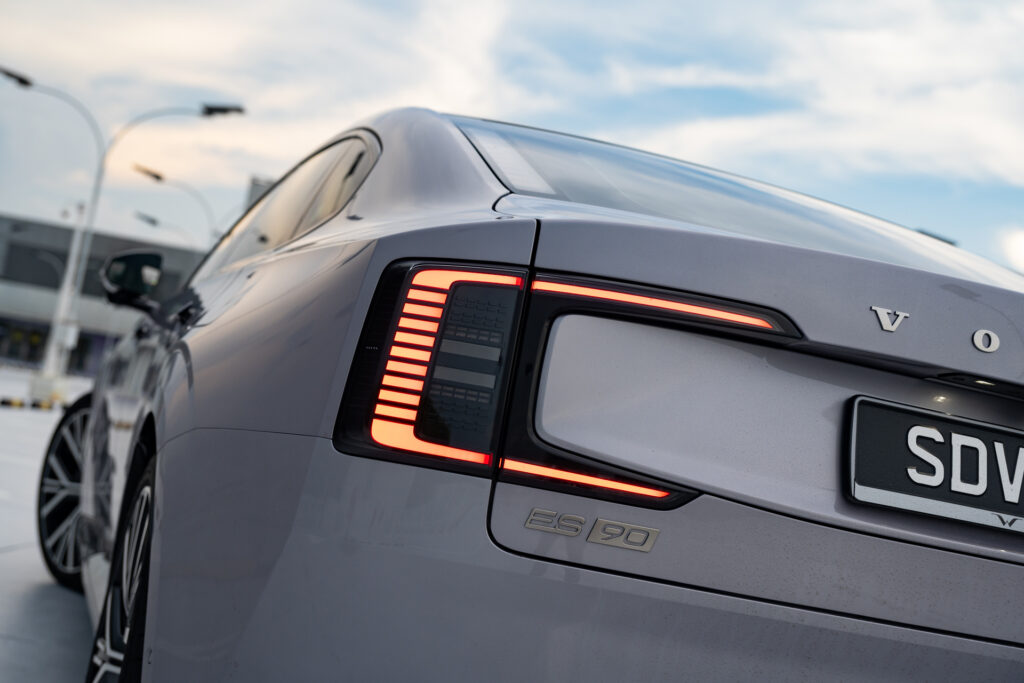
Drive the ES90, and one word comes to mind almost immediately: refinement. This is a car that glides effortlessly and silently. Almost imperiously.
Wind noise is virtually non-existent. Tyre noise is hushed. The outside world fades into the background, leaving you in a cocoon of calm.
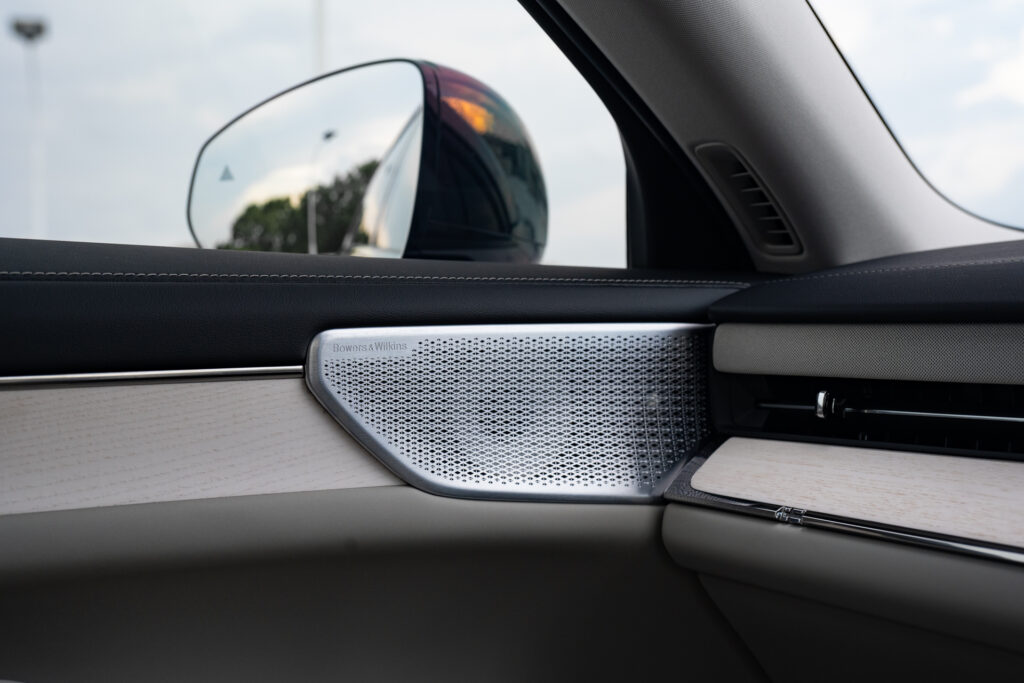
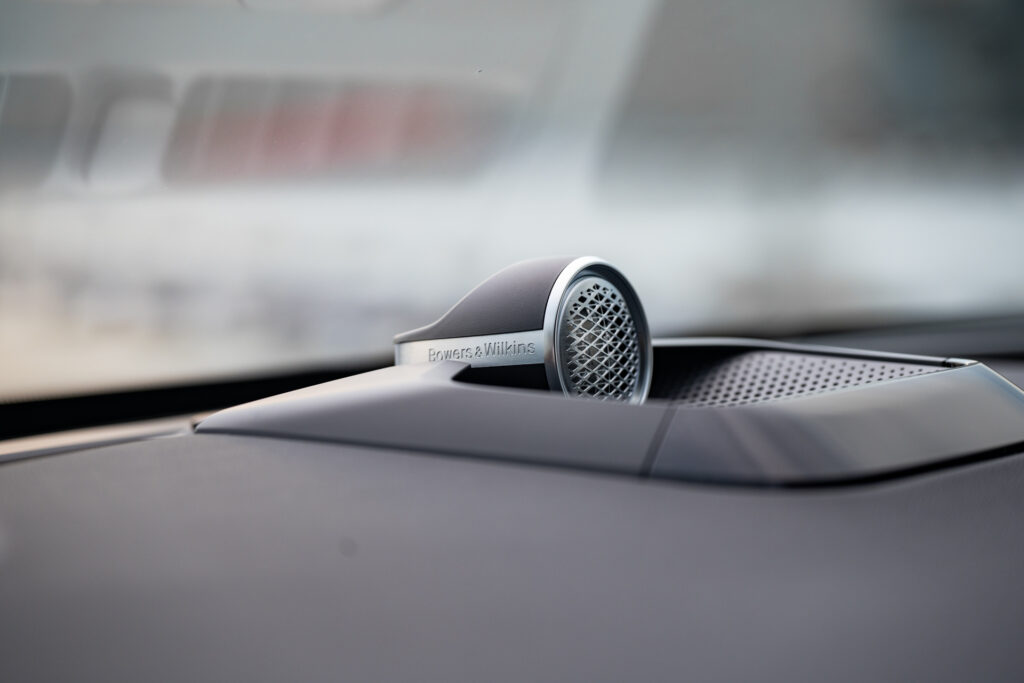
It is, in many ways, reminiscent of a Rolls-Royce Ghost. Not in outright opulence, but in the way it isolates you from the chaos beyond the windscreen.
The air suspension plays its part, delivering a ride that is soft yet controlled. Only the worst surfaces manage to disturb its composure, and even then, the disruption feels muted.
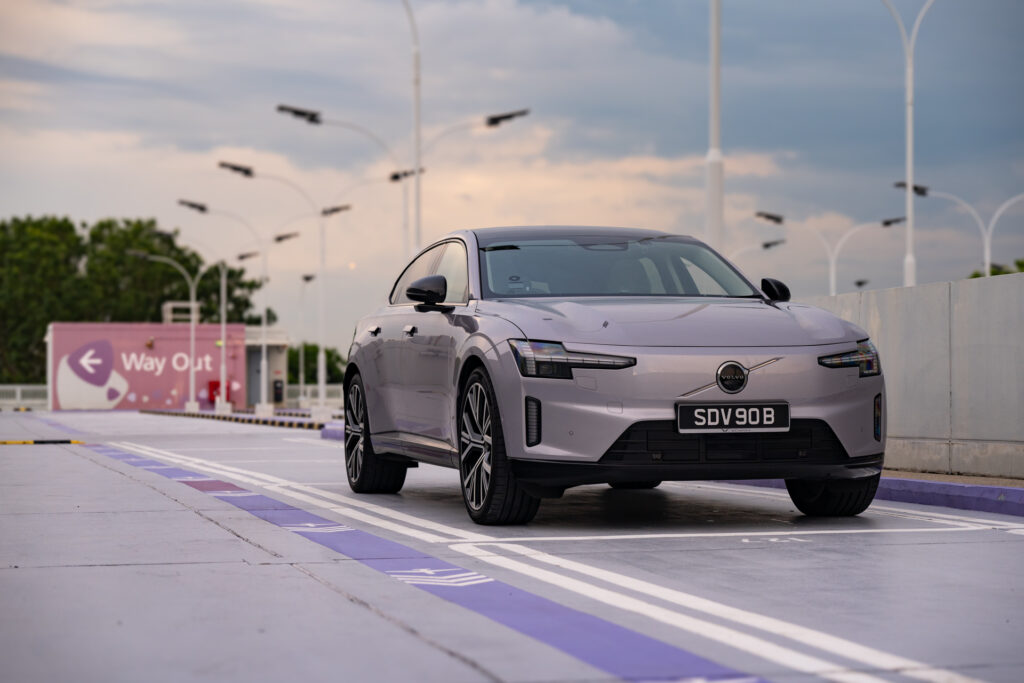
Performance is adequate rather than exhilarating. Singapore-bound units receive a single-motor powertrain, with 245kW and 480Nm at your right foot’s disposal.
The ES90 reaches 100km/h in around 6.6 seconds, and in doing so, you become aware of the car’s 2.3-tonne weight. The car never encourages such behaviour anyway. This is not a car that wants to be hurried.
Volvo claims up to 661km of range on a full charge. In real-world conditions, expect closer to a 500-ish figure.
Real-World Sensibility
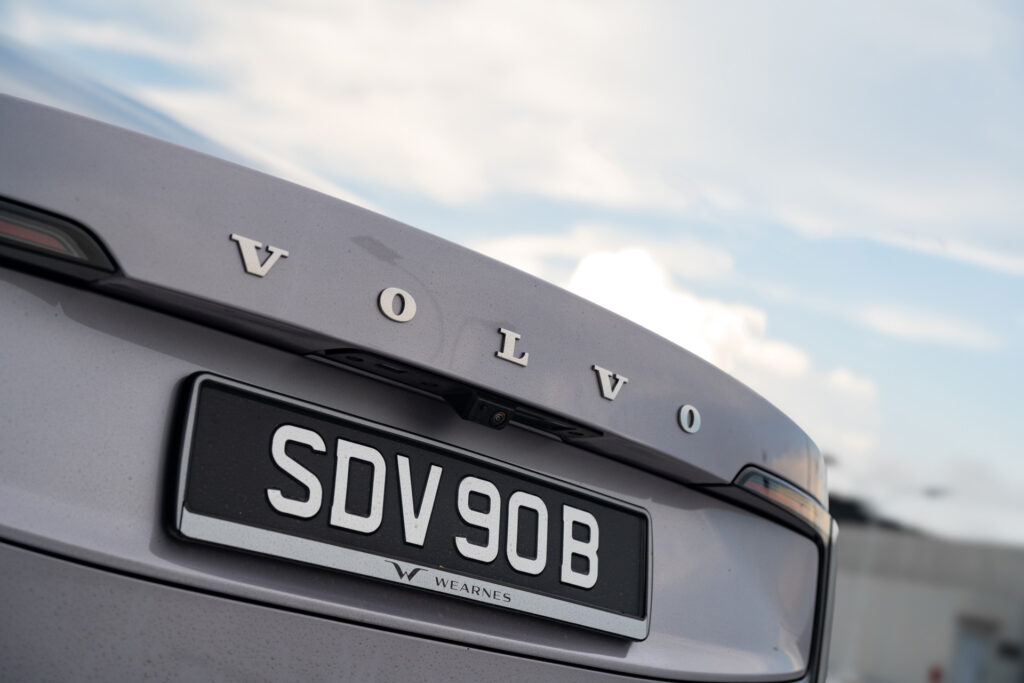
The ES90 understands that to impress, you don’t do it with numbers, but rather with consistency and predictability. Qualities that matter far more in daily use.
It is a space in which you can disconnect from the noise of modern life. A sanctuary on wheels, if you will. Serenity is a paid virtue here, and the ES90 delivers it in spades.
Technical Specifications
Volvo ES90 Ultra
Engine: Single Electric Motor
Powertrain: Rear-Wheel Drive
Power: 245 kW (329 bhp)
Torque: 480 Nm
Gearbox: Single-Speed (A)
0100km/h: 6.6 Seconds
Top Speed: 180 km/h
Battery Capacity: 92 kWh
Drive Range: 661 km (claimed)
Energy Consumption: 5.4 km/kWh (claimed)
Price: S$398,000 with COE (accurate at the time of this article)
Photo Credits: Sean Loo (@auto.driven)
Read more automotive news at AutoApp, or check out our latest videos on YouTube and on TikTok!