The eighth-generation Lexus ES is finally here, and it has gone electric.
For as long as I can remember, the Lexus ES has been the car you recommend to someone who has already decided that excitement is overrated. That sounds harsher than intended, but the ES has built its reputation by transporting people in quiet, beautifully upholstered comfort while asking very little in return.
Now, the eighth-generation ES has gone electric. And with its new drivetrain, much sharper design and almost limousine-like rear quarters, Lexus is clearly hoping its traditionally conservative executive saloon can find a new audience in a space dominated by the BMW i5 and an increasingly impressive Volvo ES90.
Certainly doesn’t look conservative anymore
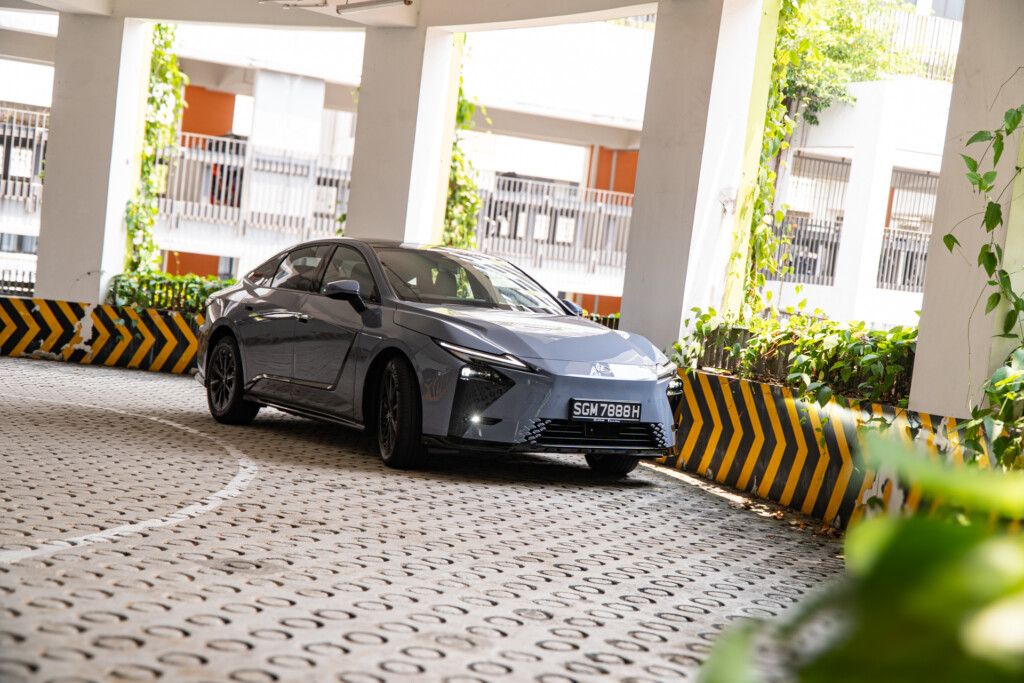
The old ES was handsome in that distinctly Lexus way, but this new one has been given a rather more dramatic wardrobe.
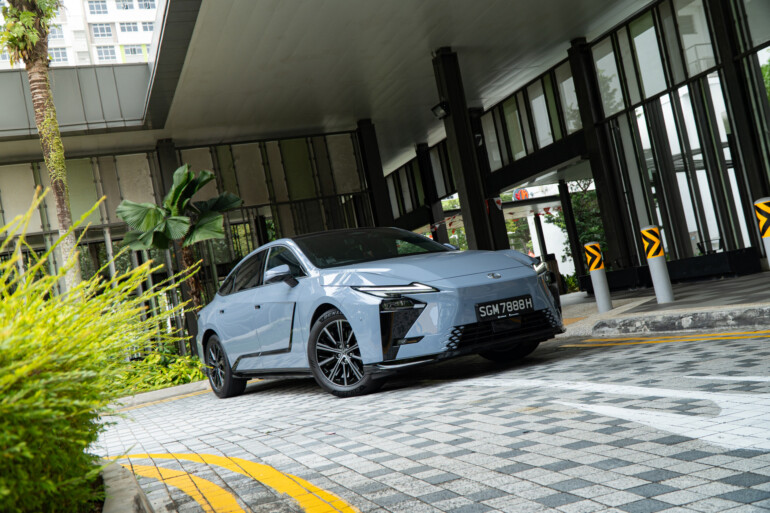
Much of the inspiration apparently comes from the LF-ZC concept shown in 2023, and the most obvious change is the disappearance of Lexus’ enormous traditional spindle grille. Well, sort of.
The grille itself has largely vanished, but Lexus insists the “spindle” idea remains, only now it is expressed through the shape of the entire front end.
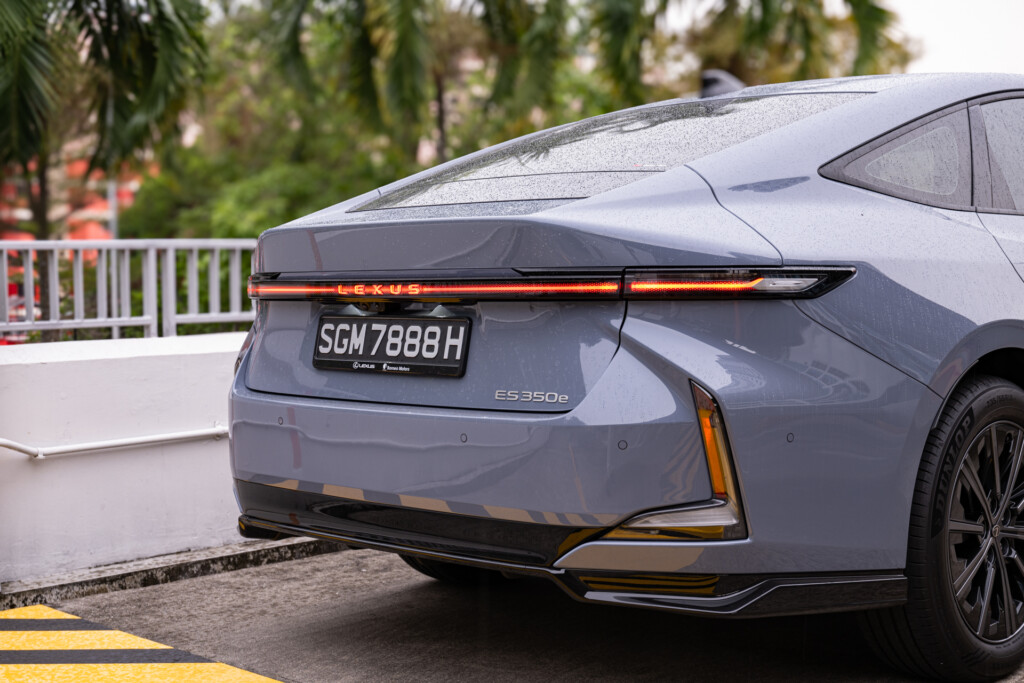
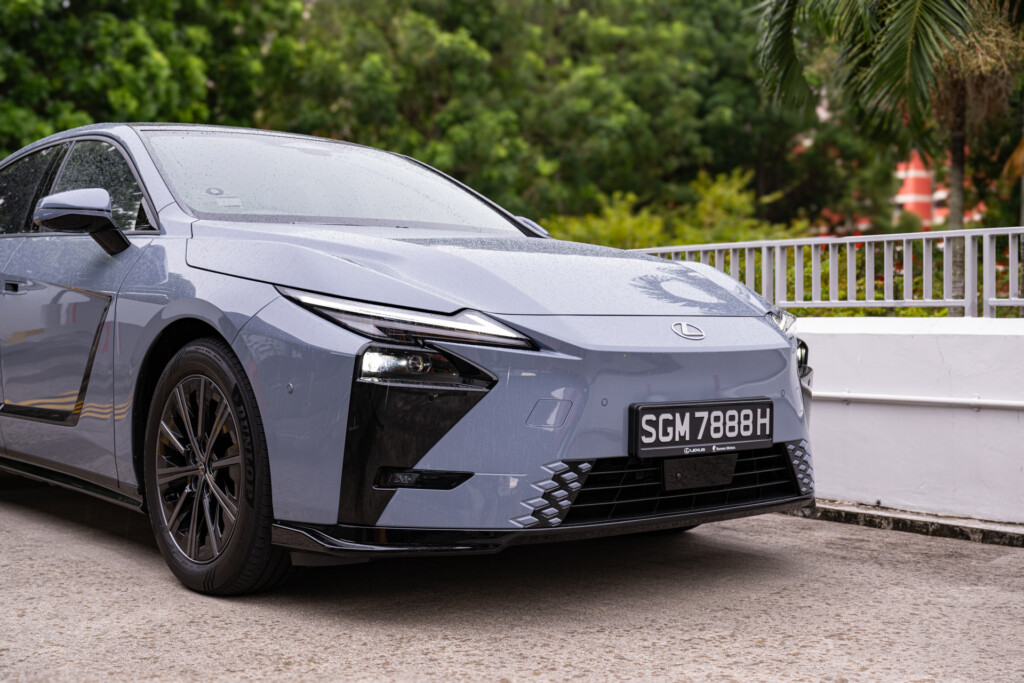
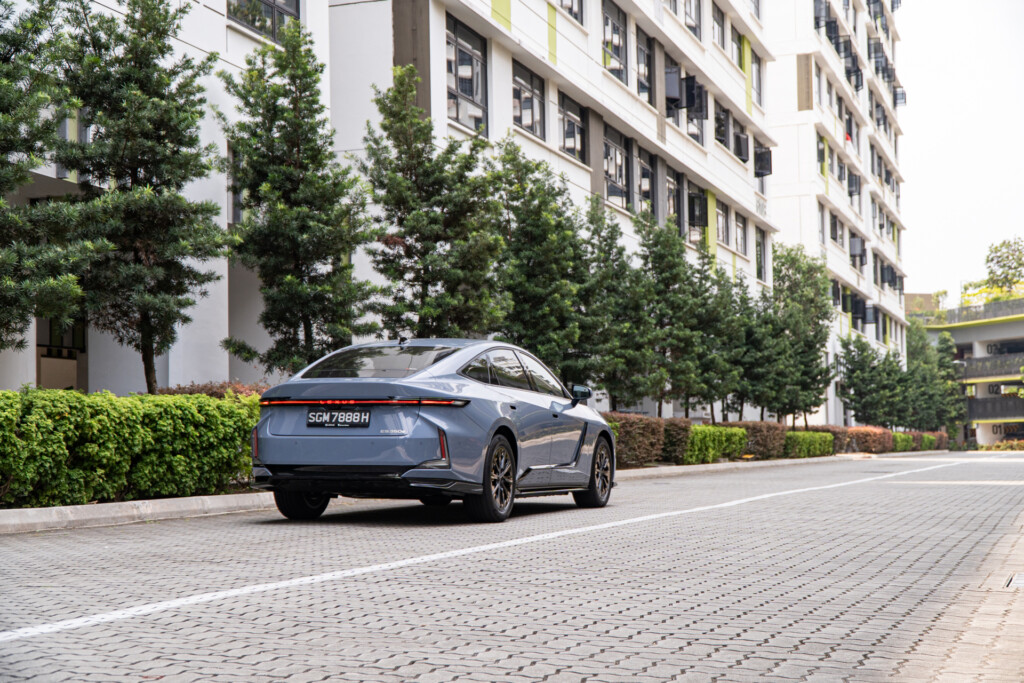
The nose is cleaner and more architectural, with sharp twin-L daytime running lights sitting above the main LED headlamps. The bodywork then sweeps rearwards through strong character lines and semi-flush door handles before tapering into a fastback-style tail.
At 5.1 metres long, this is also the largest ES yet. It feels less like the slightly anonymous executive saloon of old and more like something genuinely flagship-sized.
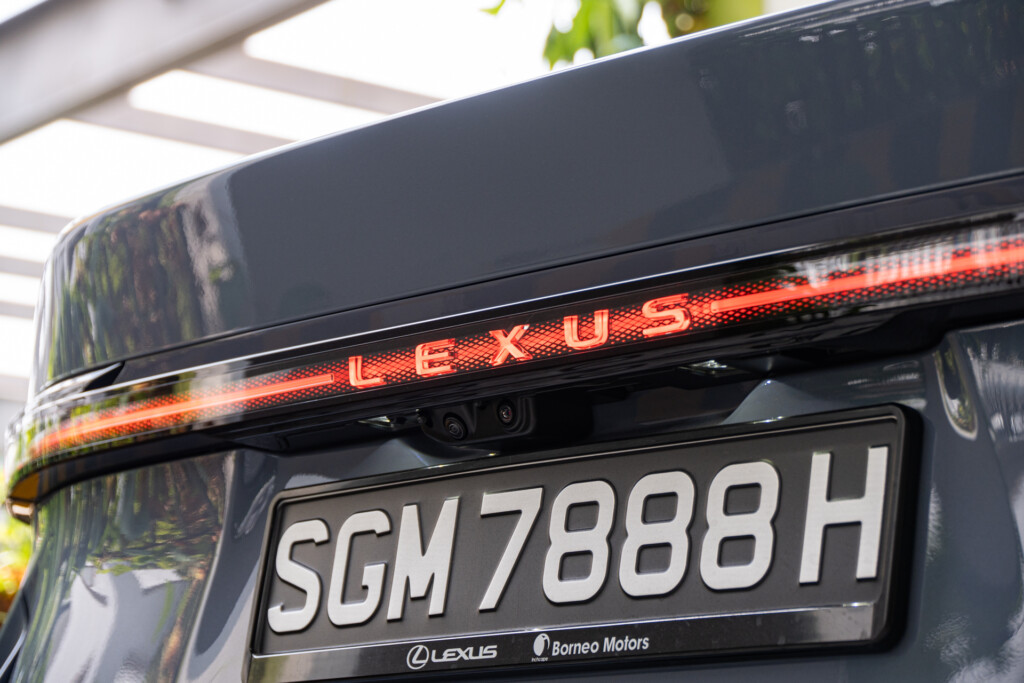
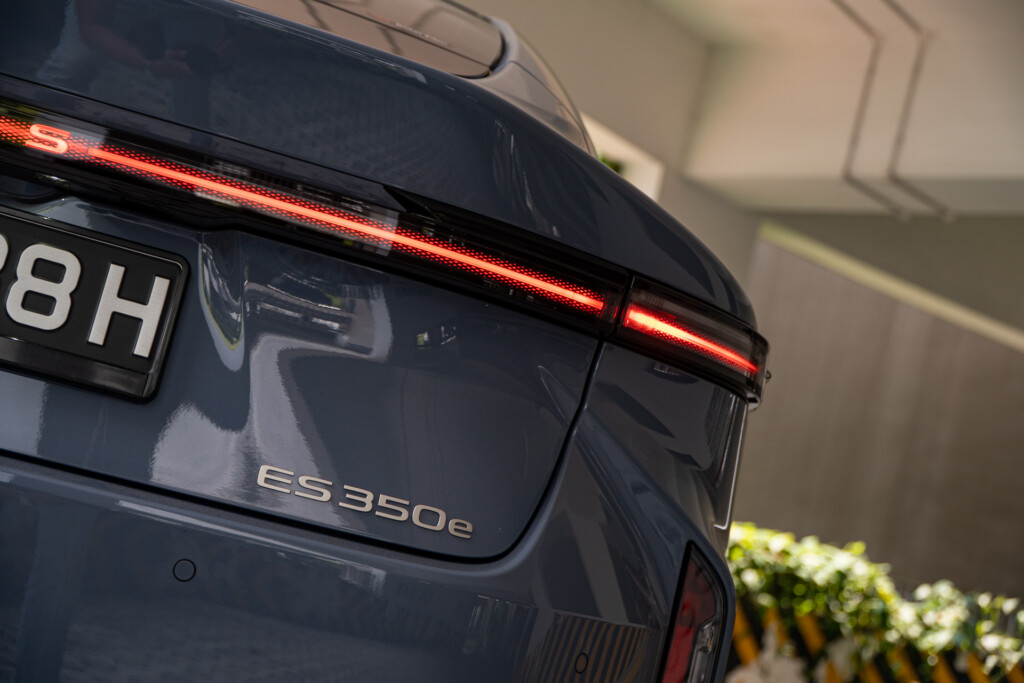
The rear light bar is perhaps a little predictable in 2026 (apparently every electric car must now possess one by international decree), but overall, the ES looks imposing without becoming vulgar.
Electric, but not from the ground up
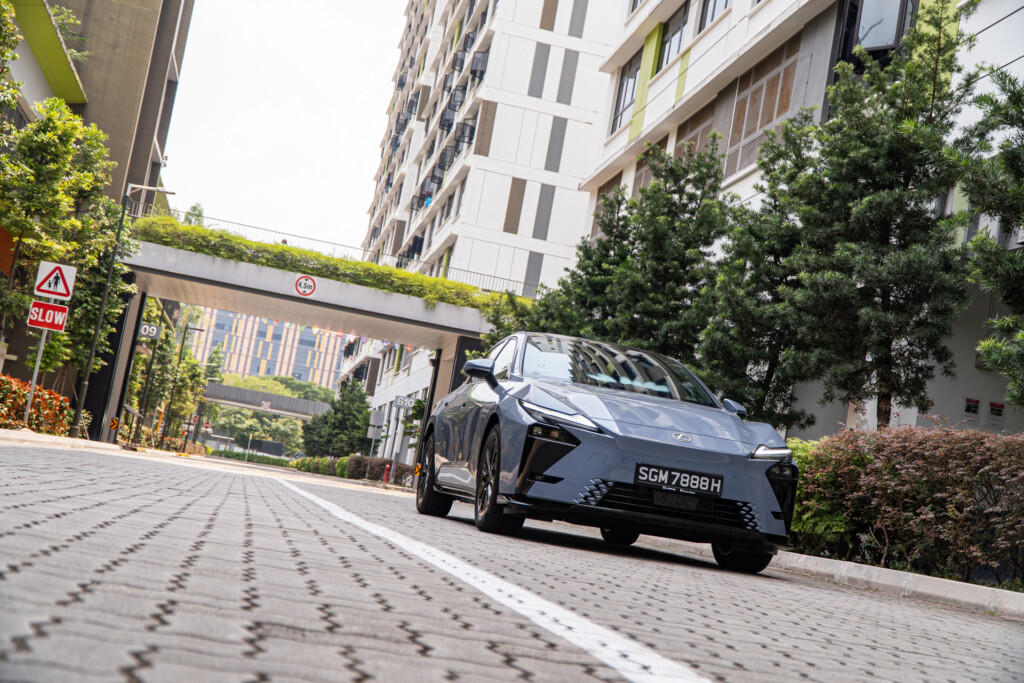
Underneath, things become slightly less futuristic. Unlike several rivals, the ES does not sit on a dedicated electric platform. Instead, Lexus has adapted its existing GA-K architecture, which also underpins models such as the Toyota Camry and RAV4.
The ES 350e tested here uses a 74kWh battery and a single electric motor driving the front wheels. Output stands at 221bhp, while 0-100km/h takes approximately eight seconds.
BMW, Mercedes-Benz and even several Chinese rivals have conditioned us to expect startling acceleration almost as a matter of course. The Lexus instead gathers speed with the urgency of someone who knows they have plenty of time before dinner.
So how does it drive?
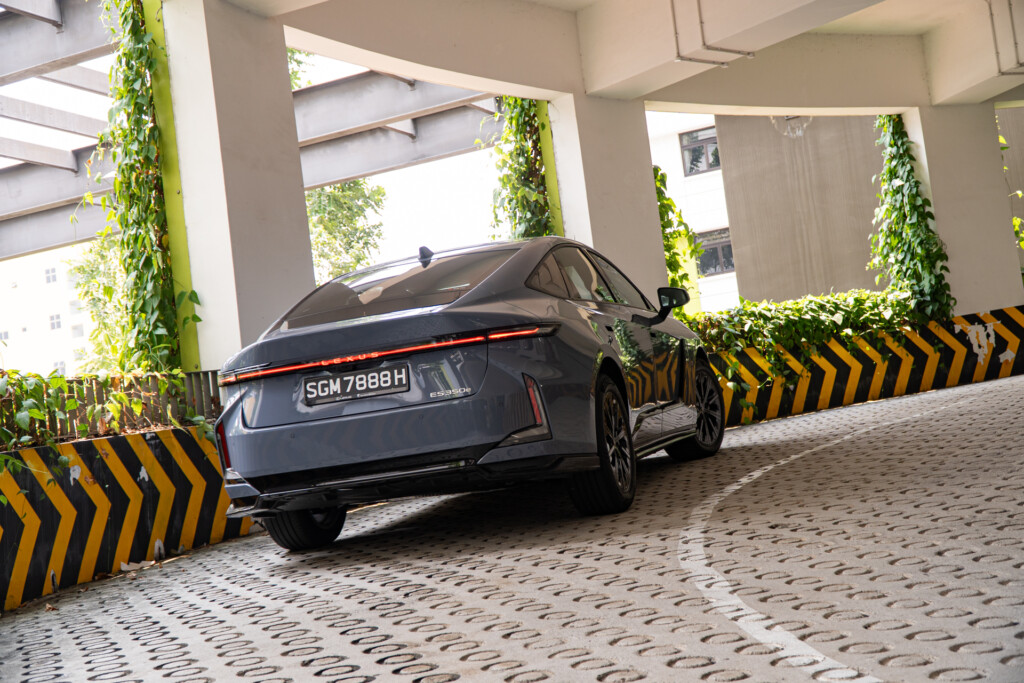
Comfortably. Very comfortably.
If your first question is whether the electric ES has suddenly developed BMW-like handling, the answer is no.
Turn into a sharper corner with enthusiasm and the front-wheel-drive layout quickly makes itself known. There is noticeable understeer, followed by some scrabbling from the front tyres if you ask for too much power while winding on steering lock.
The battery mounted beneath the cabin lowers the centre of gravity, but this is still a softly sprung, 2.2-tonne luxury saloon. It rolls and leans, making it abundantly clear that attacking a sequence of corners is not high on its list of priorities.
There is a Sport mode, but it mainly sharpens the accelerator, adds weight to the otherwise feather-light steering and pipes in a slightly futuristic propulsion sound.
You can also adjust the regenerative braking via paddles behind the steering wheel. But none of this suddenly turns the ES into a driver’s car.
But does everything need to be sporty?
This is where the Lexus ES justifies itself. Modern carmakers have become obsessed with pretending that every executive saloon must possess the Nürburgring somewhere within its soul. Lexus appears less interested, and I rather like that.
The same soft suspension that causes the body to roll through corners also allows the ES to glide over broken surfaces with impressive composure.
At expressway speeds, the cabin settles into the kind of hush that makes you realise how much background noise you normally tolerate in other cars. There is some tyre roar on rougher surfaces, but otherwise the ES feels beautifully isolated from the outside world.
Lexus claims up to around 510km of range from the ES 350e on the smaller 19-inch wheels. During testing, the car returned roughly 6.4km/kWh.
Extrapolated across the usable 72kWh battery, that suggests real-world range could fall around 450-480km depending on conditions.
DC rapid charging peaks at 150kW, while AC charging can reach a much more impressive 22kW. Perfectly usable, but not class-leading.
The cabin is where the ES fights back
Open the door, and the ES begins making a much stronger argument for itself.
The first thing you notice is the seating position. It is unusually high for an executive saloon. Because the platform was never originally designed around a large battery, occupants essentially sit above it rather than within a purpose-built low-slung electric architecture.
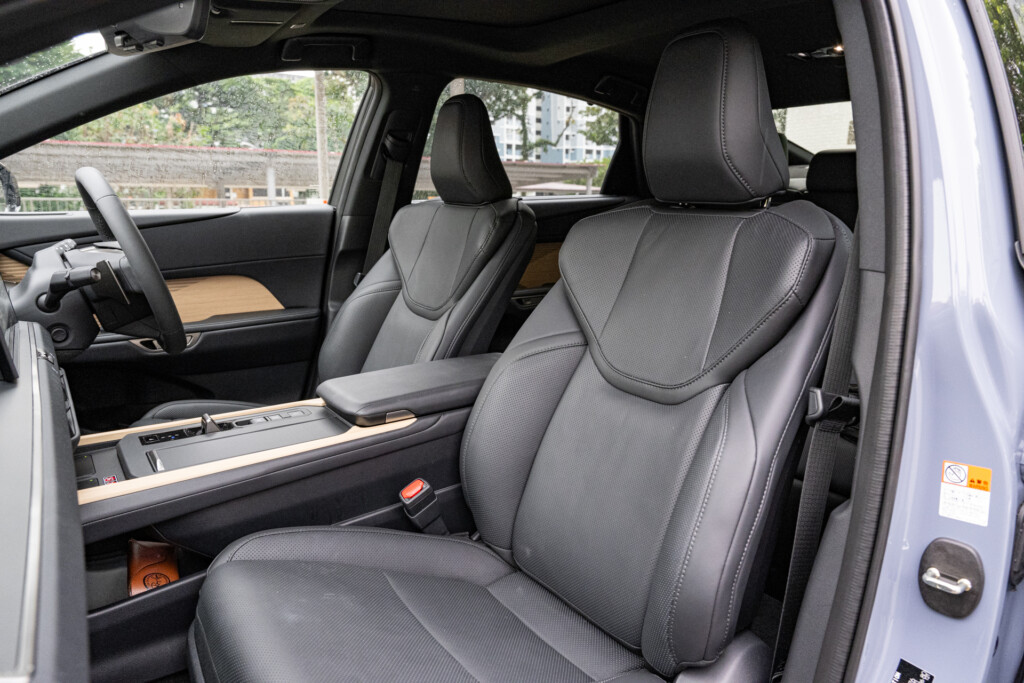
Drivers taller than around 1.83 metres may therefore find headroom less generous than expected, but once settled in, the environment is lovely.
The seats are slim but wonderfully comfortable, while the steering wheel is perhaps one of the nicest fitted to any current Lexus.
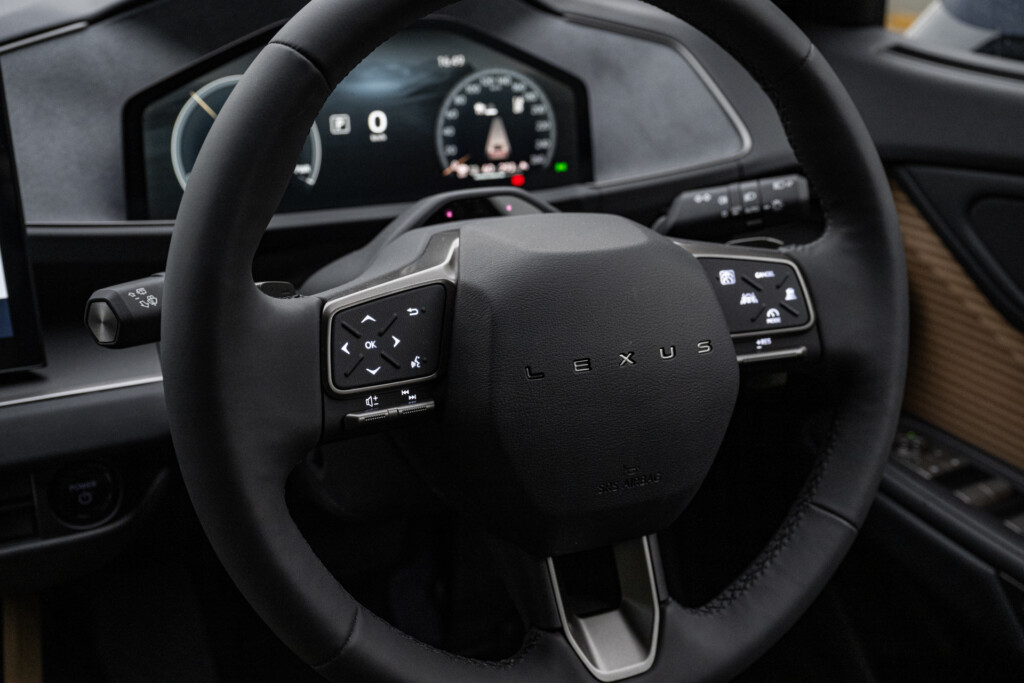
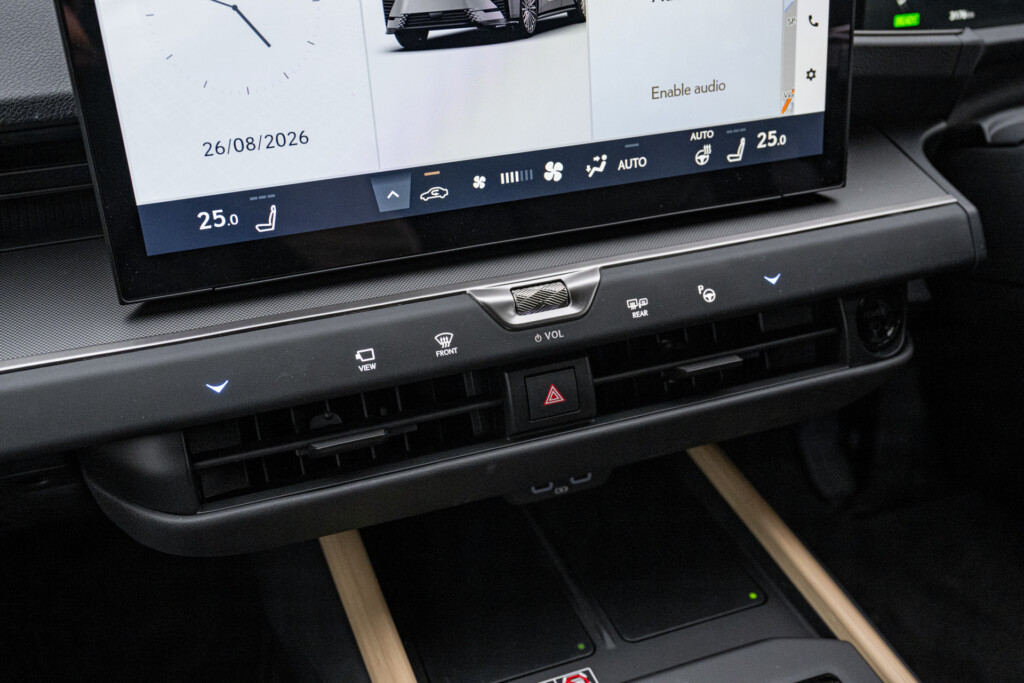
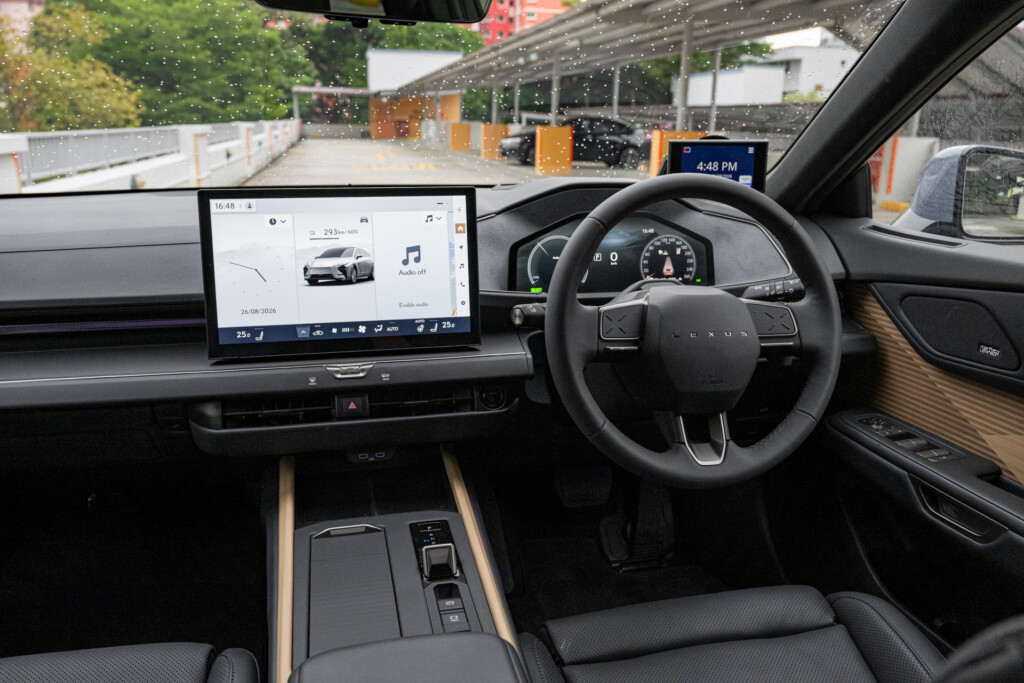
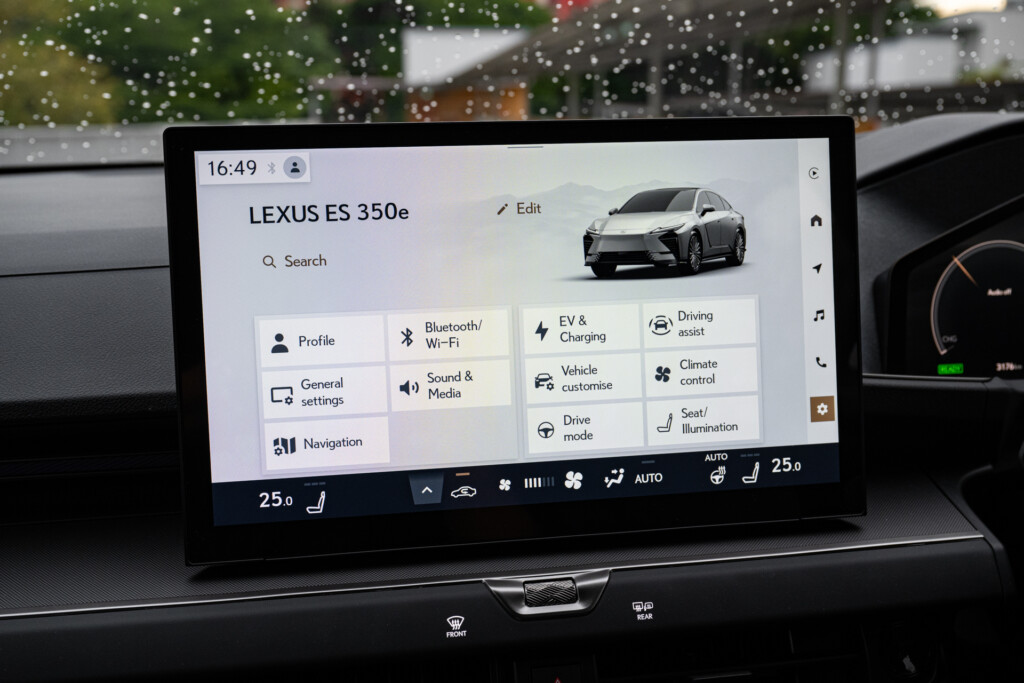
There are proper physical buttons, and behind it sit proper paddles for regenerative braking. A 12.3-inch digital instrument display sits ahead of the driver, while a 14-inch central touchscreen handles infotainment duties.
The latter is crisp and responsive. The interface, however, occasionally buries simple functions deeper than necessary.
Drive modes, for example, require a touchscreen excursion rather than a physical switch. Rather bizarrely, there remains a proper button for disabling traction control. Apparently Lexus believes drivers are more likely to disable stability electronics than switch from Normal to Eco.
Beneath the main display is a row of concealed controls that illuminate when the car is switched on.
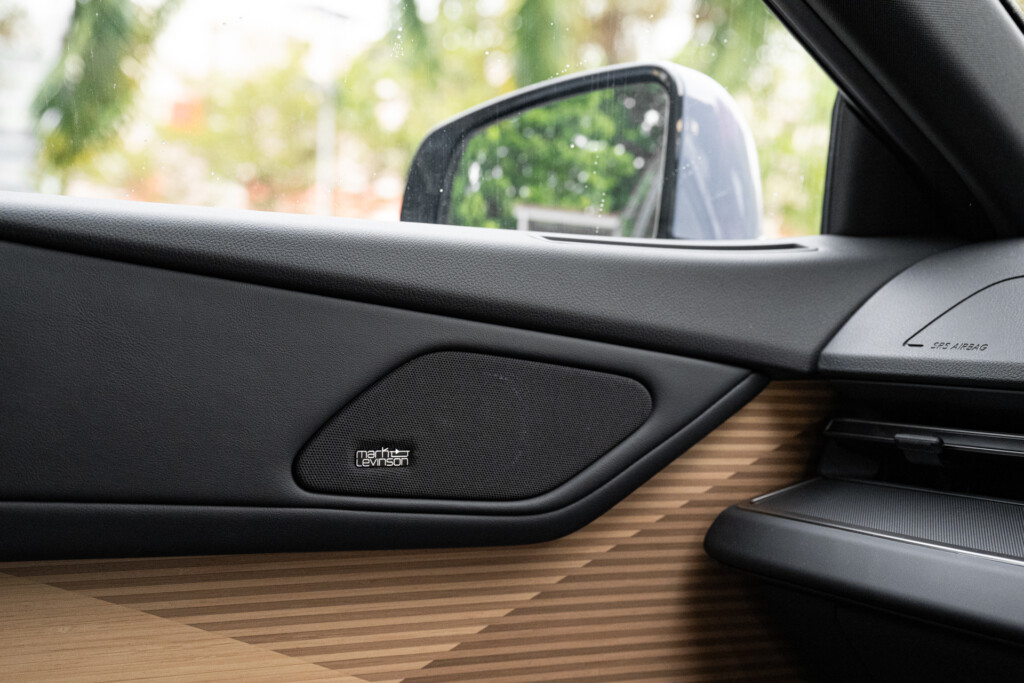
Climate functions also remain permanently visible along the bottom of the screen, which is considerably more sensible than hiding them inside multiple menus. Singapore units also come with a head-up display and an excellent 17-speaker Mark Levinson audio system.
Proper luxury, not faux sportiness
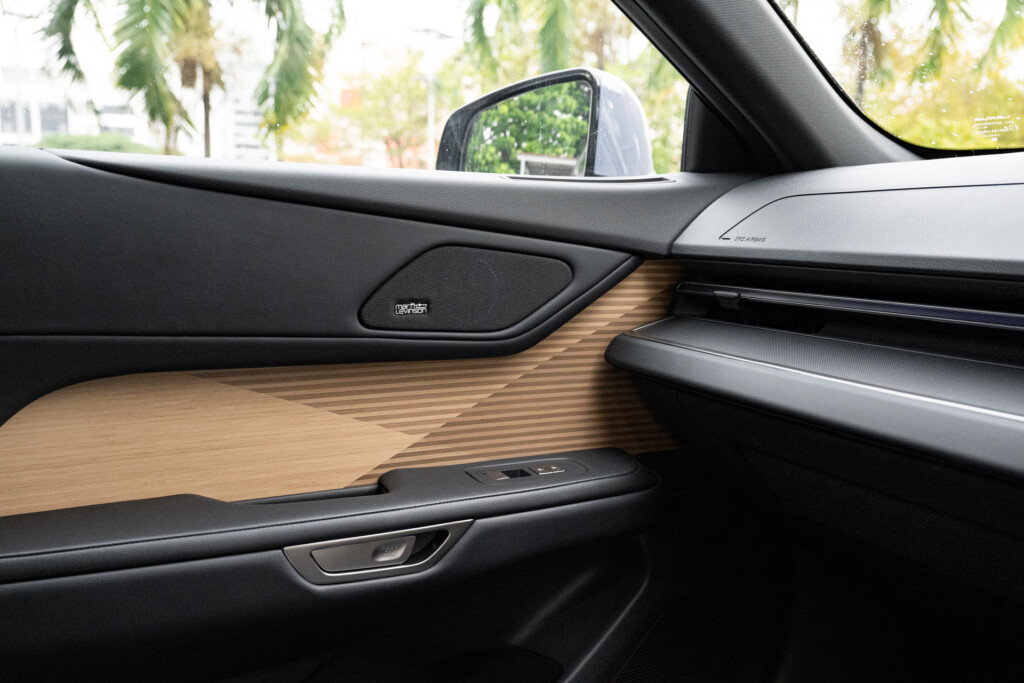
This is perhaps my favourite thing about the ES interior. There is no carbon fibre or fake racing motifs.
No red stitching desperately trying to convince you that your luxury saloon secretly wants to compete in Super Taikyu. Instead, Lexus uses soft leather, genuine bamboo trim and beautifully finished surfaces.
Ambient lighting illuminates the bamboo rather elegantly, giving the cabin a warmer and more natural character than many rivals.
The material quality is excellent. And unlike some modern luxury interiors that resemble high-end electronics shops, the ES still feels like a place designed for humans.
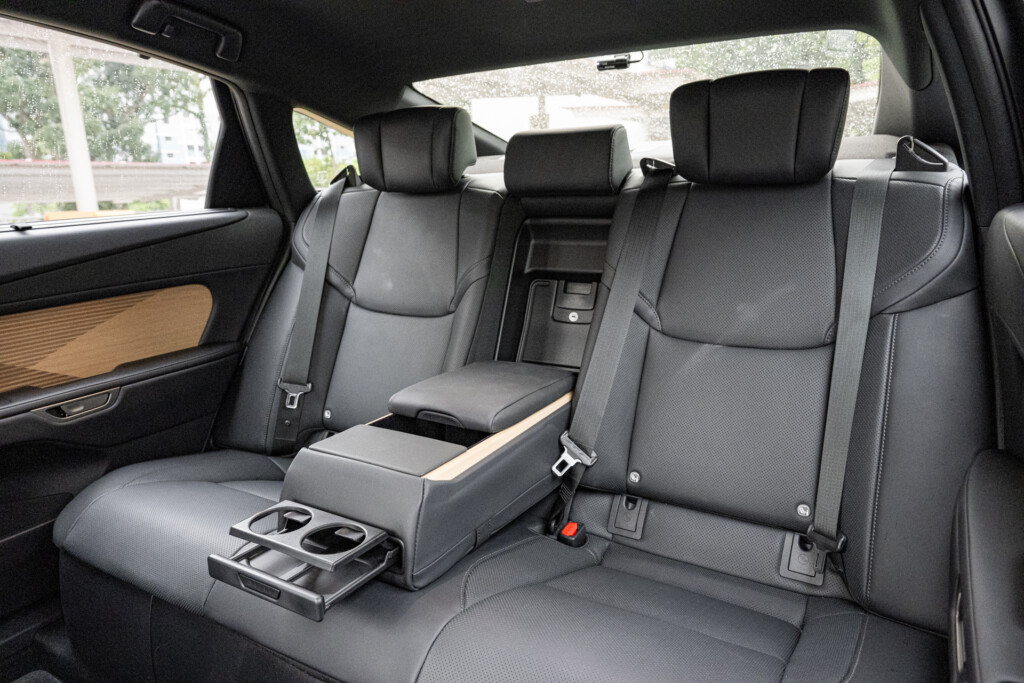
Then you climb into the back, and suddenly everything becomes clear. At 5.1 metres long, the ES provides enormous rear legroom. Proper limousine levels of it.
Lean back, stretch out. The ES is arguably best understood not from the driver’s seat, but from behind it. And when viewed that way, many of its dynamic compromises become considerably easier to forgive.
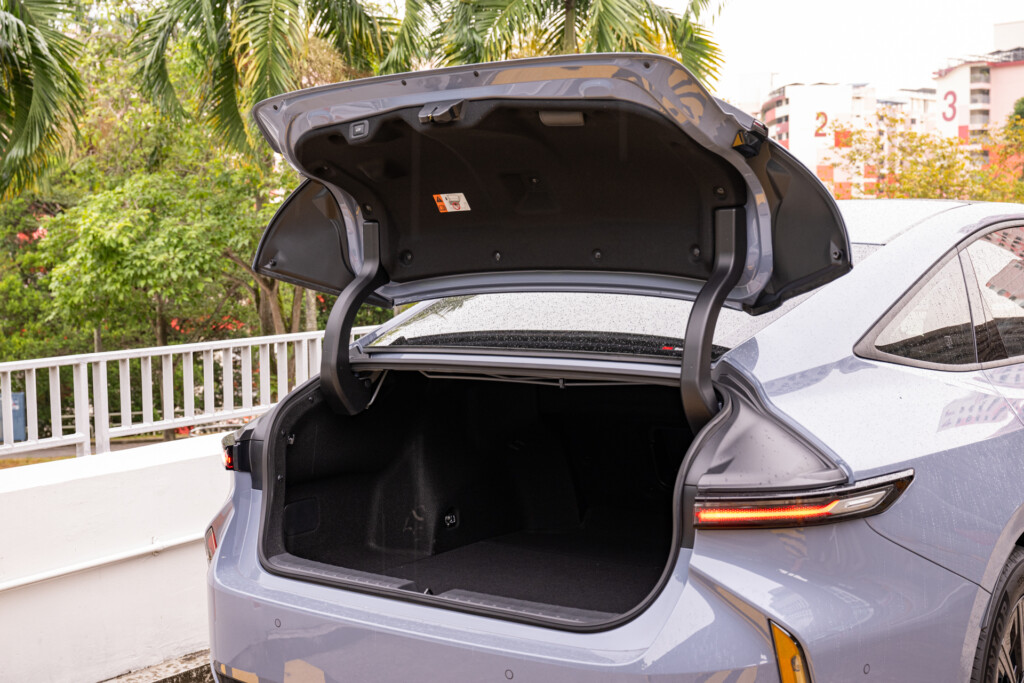
Boot space is generous too, at 517 litres, eclipsing several German rivals.
There is no front storage compartment for charging cables, however. Again, blame the converted combustion-car platform.
The dark horse
The electric Lexus ES is not the obvious choice in this segment.
The BMW i5 is better to drive. The Mercedes-Benz EQE can travel further. And the Volvo ES90 arguably combines comfort, design and electric packaging more convincingly.
Yet this knows exactly what it wants to be. Lexus has not built the electric ES to be the fastest executive EV. It has built it to be a Lexus. Quiet, exquisitely finished, deeply comfortable and just a little indifferent to what everyone else is doing.
Technical Specifications
Lexus ES350e
Powertrain: Single Electric Motor, Front-Wheel Drive
Power: 165 kW (221 bhp)
Torque: 269 Nm
Gearbox: Single-Speed (A)
Acceleration: 8.0 Seconds (0-100km/h)
Top Speed: 160 km/h
Battery Capacity: 74.69 kWh
Drive Range: 510 km
Energy Consumption: 6.1 km/kWh
Price: S$399,800 with COE (accurate at the time of this article)
Photo Credits: Sean Loo (@auto.driven)
Read more automotive news at AutoApp, or check out our latest videos on YouTube and on TikTok!