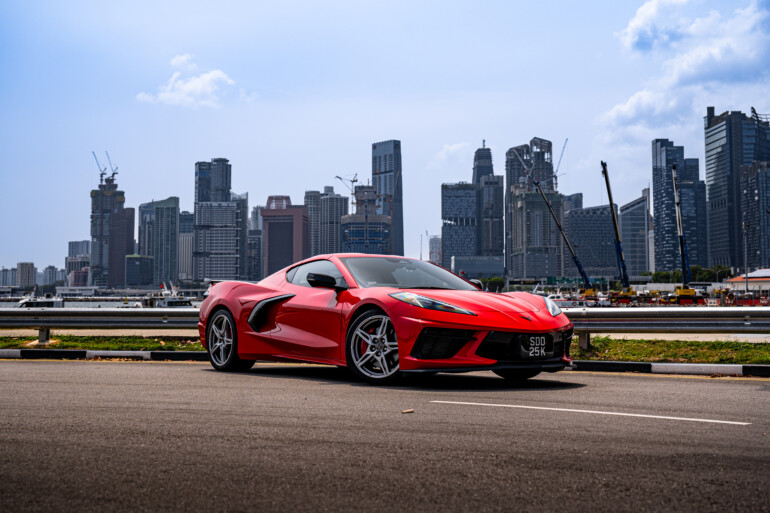
The eighth-generation Corvette Stingray finally puts its V8 where a supercar’s engine is supposed to be. Strangely, that has made America’s sports car more sensible than ever.
The Chevrolet Corvette Stingray is unique, although perhaps not for the reasons you might expect. Yes, it has a 6.2-litre V8. Yes, the engine sits behind your head. And yes, from certain angles people will look at it and go “wow what a cool Ferrari!”
But, the really surprising thing about the eighth-generation Corvette is how little effort it demands from its driver.
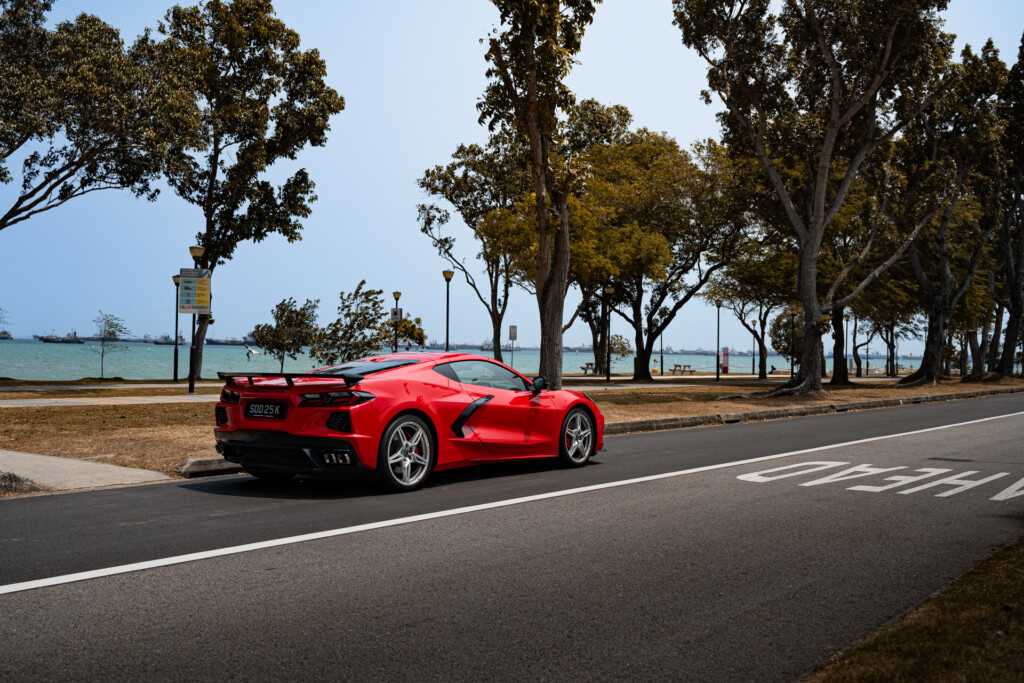
Corvettes have traditionally been big-engined, front-engined things with enough torque to interfere with continental drift. Yet the C8 Stingray is refined, composed and startlingly easy to drive. Growing up, apparently, comes for everyone.
The Corvette has been around since 1953, but Chevrolet spent decades flirting with the idea of putting the engine behind the occupants before finally doing it with the C8 in 2020.
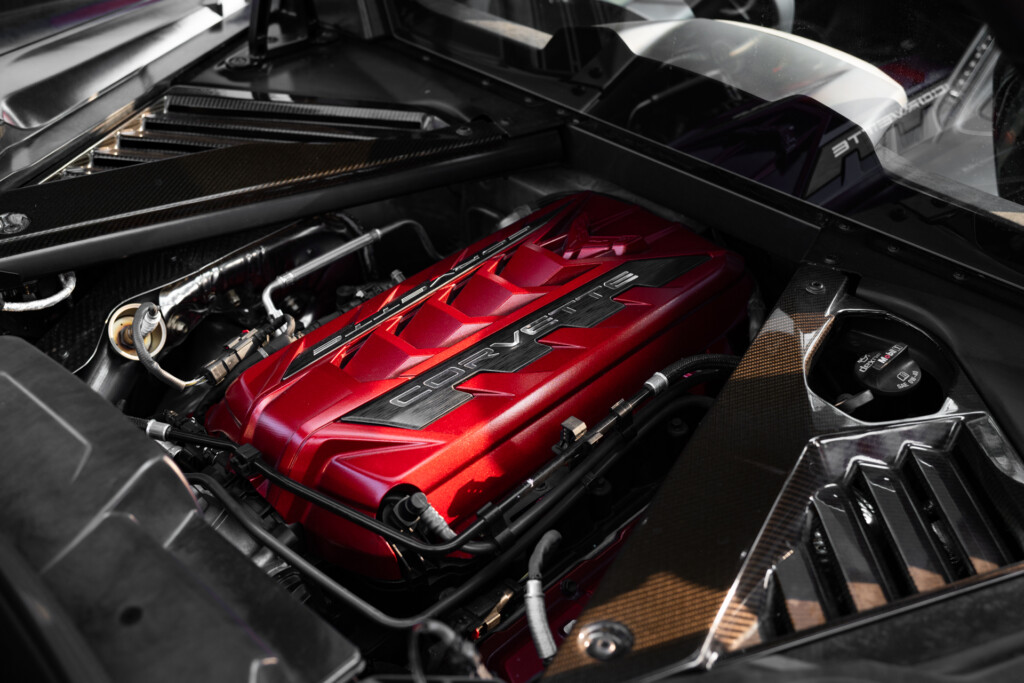
That decision fundamentally altered the car. Instead of having a large V8 somewhere near the front bumper, the C8 carries its 6.2-litre naturally aspirated LT2 V8 just behind the cabin, driving the rear wheels through an eight-speed dual-clutch gearbox. There is no manual gearbox, which will give traditionalists something to grumble about between discussions of carburettors and how music was better in 1974.
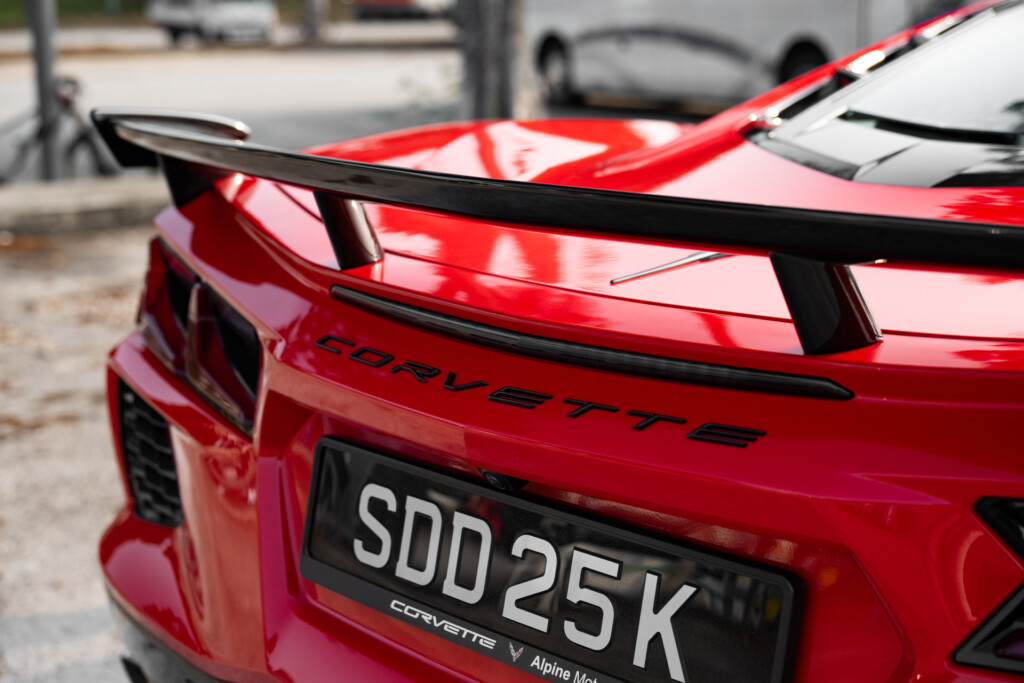
In current specification, the engine produces 495 horsepower and 630Nm of torque. The century sprint is dusted in only 2.9 seconds, which gives onlookers just enough time to catch the digits on your license plate.
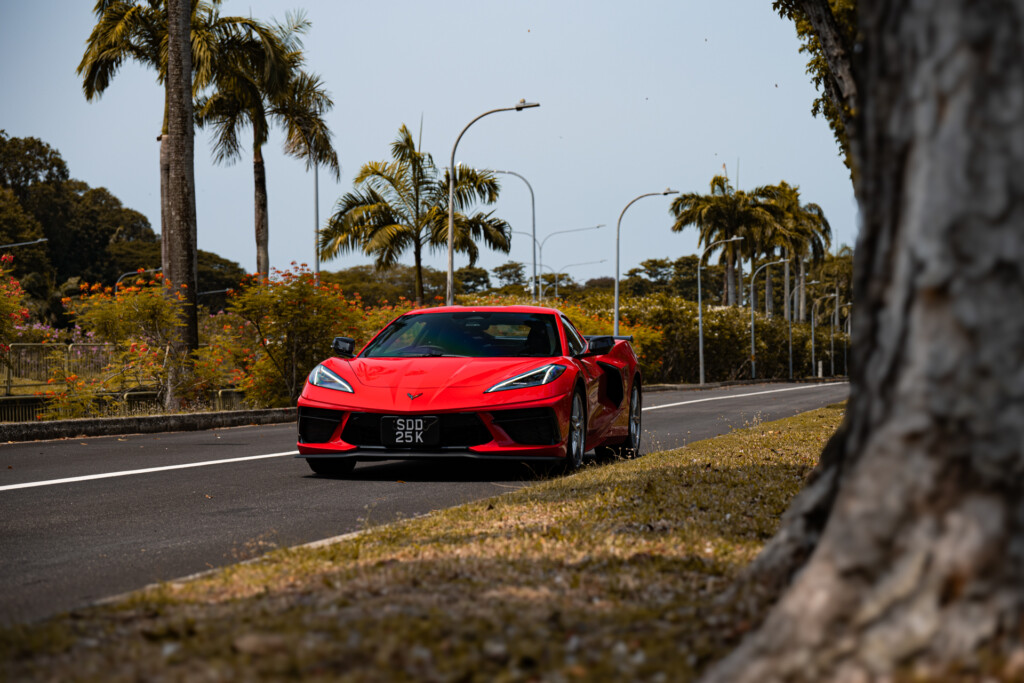
An old-fashioned Corvette could sometimes make its driver feel as though he had accidentally joined a rodeo. The C8 is different.
Putting the engine in the middle gives it a 40:60 front-to-rear weight distribution, and the result is a car that feels far more balanced and predictable than its predecessors. Its steering is accurate, its responses are clean, and both ends of the car seem to agree on where they are going, while still retaining enough personality to punish clumsy mid-corner decisions.
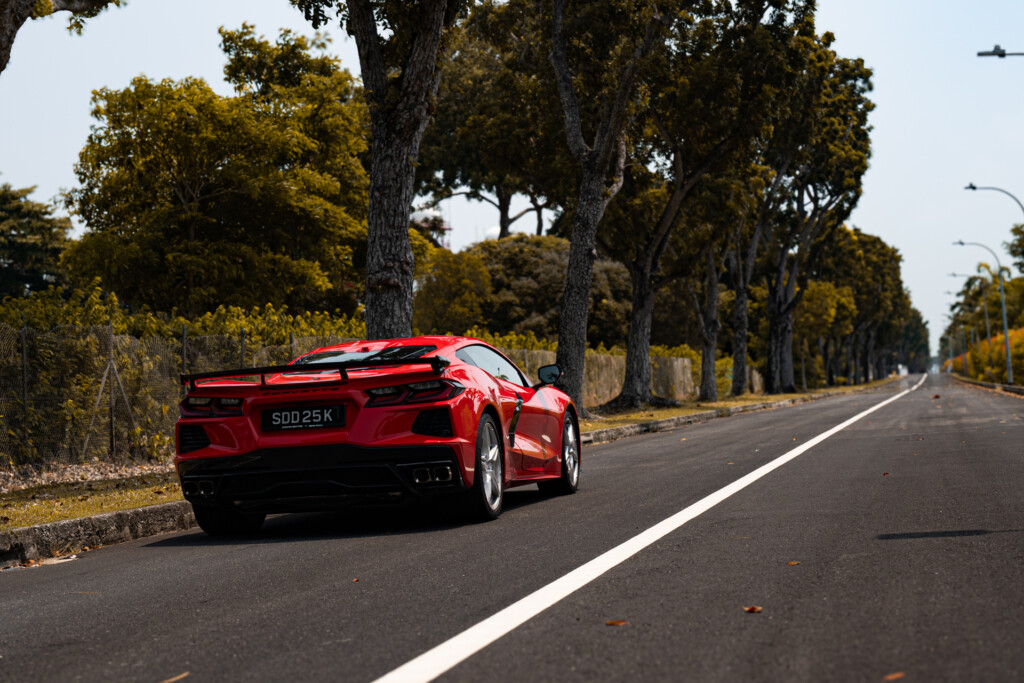
With the available Magnetic Selective Ride Control that comes with the Z51 Performance Package, the Stingray can soften itself considerably for ordinary roads. Which is useful, because most journeys do not involve clipping apexes. They involve traffic lights.
For all the C8’s newfound sophistication, Chevrolet did at least remember to install the important bit.
The LT2 is a naturally aspirated 6.2-litre V8, which feels almost rebellious in an age when manufacturers are busy removing cylinders, adding turbochargers and attaching electric motors to everything that stays still long enough. It does not have the manic top-end theatrics of the old Corvette Z06’s smaller flat-plane-crank V8, but the Stingray’s engine is about effortless shove.
There is plenty of torque, plenty of speed and, crucially, no waiting around for turbos to decide whether they feel like participating. Put your foot down, and the Corvette simply gets on with scaring your passenger.
The eight-speed dual-clutch gearbox deserves some credit here, too. It shifts rapidly and is clever enough that you can largely leave it alone, although paddles are there for occasions when you would like to feel more involved.
The only oddity is that the Corvette can actually be quieter than expected from inside. A mid-engined American sports car with a 6.2-litre V8 sounds like something that should frighten wildlife several postcodes away. Instead, the C8 is surprisingly civilised at cruising speeds, with wind and tyre noise from inside the cabin sometimes more noticeable than the engine itself.
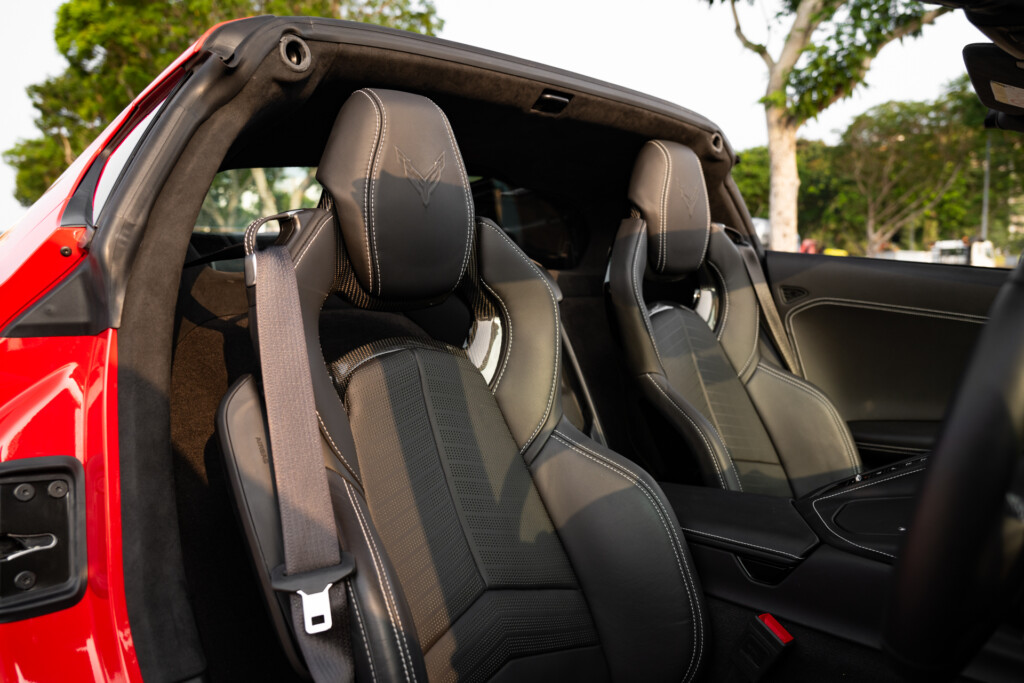
Speaking of inside, Chevrolet has been taking notes from the Europeans. Older Corvettes could occasionally feel as though all the development money had been spent by the time Chevrolet reached the interior. The C8 is considerably more convincing.
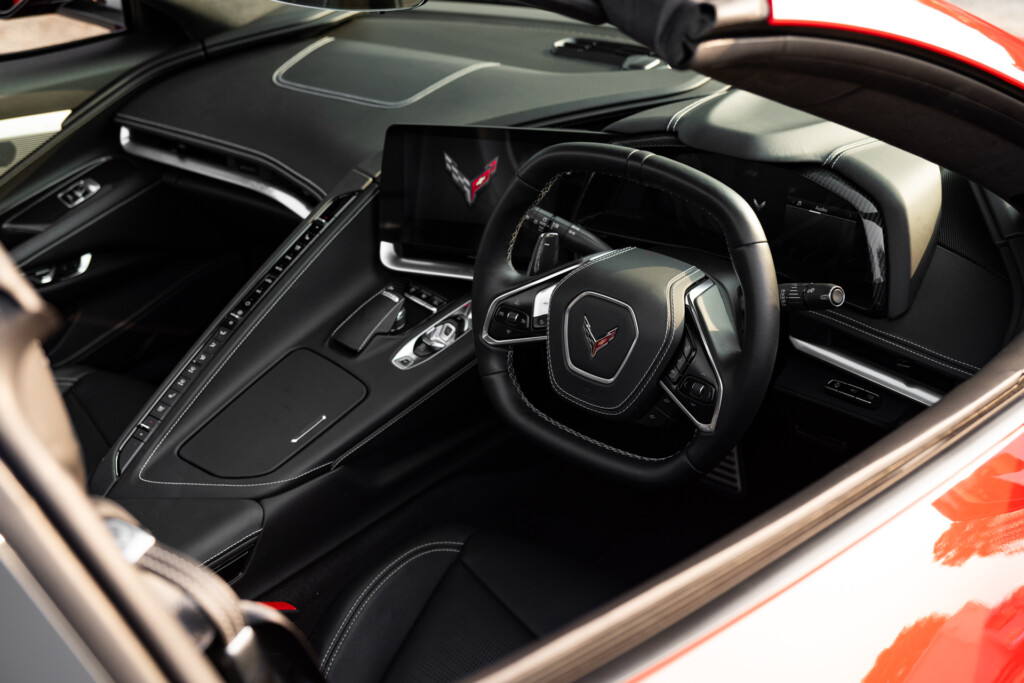
Materials are better, the digital displays look contemporary, and the driving position makes you feel properly embedded in the car rather than merely seated inside it. The optional front-axle lift system is fantastic – the fastest I’ve tested in any supercar – with location memory and a forward-facing camera to help preserve expensive bodywork from kerbs.
Then there is the famous wall of buttons. a long strip containing the climate controls runs along the centre console between driver and passenger. It looks dramatic and puts a great many physical switches within reach, which is commendable in an era when manufacturers seem determined to make adjusting the air-conditioning resemble filing an online tax return.
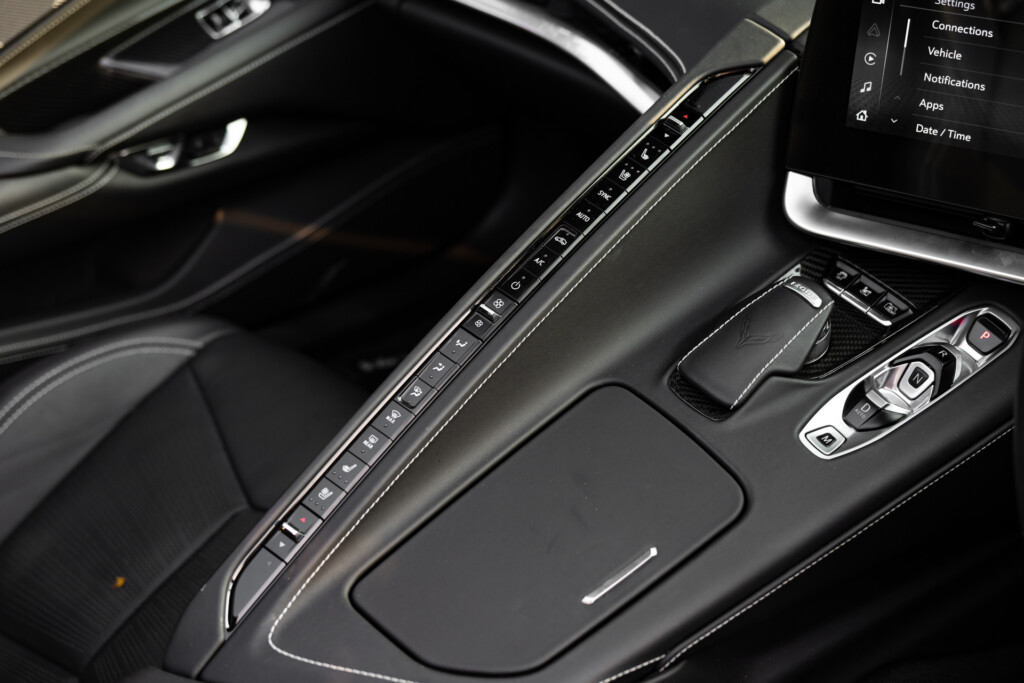
The downside is that it divides the cabin rather too effectively. The driver feels cocooned. The passenger feels as though immigration formalities may be required before crossing to the other side.
Still, the cabin now feels expensive enough to belong in a car with genuine supercar performance, and you can now actually put things in it.
Because the engine sits in the middle, there is storage at both ends of the car. Combined cargo capacity is around 357 litres, which means the Corvette can accommodate considerably more luggage than its silhouette suggests.
The coupe also has a removable roof panel. Remove it, and you have something approaching a T-top sports car without having to buy the convertible. The catch is that the panel has to live somewhere, and storing it consumes much of the rear luggage area.
Still, the very fact that we are discussing luggage capacity in a mid-engined V8 sports car tells you how practical the Corvette can be.
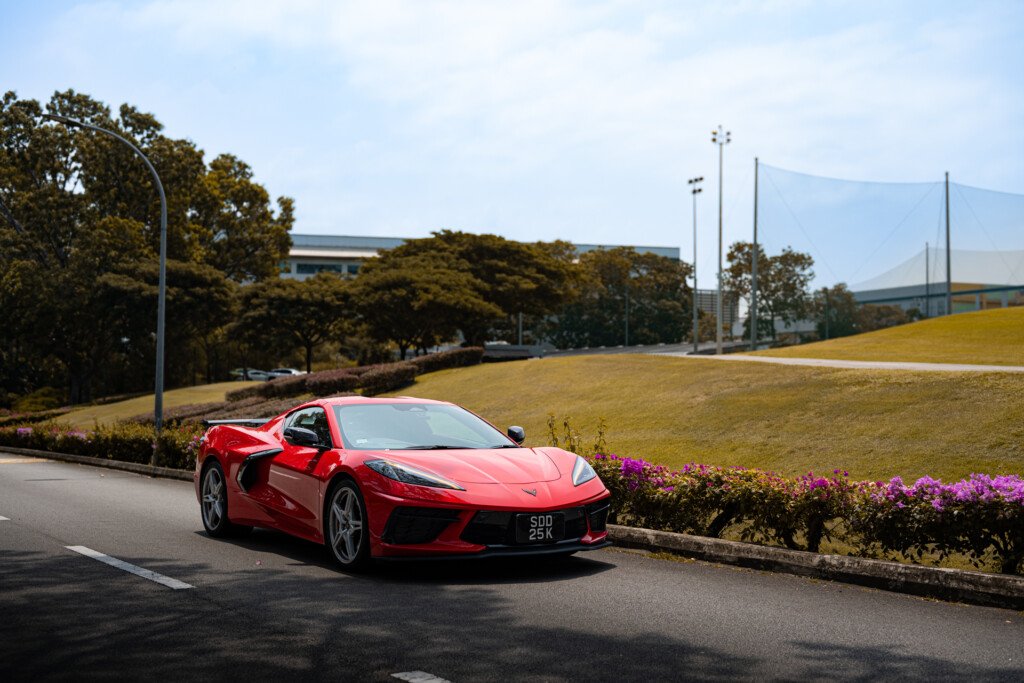
Of course, the Corvette has always made most sense in America, where its combination of performance and price has traditionally made Europeans look faintly unreasonable.
Things become rather less straightforward once taxes and import costs enter the conversation, but the basic achievement remains impressive. Chevrolet has built a car that no longer needs the usual Corvette qualifications.
You do not have to say it is good for an American car. You do not have to make excuses for the way it handles because it is inexpensive compared with a European exotic. The C8 can finally be judged simply as a sports car, and it is a brilliant one.
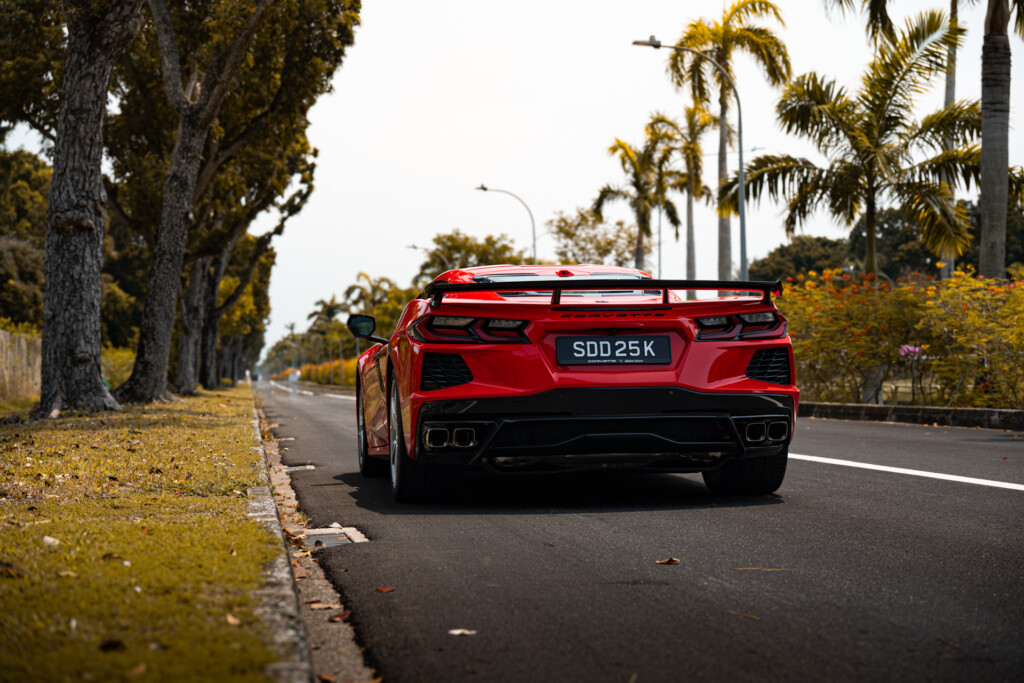
That, however, does create a small philosophical problem. In civilising the Corvette, Chevrolet has removed some of the rough edges that gave earlier versions their peculiar charm.
The C8 is more accurate, more refined, more comfortable and vastly easier to exploit than the cars that came before it. Objectively, it is a much better car, although some of the old Corvette’s unruliness has inevitably disappeared in the process. Whether you consider that progress depends on why you liked Corvettes in the first place.
But make no mistake. If you wanted a V8-powered caricature of America, built to rival Europe’s best sports cars without charging European-supercar money, this is it.
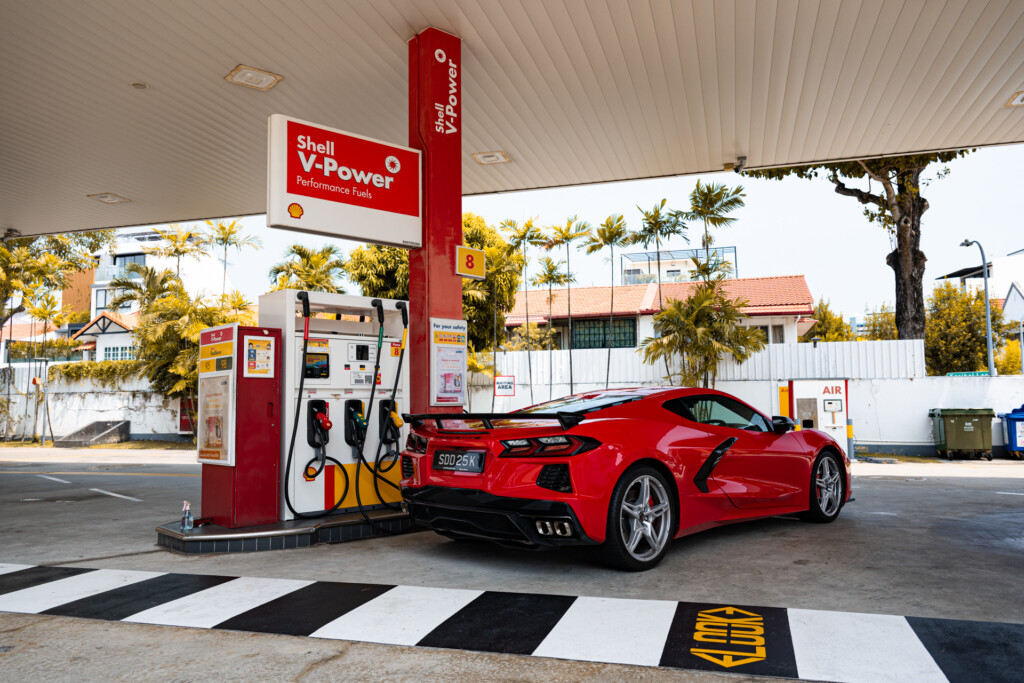
Technical Specifications
Chevrolet Corvette Stingray (C8)
Engine: 6.2-litre V8
Drivetrain: Rear-wheel drive
Power: 495 bhp
Torque: 630 Nm
Gearbox: 8-Speed (A) Dual Clutch
0-100km/h: 2.9 seconds
Top Speed: 312 km/h
Fuel Economy: Do you even care about this part?
Price: POA
Photo Credits: Sean Loo (@auto.driven)
Read more automotive news at AutoApp, or check out our latest videos on Ignition Labs TV and on TikTok!