Mercedes-Benz has stopped trying quite so hard to make its electric cars look electric. The result is a GLC that feels reassuringly familiar, apart from the enormous glowing grille and 39.1-inch screen.
The Mercedes-Benz GLC Electric has a grille. This normally shouldn’t be remarkable; cars have had grilles for more than a century, largely because engines tend to get hot and require air to stop themselves becoming expensive paperweights.
Electric cars do not have quite the same problem, which is why Mercedes spent the first half of its EV era smoothing their noses over completely.
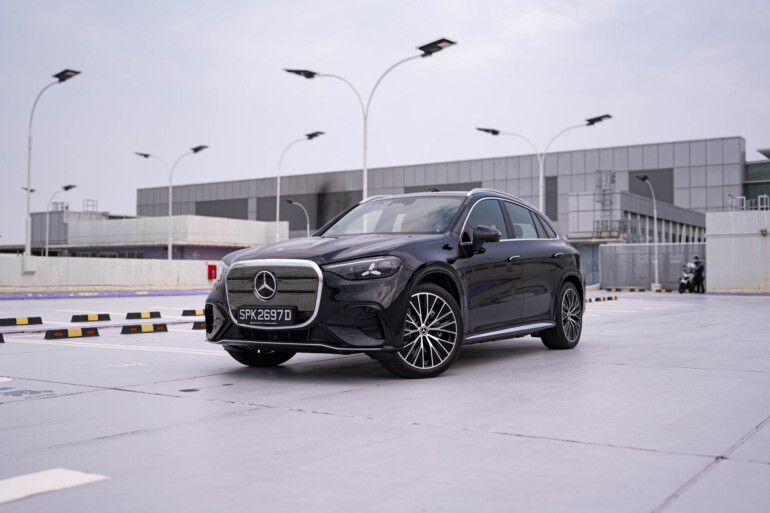
Now Mercedes has brought the grille back. Admittedly, it no longer does much actual grunting work. Instead, it is illuminated, along with the three-pointed star, because apparently simply having a grille in 2026 would be insufficiently technological.
Still, it represents something bigger. Mercedes appears to have remembered that people buying an electric GLC might actually want it to look and feel like a Mercedes-Benz GLC, and that turns out to be a very good idea.
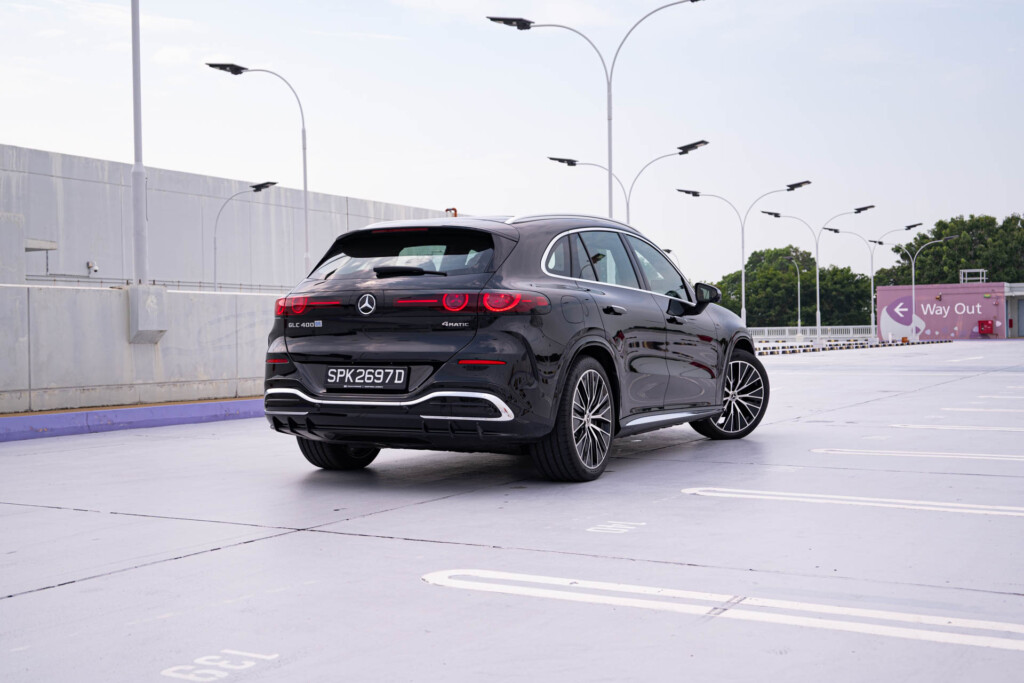
Officially, this is the Mercedes-Benz GLC with EQ Technology… which is the sort of name you imagine somebody arriving at after a long meeting and several PowerPoint slides.
For everyone else, it is the electric GLC. More importantly, it no longer belongs to a separate EQ family. The old EQC tried to create an electric identity of its own; this car simply takes one of Mercedes’ most important model names and electrifies it.
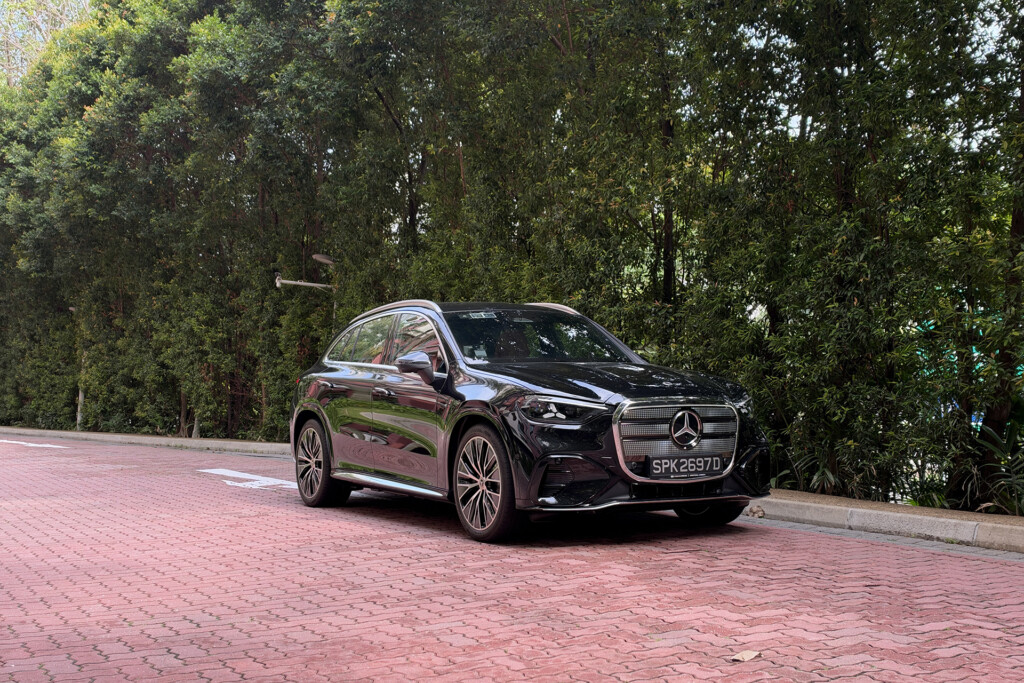
There is a proper bonnet, relatively upright body and enough visual weight to stop it looking like an oversized hatchback.
At 4,845mm long and 1,913mm wide without its mirrors, it is a substantial thing, while its 2,972mm wheelbase is noticeably longer than before.
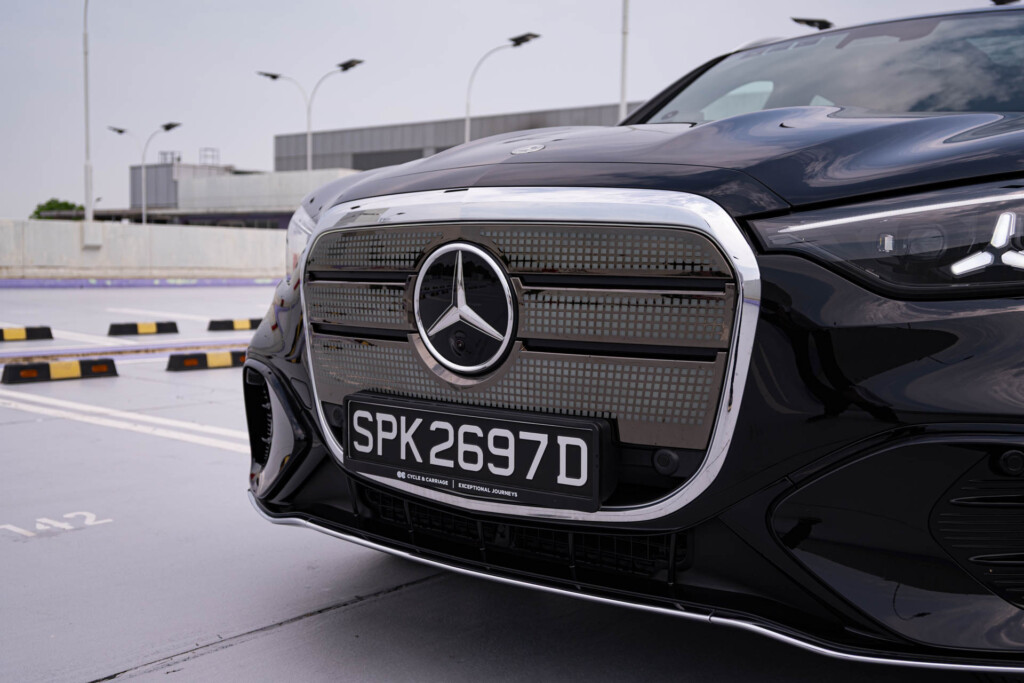
That illuminated grille is enormous. At night it glows with the confidence of an Orchard Road Christmas decoration, and whether this constitutes elegance will depend on your tolerance for ambient lighting.
But, there is no mistaking what it is. After years of anonymous EV noses, that somehow feels refreshing.
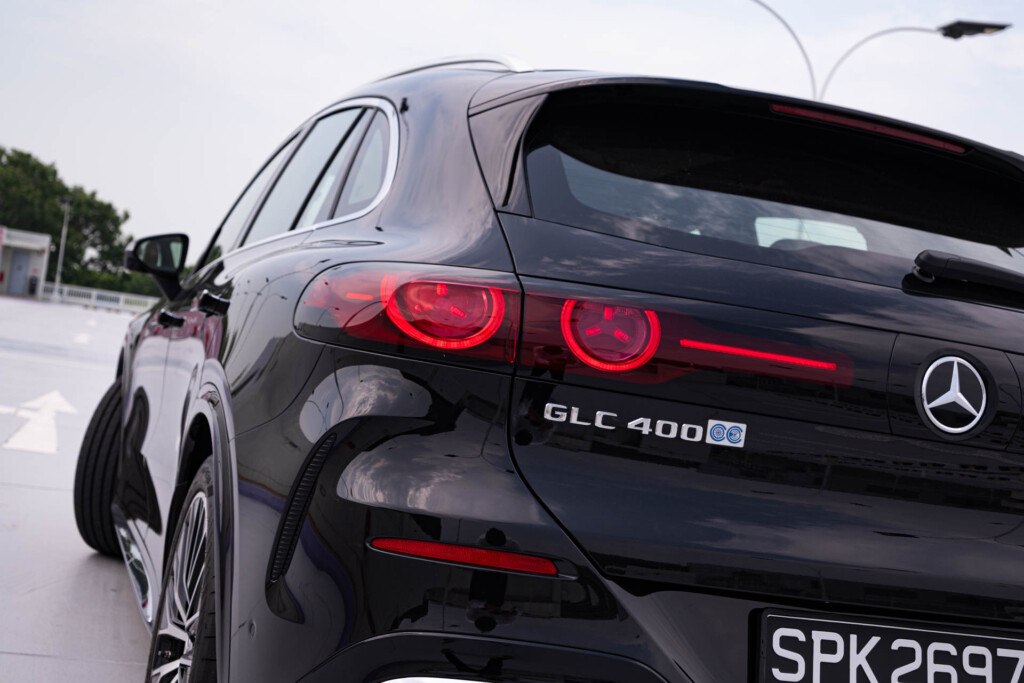
The version tested here is the GLC 400 4MATIC, which currently sits at the top of the electric GLC range in Singapore. There is one electric motor on each axle, producing a combined 360kW (489hp) and 800Nm of torque. Zero to 100 takes 4.3 seconds, and the top speed is 210 km/h.
In practice, the GLC’s performance is less dramatic than the numbers suggest. I found it extremely rapid without being violently theatrical, which suits the car perfectly. The acceleration arrives as one long, smooth surge rather than the sort of neck-snapping launch that makes passengers reconsider whether they actually wanted lunch.
This is a Mercedes-Benz first, then fast electric car second.
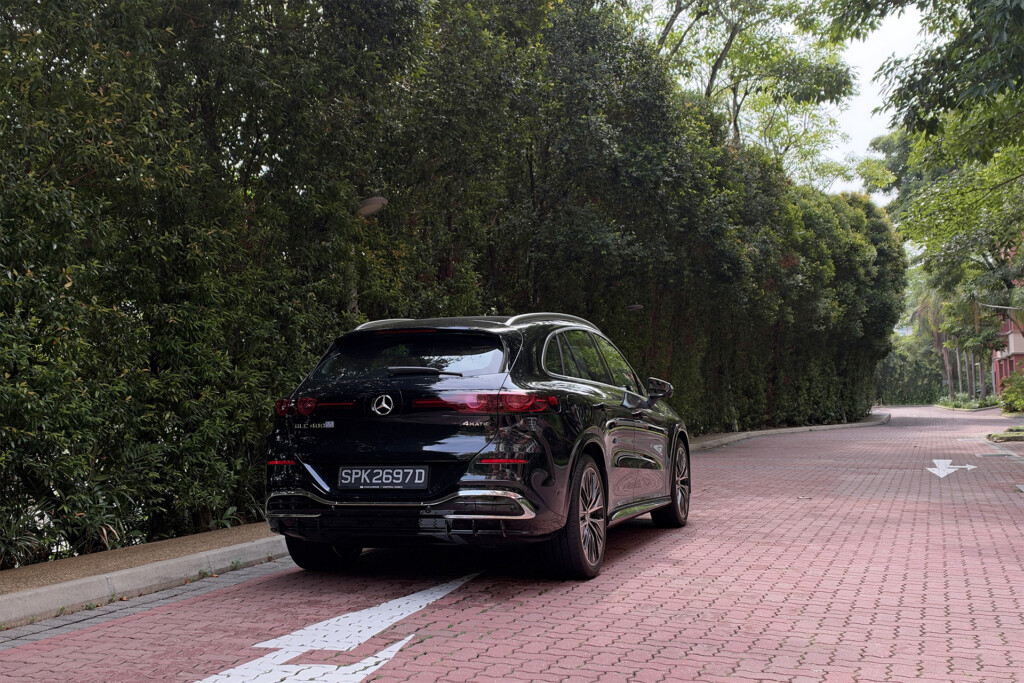
Surprisingly, the GLC uses a two-speed transmission on the rear axle. Most electric cars do not bother with gears because electric motors operate effectively across such a wide speed range. The second ratio allows the rear motor to operate more efficiently at higher speeds, while also helping maintain stronger acceleration as velocity rises. The front motor can disconnect entirely when it is not required, reducing drag and improving efficiency.
Many powerful EVs deliver their most impressive shove below expressway speeds, then gradually become less enthusiastic as speed rises. The GLC, on the other hand, keeps pulling.
In Singapore, of course, the opportunities to experience this are limited; our speed limit remains stubbornly unimpressed by German engineering. Still, it is nice to know the capability is there.
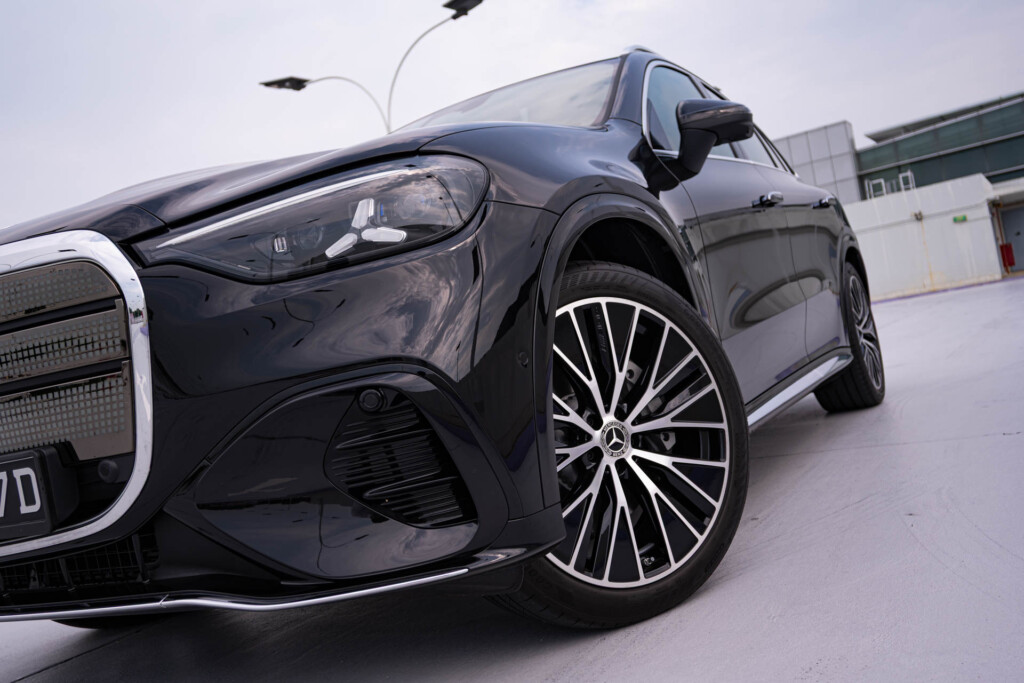
The GLC 400 weighs 2,535kg. That giant battery pack is not light, nor are two electric motors, air suspension, rear-wheel steering, an enormous glass roof and enough computing hardware to run a medium-sized office.
Yet, the GLC is surprisingly adept at concealing its mass. The steering is light without becoming vague, and the car changes direction cleanly enough that you rarely feel as though 2.5 tonnes are being negotiated through a corner.
It is not a driver’s car in the BMW sense, and Mercedes does not seem particularly interested in pretending otherwise. Wind noise, tyre roar and suspension thumps are almost entirely absent, making the GLC effectively a near-silent bubble. Even Sport mode retains an impressive level of suppleness. After a hard day’s work, these are the qualities that matter.
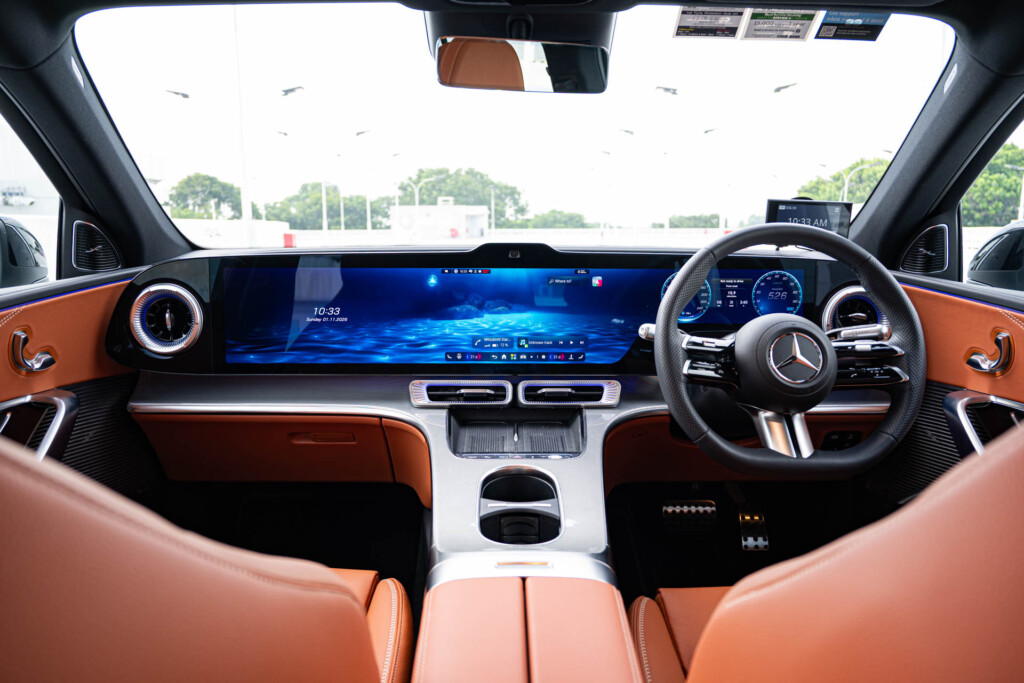
The restraint shown by the chassis disappears when you reach the dashboard.
Depending on specification, the electric GLC can be fitted with Mercedes’ new 39.1-inch MBUX Seamless Hyperscreen, stretching almost the entire width of the cabin. Thirty-nine-point-one inches. That is a television.
Mercedes somehow managed to look at the already enormous Hyperscreen in its previous cars and conclude that what customers really wanted was more screen.
The alternative MBUX Superscreen still gives you three displays: a 10.3-inch driver’s screen, a 14-inch central touchscreen and another 14-inch display for the passenger. Calling that the restrained option tells you everything you need to know.
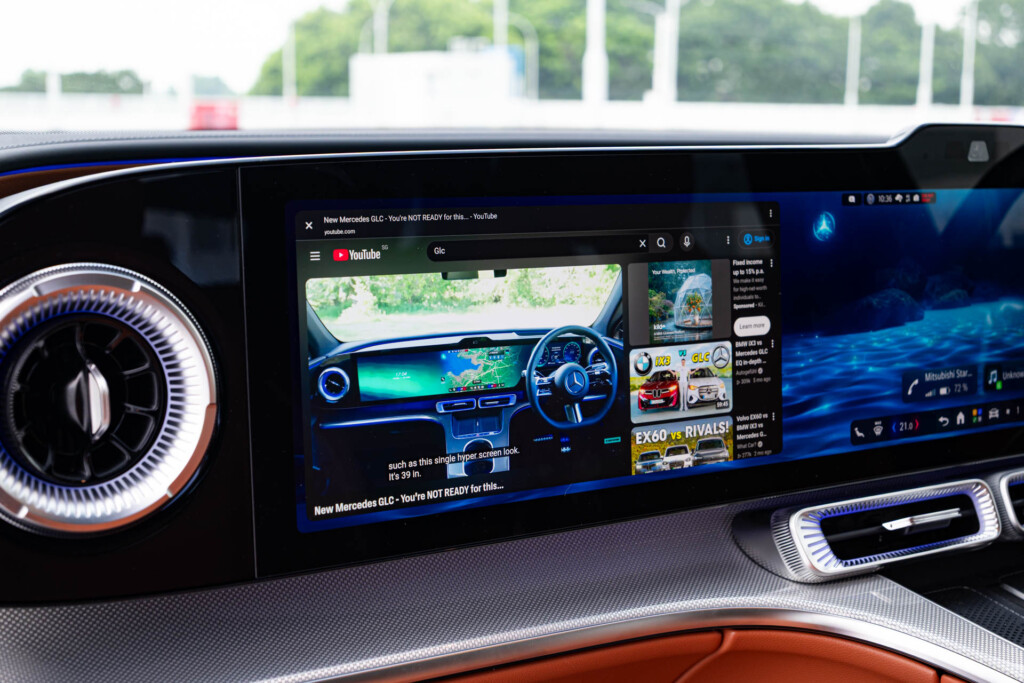
Mercedes’ new MB.OS platform integrates infotainment, navigation, charging and assistance functions, while AI technology from Google and Microsoft supports the MBUX Virtual Assistant. The interface is responsive and relatively intuitive once you become accustomed to the initial visual overload.
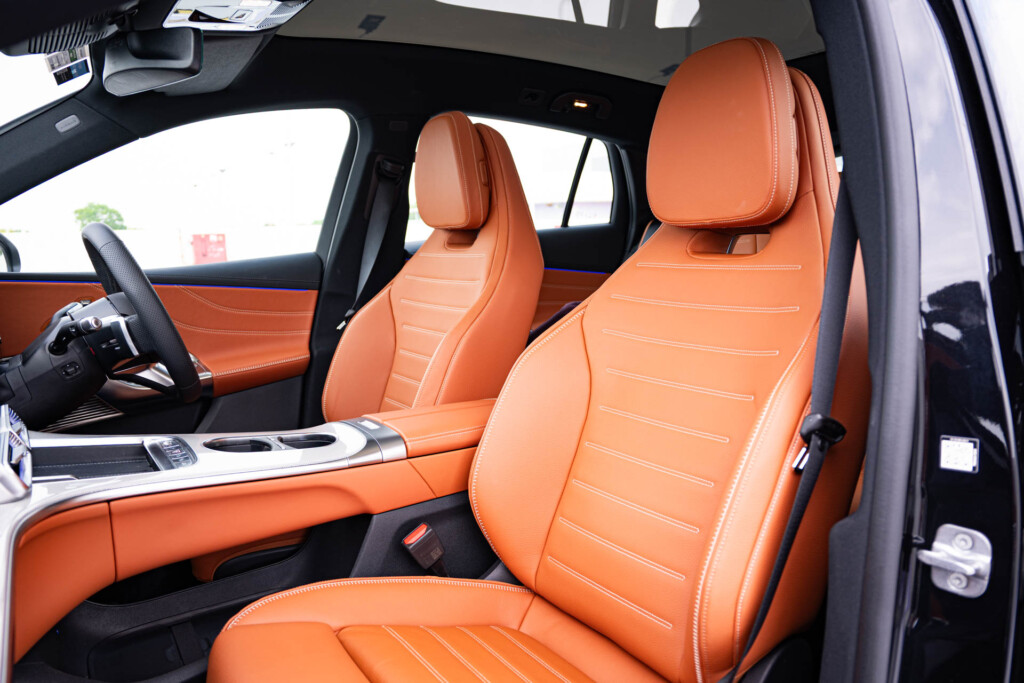
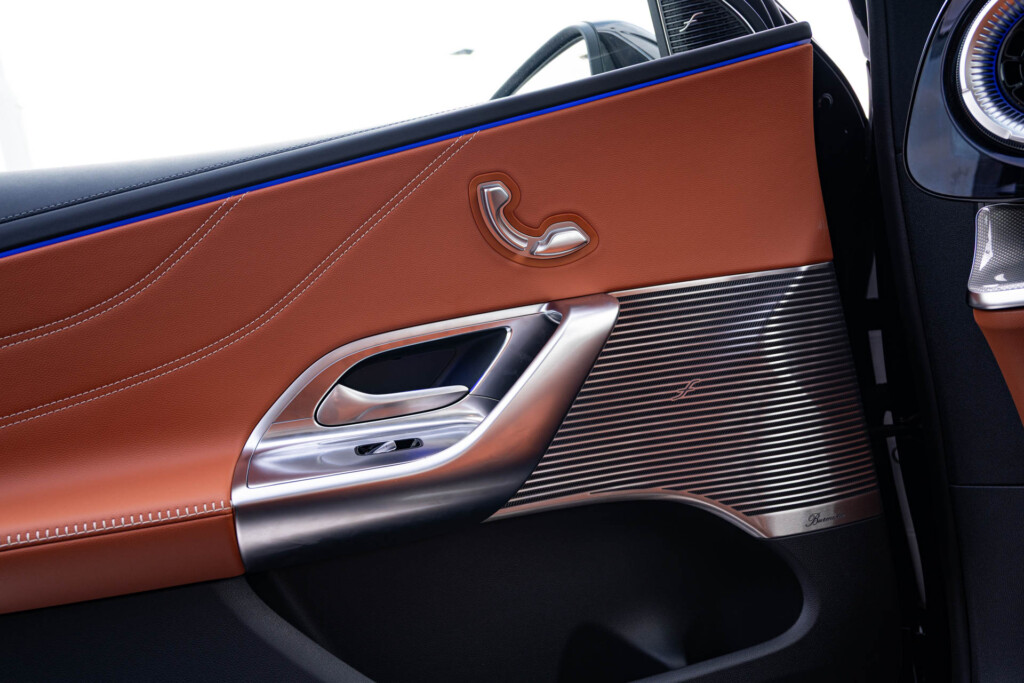
Look beyond the screens and the cabin is properly impressive. The quality of the cabin exceeds expectations, while Mercedes offers equipment including climatised seats and a Burmester 3D surround sound system.
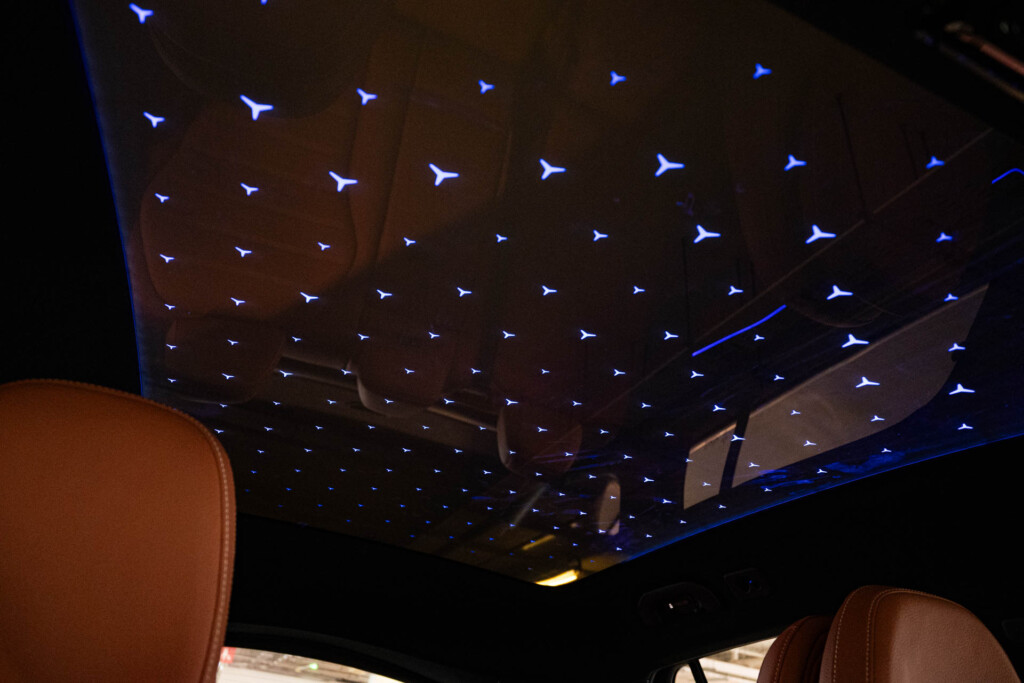
The panoramic roof is another piece of theatre. Mercedes calls it SKY CONTROL, and it is split into nine individually controllable segments that can switch between clear and opaque states or create patterns. It even contains tiny illuminated Mercedes stars.
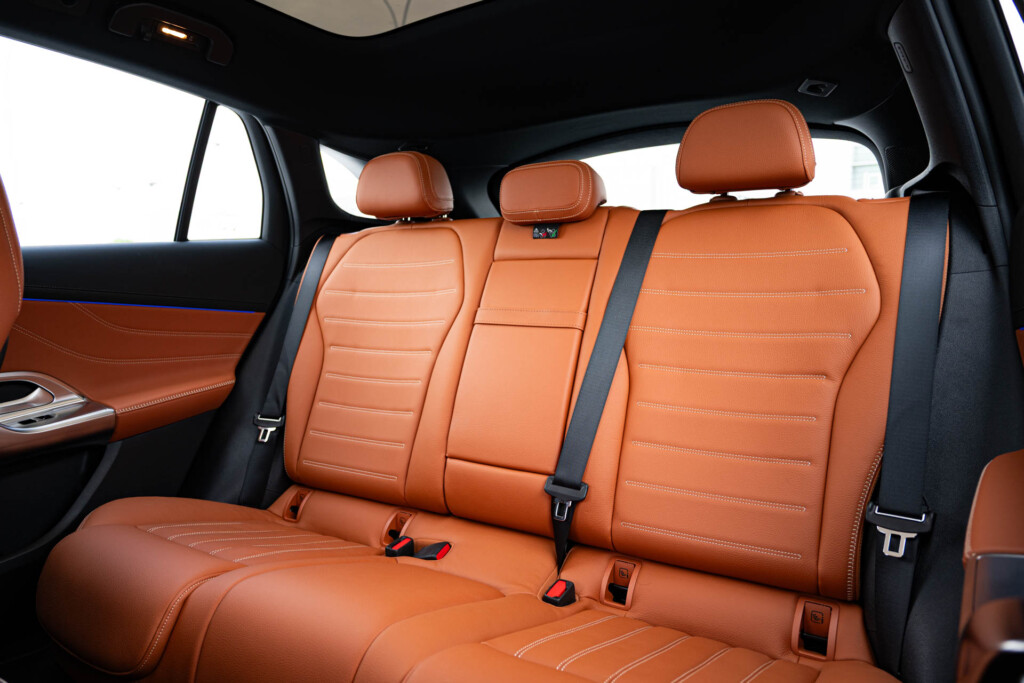
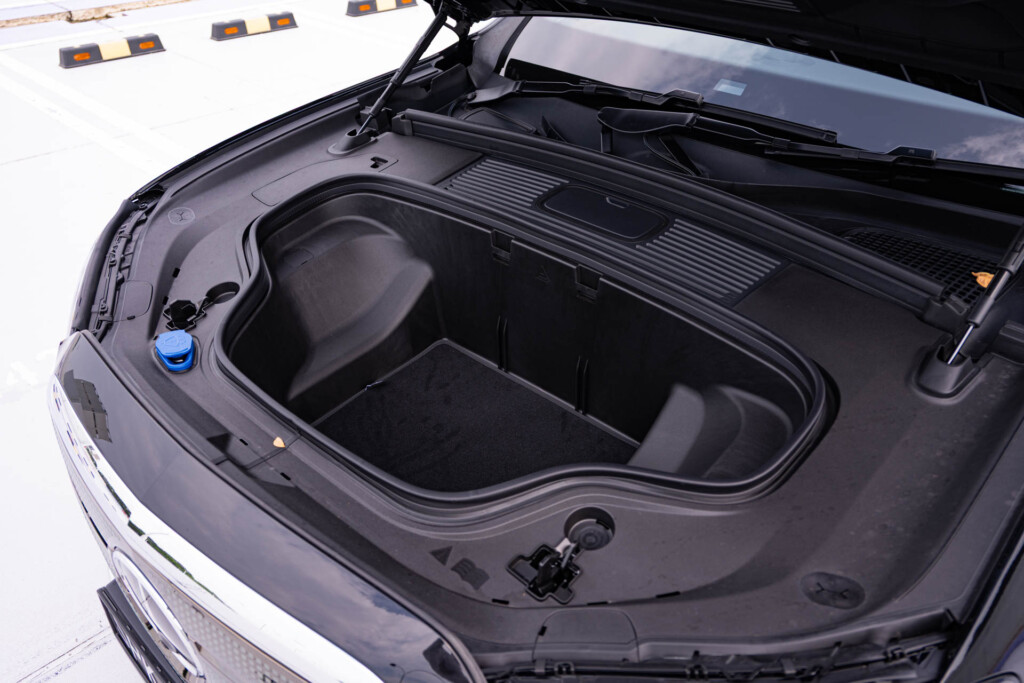
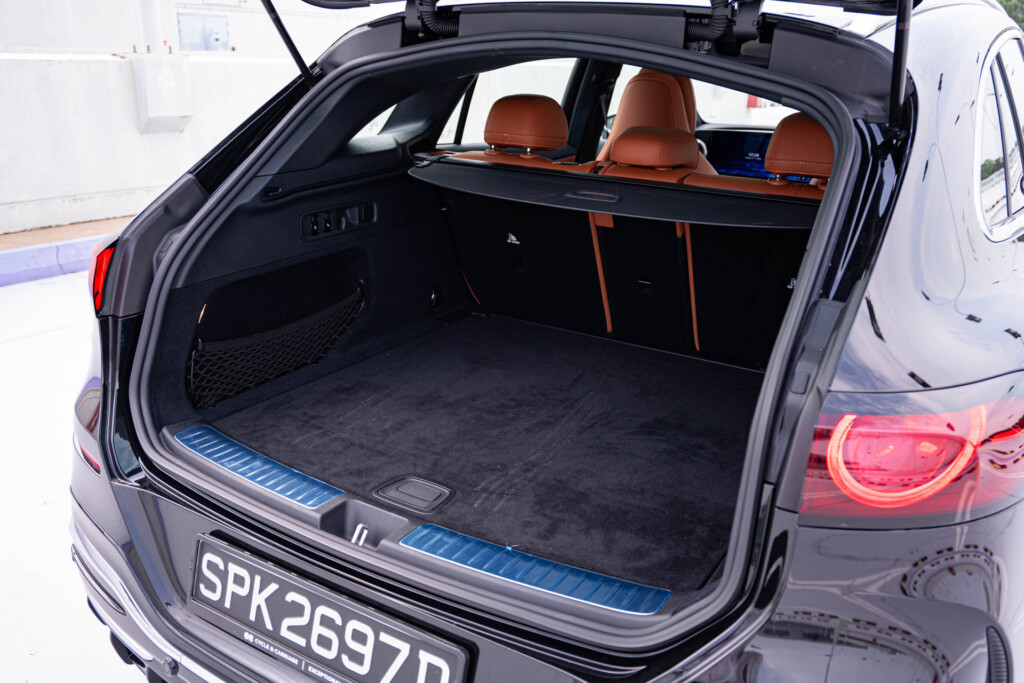
The electric platform gives rear passengers more space than before, helped by the longer wheelbase. The boot holds 570 litres and there is additional storage beneath the bonnet.
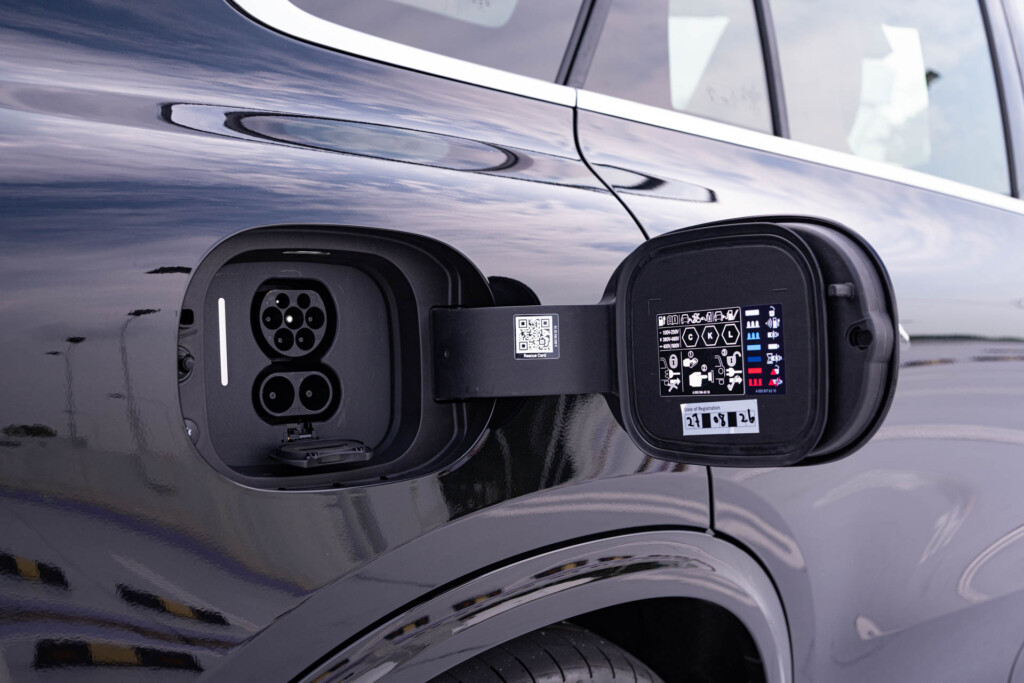
The GLC uses a 94kWh usable battery, quoting as much as around 650km of WLTP range. The 800-volt architecture allows the GLC to accept up to 330kW of DC charging.
Mercedes quotes a 10-to-80 per cent charge in 22 minutes, while up to 22kW AC charging is supported as well. At sufficiently powerful chargers, around 300km of range can be added in roughly 10 minutes.
Unfortunately for Mercedes, the GLC Electric did not arrive alone. BMW’s new iX3 is built around similarly advanced 800-volt architecture, offers exceptional efficiency and remains the more engaging driver’s car while also providing a substantially longer maximum range.
The comparison is unavoidable. BMW has gone after efficiency and driving involvement. Mercedes has gone after comfort and refinement.
Neither approach is wrong. They simply reveal what each manufacturer believes a premium electric SUV should be.
And for perhaps the first time in Mercedes’ modern electric era, the GLC does not feel as though it needs explaining before joining that conversation. That may be the biggest compliment you can give it.
The EQC felt like Mercedes adapting an existing SUV into an EV. The EQE SUV felt like Mercedes trying to work out what an electric Mercedes ought to look like. The GLC Electric simply feels like a Mercedes. The brand has stopped treating electrification as a design genre, and is all the better for it.
Perhaps that glowing grille really does explain the entire car. It no longer needs one, but without it, apparently, the car would not quite feel like a Mercedes-Benz.
Mercedes-Benz GLC 400 4MATIC Electric
Powertrain: Dual electric motors, all-wheel drive
Power: 360 kW (489 hp)
Torque: 800 Nm
Battery: 94 kWh
Transmission: Two-speed rear transmission
0-100km/h: 4.3 seconds
Top speed: 210 km/h
Range: Up to around 650km (WLTP)
DC charging: Up to 330 kW
AC charging: Up to 22 kW
Boot capacity: 570 litres
Kerb weight: 2,535kg
Length/Width: 4,845mm / 1,913mm
Price: From S$394,888 with COE
Read more automotive news at AutoApp, or check out our latest videos on YouTube and on TikTok!