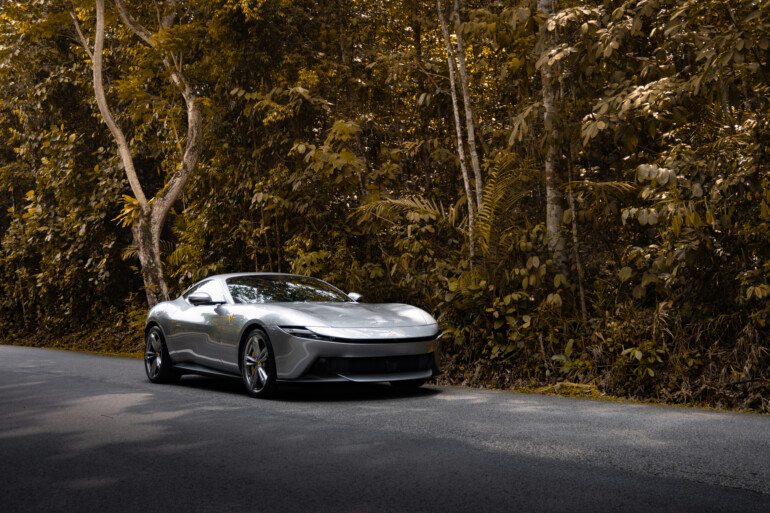
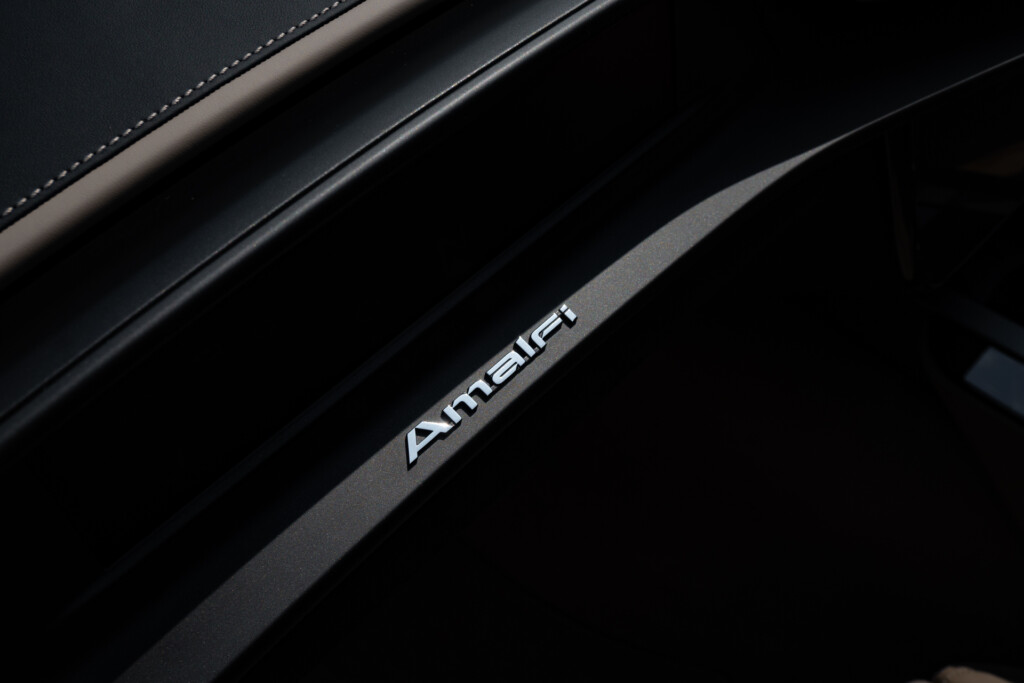
The Ferrari Amalfi may be the least powerful and least expensive Ferrari you can buy today, but it could also be one of the easiest to genuinely enjoy.
It’s weird to call any Ferrari an entry-level model. Entry-level suggests sensible shoes, base-spec infotainment and perhaps a monthly instalment plan you can discuss without first contacting your private banker. The Ferrari Amalfi, meanwhile, comes with 631bhp, a twin-turbocharged V8 and a price that starts well north of what most people would spend on a house deposit.
Still, within Maranello’s increasingly exotic hierarchy, this is the gateway. The Amalfi replaces the Roma, Ferrari’s elegant front-engined V8 coupe that attempted to blend grand touring polish with supercar speed.
Think of the new car less as a revolution and more as a thorough rethink. The basic structure and engine remain familiar, but every exterior panel is new, the cabin has been substantially reworked, the brakes now rely on brake-by-wire technology, and the electronics have been recalibrated to broaden the car’s personality.
In other words, Ferrari has taken the Roma, listened to the complaints, and gone back through the homework with a red pen.
A different sort of Ferrari face
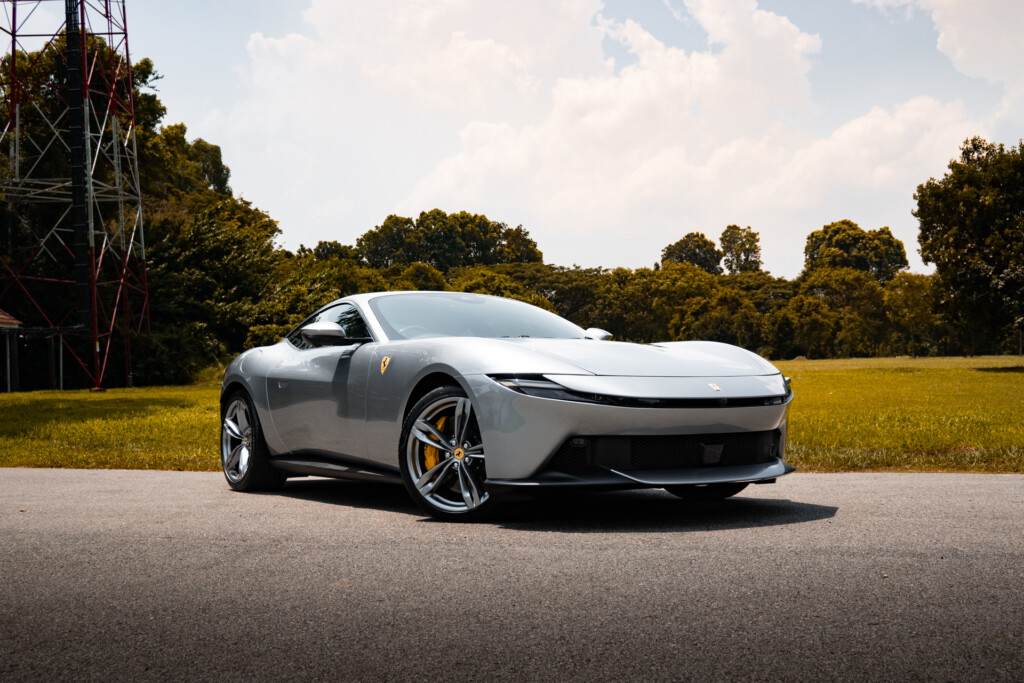
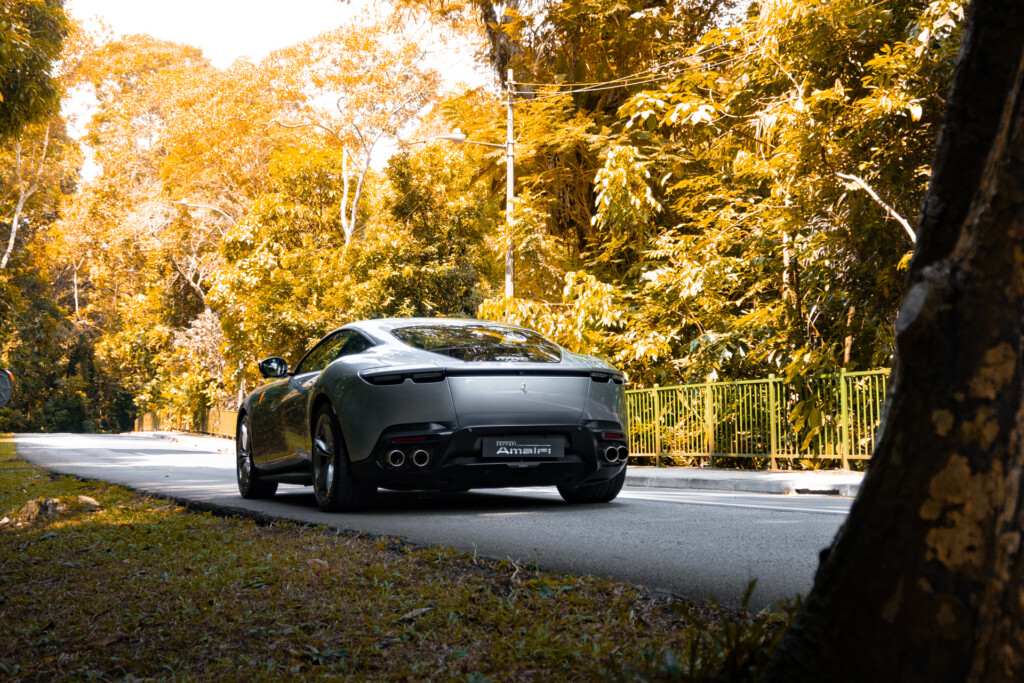
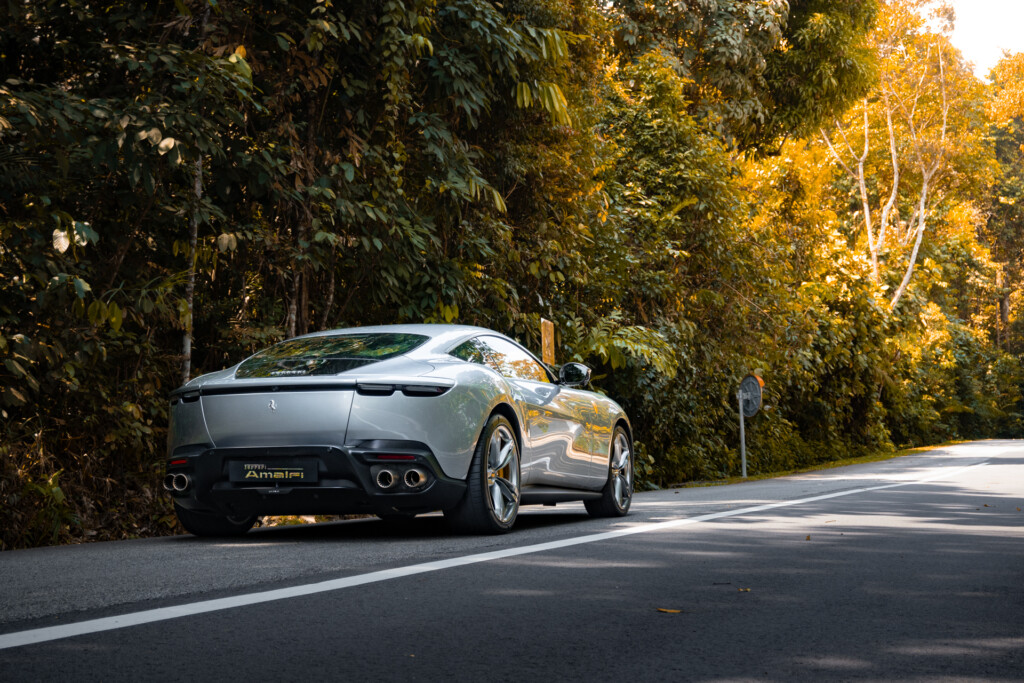
The Amalfi’s proportions remain deliciously traditional. There is a long bonnet ahead of you, a tightly drawn cabin, muscular rear haunches and a short tail. In silhouette, it is exactly the sort of front-engined grand tourer Ferrari has spent decades perfecting.
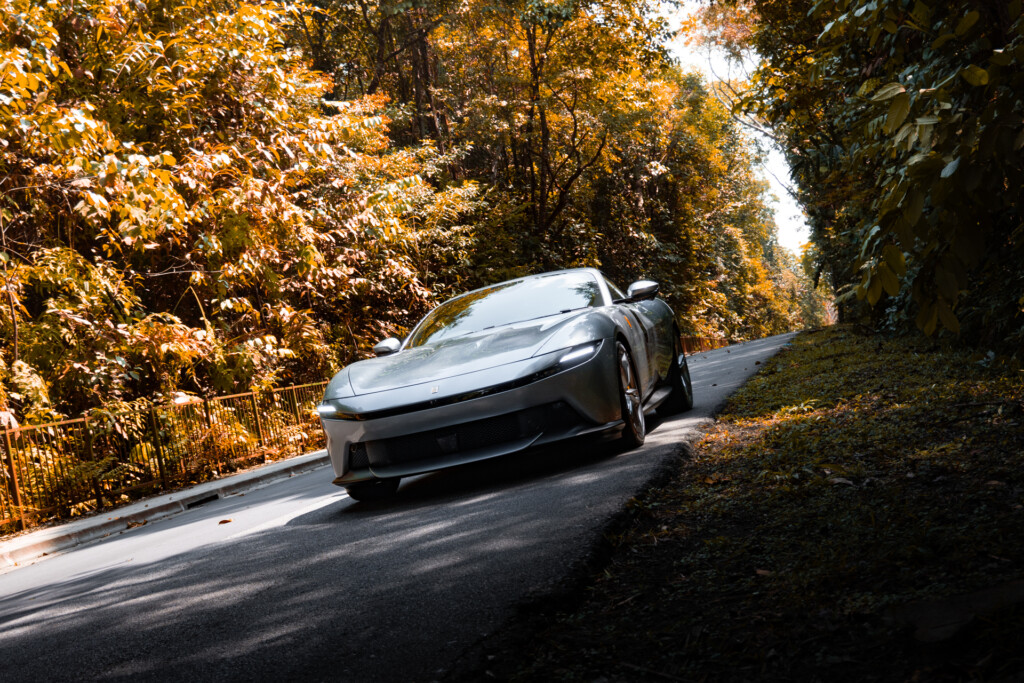
The details, however, are more controversial. The new visor-like front end has already drawn comparisons with everything from the Honda Prelude to the Toyota Prius, while others have apparently seen aquatic mammals in its expression.
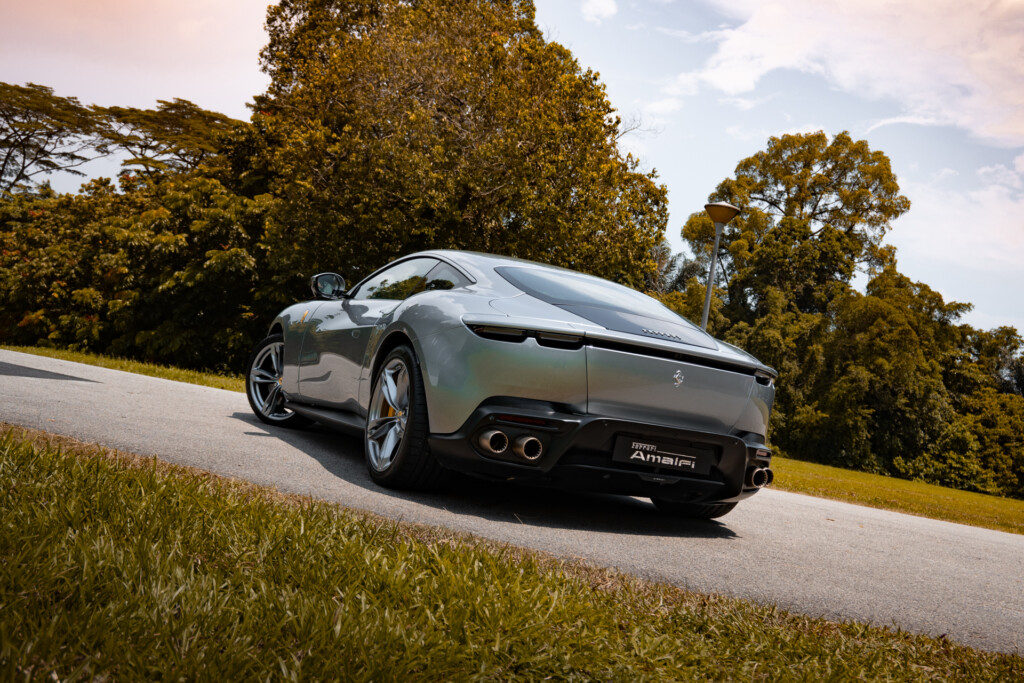
Ferrari says it is moving away from giving its cars recognisable “faces”, instead hiding lighting elements and sensors within the bodywork to create cleaner graphic surfaces. That approach certainly makes the Amalfi look modern, although whether it looks prettier than the Roma is another matter entirely.
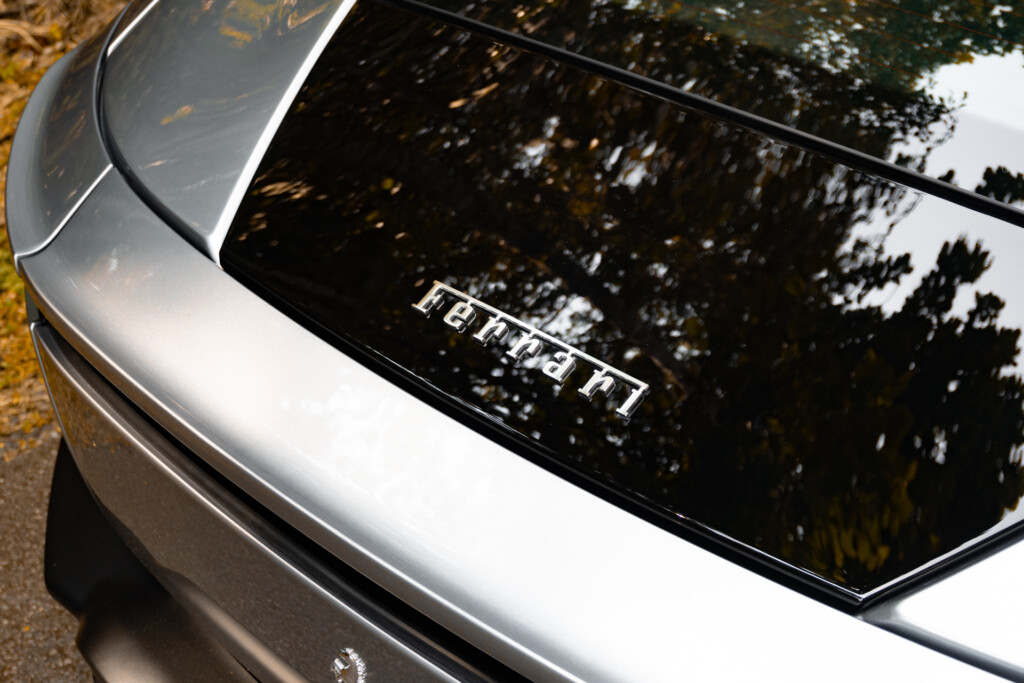
Pick the right colour, however, and the shape begins to work considerably better. It is one of those cars that probably needs to be seen in the metal before judgement is passed. Preferably somewhere along the Amalfi Coast, obviously.
Press the button. A proper one.
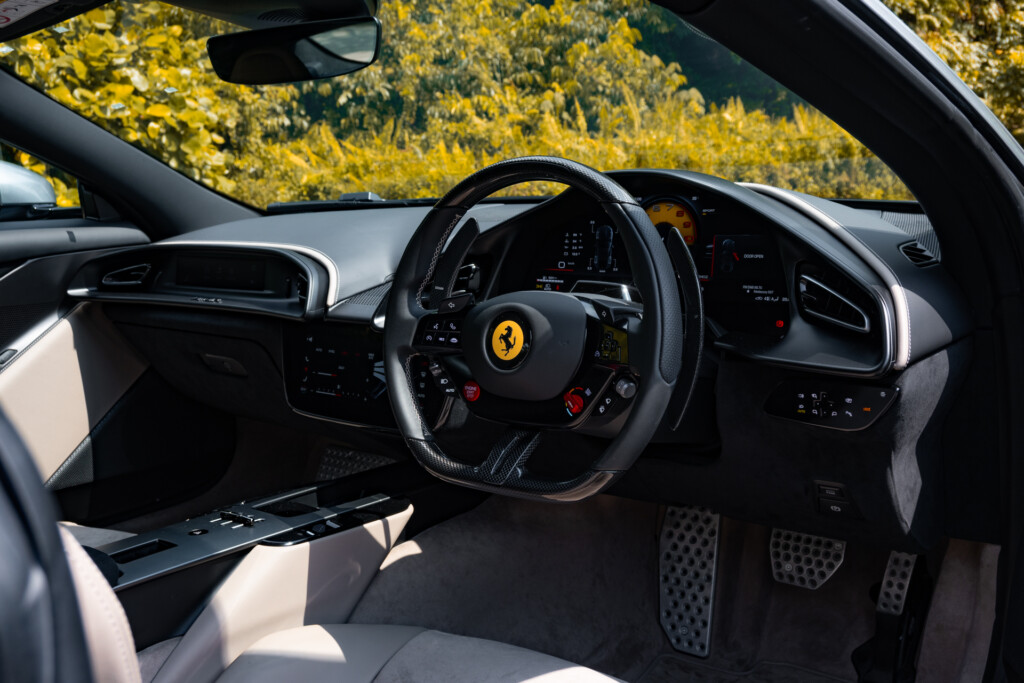
The first improvement appears before you even leave the carpark; Ferrari has brought back a physical starter button.
That may sound like a remarkably trivial thing to celebrate in a machine with more than 600 horsepower, but anyone who has spent time with Ferrari’s recent touch-sensitive steering wheel controls will understand. The Amalfi wakes up beneath your thumb with a proper crimson button rather than an anonymous capacitive pad. Already, civilisation is healing.
The 3.9-litre twin-turbocharged V8 settles into a noticeably more sophisticated idle than the Roma did. Its predecessor could occasionally drone at lower engine speeds, producing the sort of constant bass note that made you wonder whether someone had accidentally installed an aftermarket exhaust from a neighbourhood Civic.
Equal-length exhaust tracts and revised tuning have cleaned up the soundtrack considerably, making the Amalfi more pleasant during ordinary driving without completely silencing its personality.
Surprisingly civilised
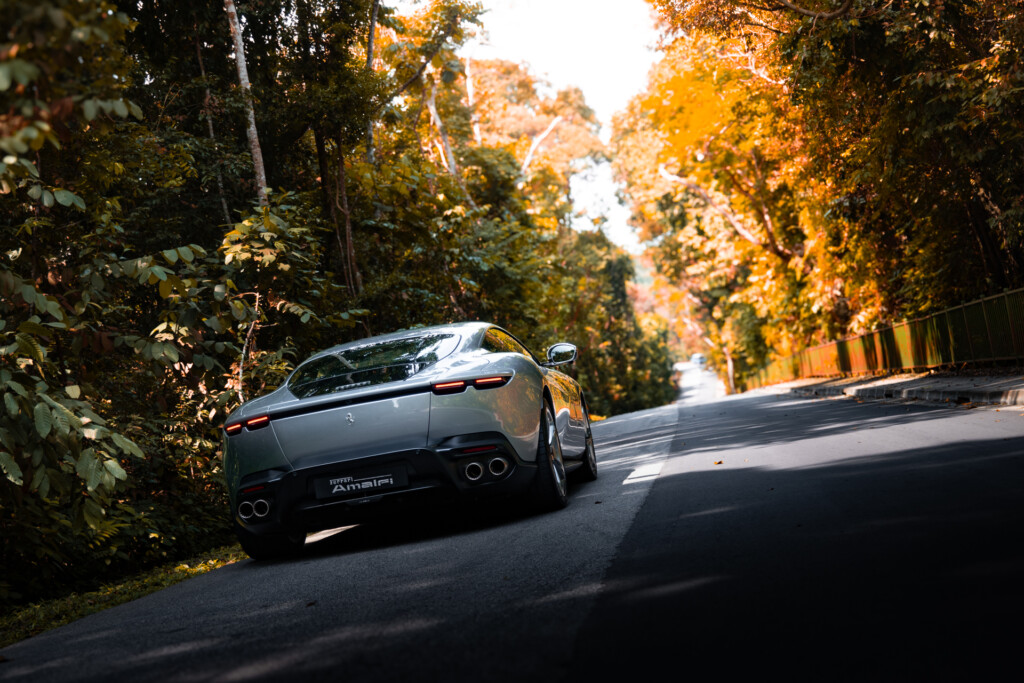
In Comfort mode, the Amalfi is extraordinarily compliant. Ferrari’s so-called Bumpy Road suspension setting is engaged by default, and the car handles urban imperfections with a suppleness you would not necessarily associate with something carrying a Prancing Horse badge.
Speed humps are absorbed cleanly. Broken surfaces rarely send unpleasant shocks through the cabin. Around town, the Amalfi can feel almost absurdly easygoing. You could commute in this, take it to dinner, sit in traffic and embark on longer road trips without eventually requiring physiotherapy.
Yet press the manettino into something more aggressive and the car begins peeling away those layers of politeness.
The other side of the Amalfi
Ferrari has deliberately widened the spread between the car’s personalities. Wet and Comfort modes are more forgiving than before, with stronger stability intervention and gentler power delivery designed to reassure drivers unfamiliar with the concept of 631bhp being sent solely to the rear wheels.
Sport and Race modes, however, release considerably more of the car’s mischievous side. Throttle response sharpens, the exhaust becomes louder, and Ferrari’s latest Side Slip Control system loosens its tie slightly, allowing the rear axle greater freedom without simply abandoning you to your own questionable judgement.
There is an active rear spoiler too, capable of producing up to 110kg of downforce at approximately 250km/h. Useful if you commute particularly quickly.
What makes the Amalfi interesting is what Ferrari has deliberately left out.
There is no rear-wheel steering.
No electric motor providing instant torque fill.
No hugely complicated active suspension system attempting to defy physics.
Ferrari’s engineers describe the Amalfi as something of a “back to basics” machine. A V8 up front, drivetrain at the rear, and a chassis designed to be inherently approachable rather than endlessly corrected by increasingly elaborate hardware.
Back to basics is relative in Maranello, of course. This is still a car with more computing power than some small governments. But dynamically, it works.
Fast without feeling frightening
The Amalfi feels wonderfully natural when you start leaning on it. The steering remains hyper-alert, requiring small inputs and a degree of trust in the front tyres. Ferrari steering has long felt more like thought control than traditional rack-and-pinion communication, and that remains true here.
Yet the chassis does not constantly dare you to go faster. There is a friendliness to its balance that makes the car easier to understand than some of Ferrari’s more extreme machinery.
A damp patch and an enthusiastic right foot can still persuade the rear tyres to reconsider their contractual obligations. But the Amalfi never feels as though it is waiting for an opportunity to embarrass you.
The irony is that this supposedly lesser Ferrari can actually feel more satisfying on a real road than some of the company’s more powerful cars. You can explore more of what it offers without requiring a runway.
The gearbox deserves its own applause
Ferrari’s eight-speed dual-clutch transmission remains magnificent. Around town, it behaves with impeccable manners, slipping between ratios almost invisibly.
And when you reach for the paddles? Everything changes.
Shifts arrive almost instantaneously, accompanied by perfectly judged throttle blips on the way down. You can use the paddles almost like percussion instruments, playing the engine note through successive ratios.
Leaving the car in automatic mode works perfectly well. But why would you?
Not everything is perfect
Turbocharging inevitably leaves its mark. Compared with the very latest electrified performance systems, there is a slight softness between throttle input and the engine delivering everything it has.
It is not severe turbo lag, but the response is not quite instantaneous either. And near the top of the rev range, the V8 leaves you wanting more. The engine begins to develop a harder, more exotic edge as the revs climb, briefly recalling some of Ferrari’s naturally aspirated greats.
Then the limiter arrives. Abruptly.
It genuinely feels as though the engine could spin harder, sing louder and continue building towards something even more dramatic.
Perhaps Ferrari has deliberately left room above the Amalfi for faster future variants. An Amalfi Competizione, perhaps?
Then there are the brakes. Pressing the pedal no longer directly actuates the hydraulic system in the traditional manner. Instead, brake-by-wire sensors interpret your input and algorithms decide how much braking force should be applied.
Ferrari’s reasoning is sound, though. The system provides greater consistency under repeated heavy braking, better manages the carbon-ceramic discs and allows the pedal response to remain stable even after sustained punishment on track. It also integrates more cleanly with modern driver assistance systems.
At the very least, the pedal feels progressive and predictable enough that you quickly stop thinking about what lies between your foot and the discs… which is probably the greatest compliment you can give brake-by-wire.
Ferrari admits buttons are good
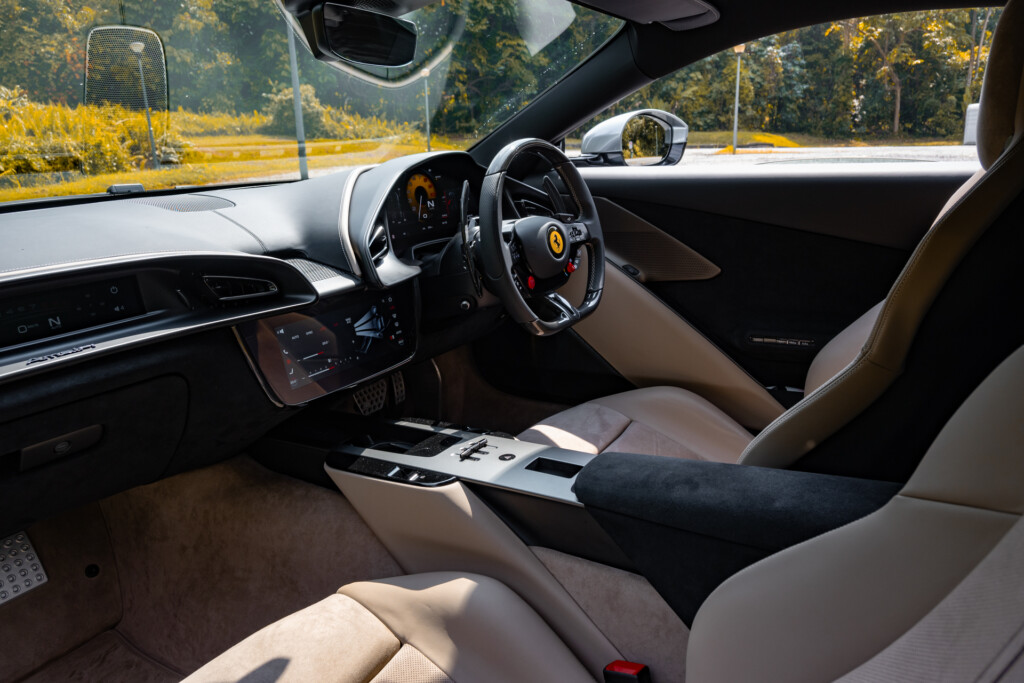
Inside, the Amalfi contains perhaps the clearest evidence yet that Ferrari knew the Roma’s interface had gone too far: physical buttons are back on the steering wheel.
Actual buttons. On a Ferrari. Imagine that.
The capacitive controls that plagued recent models have largely been replaced with tactile switches that can be operated without staring at them.
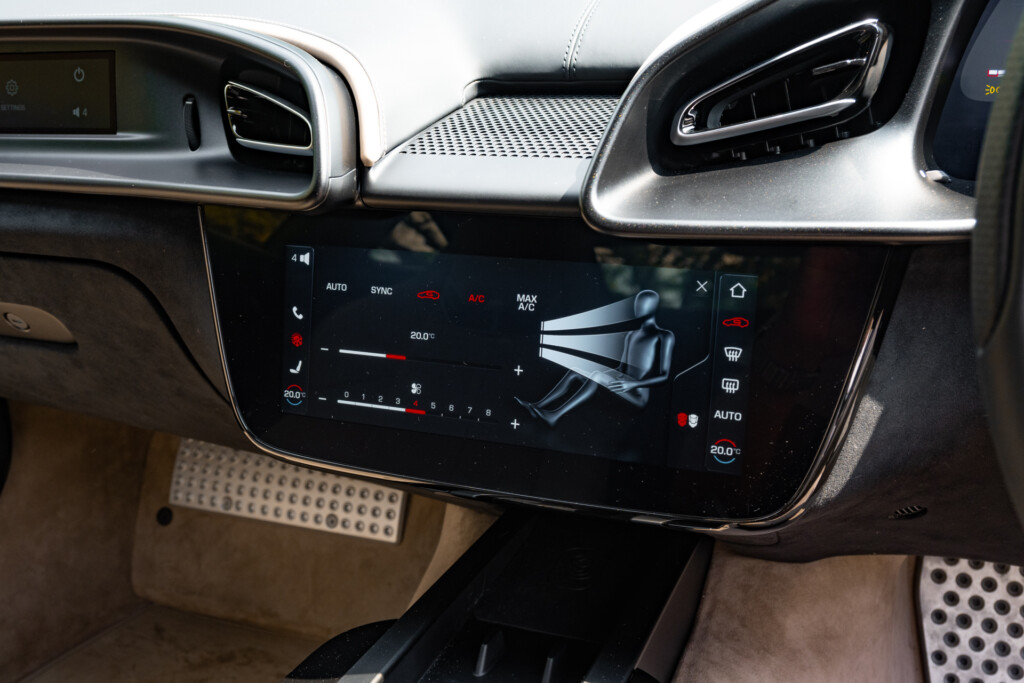
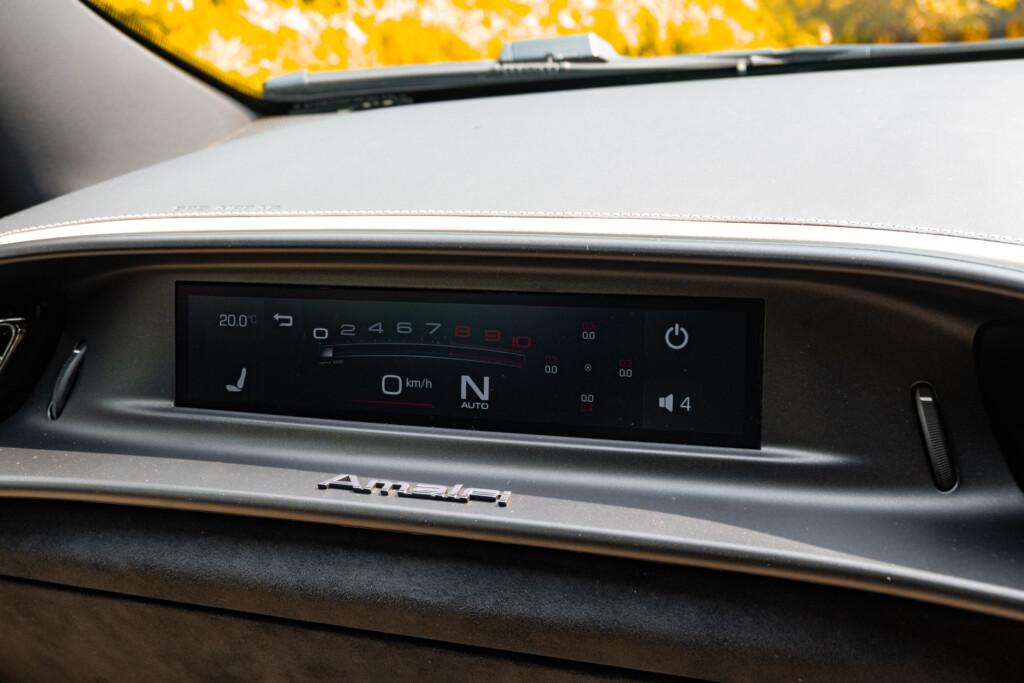
The centre of the cabin has been thoroughly redesigned too. The Roma’s awkward vertically mounted touchscreen has disappeared, replaced by a sharper and much more responsive 10.25-inch unit integrated into a more open dashboard.
The old twin-cockpit concept has been toned down, although the passenger still receives a dedicated display ahead.
Overall, the cabin feels less claustrophobic and considerably more sophisticated. However, the central screen sits rather low, which means adjusting certain functions requires taking your eyes noticeably away from the road.
Ferrari argues that it does not want its interiors dominated by enormous displays, but when climate controls, heated seats and nose-lift functions also live within said screen, positioning it somewhere nearer your line of sight would be useful.
A handful of capacitive controls also remain for functions such as the mirrors and lighting. They are a bit fiddly, and given how spectacular the Amalfi’s milled alloy wheels look, the last thing you want is to discover this while parallel parking beside a granite kerb.
Entry-level? Not in here
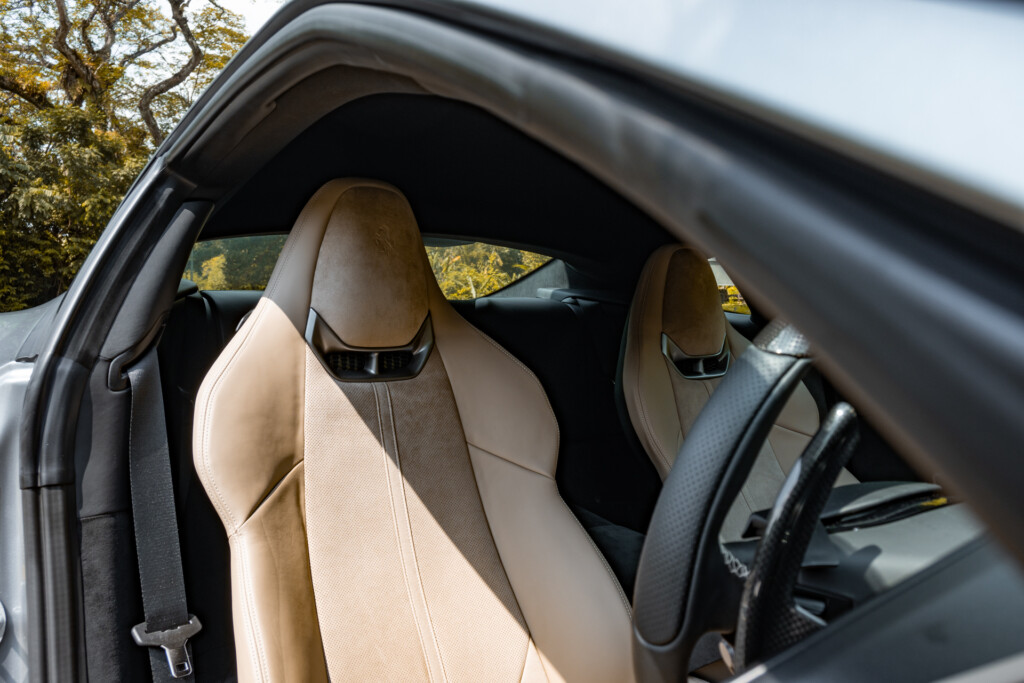
The Amalfi may technically sit near the bottom of Ferrari’s range, but nothing inside feels remotely entry-level.
Leather is beautifully finished. Carbon fibre pieces have the glossy depth of jewellery. Metal surfaces feel substantial. And running through the centre console is a beautifully machined aluminium spine that houses the key almost like a display piece.
Ferrari does not always receive the same praise as Bentley or Rolls-Royce for its interiors because performance tends to dominate the conversation. This deserves more recognition.
Rear accommodation? Well.
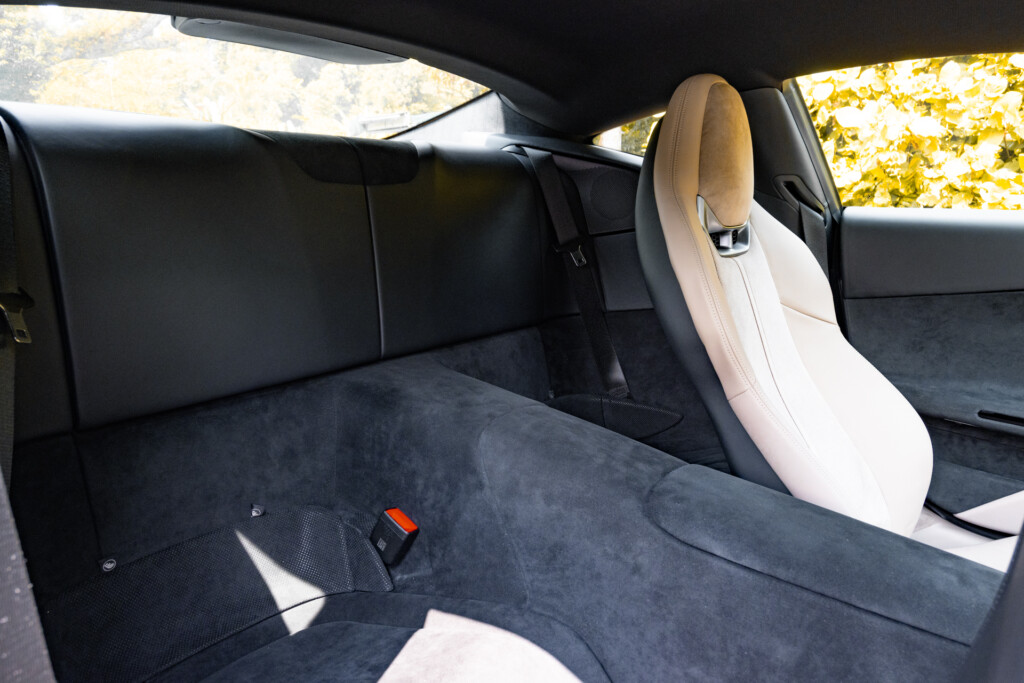
Ferrari does not even call this a traditional 2+2. Instead, it describes the Amalfi as a “2+”. That missing second “2” tells you almost everything. The rear seats are small, upright and best treated as beautifully upholstered luggage shelves.
The boot provides 273 litres of space, while folding the rear seatbacks gives you additional flexibility for longer items. For a Ferrari GT, that is perfectly usable.
Peace and Serenity
Modern performance cars have become incredibly complicated, often layering hybrid systems, active chassis hardware and endless electronic settings on top of already enormous outputs.
The Amalfi takes a slightly different route. And somehow, in becoming simpler, it feels more complete.
The design may not possess the effortless prettiness of the Roma, and there are still ergonomic frustrations lurking inside the cabin. But the improvements elsewhere are considerable.
Most importantly, you can exploit more of its character more often. And perhaps that is what makes the Amalfi such a compelling Ferrari.
Read more automotive news at AutoApp, or check out our latest videos on YouTube and on TikTok!